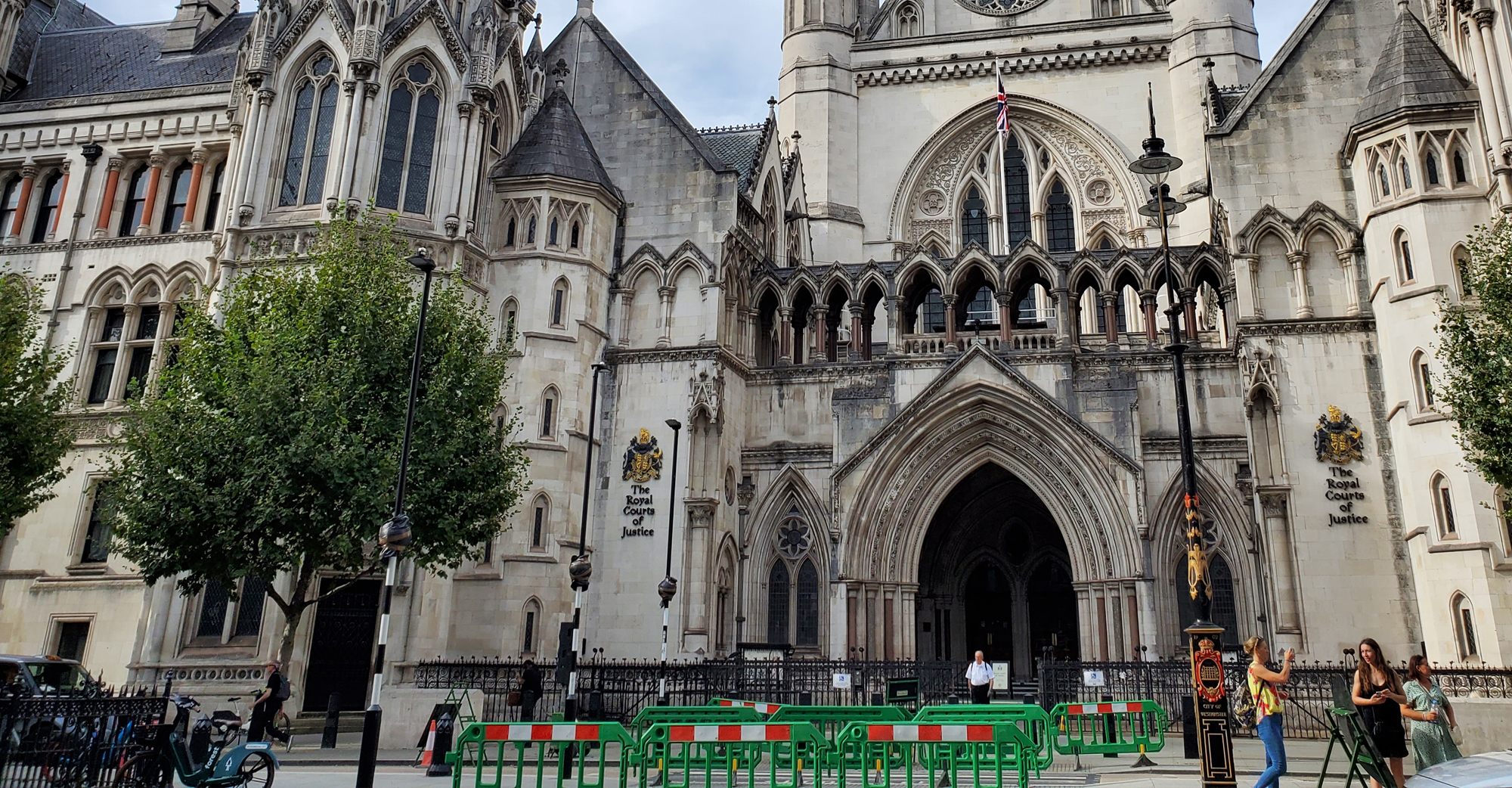
Guitars
Mixed Trivia 11
Politics 1
Trivia 7??
Come on and play Traveling Boy’s Trivia Game. Only you will see the results.
Trivia 8: How clean are we?

Trivia ??
Come on and play Traveling Boy’s Trivia Game. Only you will see the results.
Trivia 7: Coffee
Trivia 4: Water
Come on and play Traveling Boy’s Trivia Game. Only you will see the results.
Trivia 4: WATER
Congratulations - you have completed Trivia 4: WATER.
You scored %%SCORE%% out of %%TOTAL%%.
Your performance has been rated as %%RATING%%
Your answers are highlighted below.
Water Trivia
Come on and play Traveling Boy’s Trivia Game. Only you will see the results.
This Trivia Game is devoted to something we can’t live without: FRESH WATER

Congratulations - you have completed This Trivia Game is devoted to something we can’t live without: FRESH WATER.
You scored %%SCORE%% out of %%TOTAL%%.
Your performance has been rated as %%RATING%%
Your answers are highlighted below.




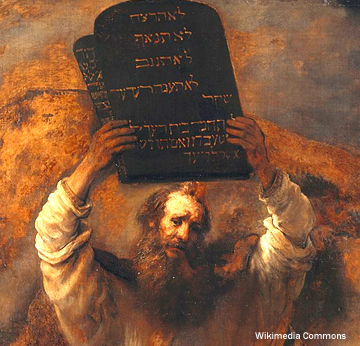
Allen vs. Farrow: An HBO Original Documentary
Dylan Farrow has been telling the same story since she was seven years old: One afternoon in 1992, she says her adoptive father, Woody Allen, brought her to the attic of her mother, Mia Farrow’s, Connecticut home and — out of sight of the rest of the family — molested her. In the intervening three decades, her account has not faltered. It has remained consistent since she first shared it with therapists, then police, as a child; when she aired it in a New York Times op-ed in 2014, and in the Los Angeles Times in 2017, in a televised interview with CBS in 2018, and now, in a four-part documentary from HBO: Allen v. Farrow, an exhaustively detailed investigation into the abuse allegations and subsequent custody battle that kneecapped Farrow’s career and have only recently begun to create consequences for Allen.
Allen has always adamantly denied Dylan’s allegations. He did not return interview requests for the documentary and described it after the fact as a “hatchet job riddled with falsehoods” and a “shoddy hit piece.” His public statements have followed the same formula since the early ’90s: He maintains that Farrow, his former partner of 12 years, orchestrated a smear campaign after discovering his affair with her 21-year-old adopted daughter, Soon-Yi Previn, and coached Dylan through a false allegation of sexual assault. “I never molested my daughter,” he said in the wake of Dylan’s 2018 interview with CBS, “as all investigations concluded a quarter of a century ago.”
Henry’s Six Wives Club, Yasujiro Ozu’s Camera Style
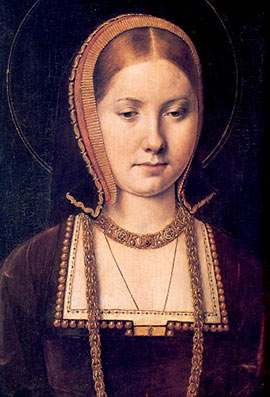
Henry’s Six Wives Club
1. Catherine of Aragon (1485-1536): Demoted for Bearing No Son
Henry took the throne in 1509, at age 17. Six weeks later, he married Catherine of Aragon, daughter of King Ferdinand and Queen Isabella of Spain, and the widow of his elder brother, Arthur Tudor (1486 –1502). As the eldest son and heir apparent of Henry VII of England, Arthur Tudor died young. It was a custom in the Tudor Court for the younger brother to marry the wife of an older brother. From the moment young Henry took his nuptials, he obsessed over continuing the Tudor line. Of multiple pregnancies and several births, the only child to survive was Henry and Catherine’s daughter, Mary.
Catherine remained at Henry’s side for 23 years and is even thought to be the only woman the king ever truly loved. “Henry viewed her as a model wife in every respect bar one… her failure to give him a son,” says Tudor historian Tracy Borman. Frustrated at the lack of a male heir, Henry’s eyes wandered.
2. Anne Boleyn (c. 1501-1536): The Union That Sparked Reformation, Beheaded
 Anne Boleyn and her sister, Mary, spent part of their childhood in the France court. Mary returned to England sometime around 1520 and had a brief affair with Henry. Henry then became smitten with Anne, but she refused the king’s advances. She had no interest in being a mistress. When Henry sought an annulment from his first wife to marry Anne, Rome refused. So the king broke away from the Roman Catholic Church and formed the Church of England.
Henry and Anne wed in January of 1533, and Anne gave birth to their first child, Elizabeth, in September the same year. Henry remained hopeful Anne would give him a son, but after a series of stillborn births, Henry lost interest in his wife. When he took a mistress, Anne became enraged. “On one occasion, her sister-in-law, Lady Rochford, was banished from court when she and Anne had plotted to remove an unnamed mistress from court,” says Tudor historian Elizabeth Norton. Desperate to end the relationship, Henry accused her of adultery and treason and had the marriage annulled. On May 19, 1536, Anne was beheaded for her alleged crimes.
3. Jane Seymour (1508-1537): Died After Giving Birth to Male Heir
 Days after Anne’s execution, Henry married his third wife, Jane Seymour. Jane had served as a lady-in-waiting to both Catherine of Aragon and Anne Boleyn. Anne Boleyn’s and Jane Seymour’s mothers were first cousins, who shared the same grandmother, and were raised together for a time. “Anne did not stand meekly aside when Henry’s interest in Jane became apparent. We know from sources that the pair came to blows on more than one occasion at court,” says Norton. On October 12, 1537, Jane gave birth to Edward VI and died from complications of the birth several weeks later. At the wishes of the king, Jane is buried at St. John’s Chapel alongside him.
 4. Anne of Cleves (1515-1557): Strategic, Six-Month Marriage
Henry stayed a bachelor for two years, until his chief minister suggested that he seek a European alliance and marry one of the sisters (Anne and Amelia) of Germany’s Duke of Cleves. Henry requested the women’s portraits and found Anne to be the more flattering of the two. When Anne arrived in England on January 1, 1540, Henry was shocked that she looked nothing like the painting. He tried to halt the wedding, but because the arrangement had progressed so far, they married on January 6, 1540. Anne, the so-called “ugly wife,” accepted a divorce and generous settlement six months later and lived in peace as the “King’s Sister” until her death in July 1557.
 5. Catherine Howard (1523-1542): Treasured, Then Executed
Henry married 19-year-old Catherine Howard—a lady-in waiting to Anne of Cleves—in July 1540. By this time, he had become overweight and unable to walk. Said to be delighted with his rambunctious new bride, Henry showered Catherine with gifts and called her his “rose without a thorn.” But less than a year into their marriage, rumors of infidelity surfaced. With enough evidence that she had been at least promiscuous, Catherine was executed for adultery and treason at the Tower Green on February 13, 1542.
6. Catherine Parr (1512-1548): Peacemaker Who Outlived Henry
 Henry married his sixth wife, Catherine Parr, in July 1543. A spirited and educated widow, when Catherine showed an interest in Protestantism, Henry had her arrested. She managed to avoid the fate of her predecessors, bringing stability and peace to the court, while serving as a kind and caring stepmother to Henry’s children.
Of all Henry’s wives, Borman says Catherine Parr had the most influence upon the widest variety of areas including court culture, religion, the role of women and the education of Henry’s children. “She also persuaded Henry to restore his daughters Mary and Elizabeth to the order of succession and acted as Regent when Henry went to war with France,” Borman explains.
Catherine died in 1548, a year after Henry’s passing.
Yasujiro Ozu’s Camera Style
Yasujiro Ozu (1903-1963) invented the “tatami shot,” in which the camera is placed at a low height, supposedly at the eye level of a person kneeling on a tatami mat. Actually, Ozu’s camera is often even lower than that, only one or two feet off the ground, which necessitated the use of special tripods and raised sets. He chose the stationary low-angle Tatami-style shot, feeling that it best represented Japanese culture. Ozu’s narratives were dismissed as old fashioned by the Japanese press, but the style of his films are still considered ahead of their times, almost bordering on the avant-garde. Ozu’s camera seldom moved and there was no trickery in the frame or special effects in his method. Yet, his films were by no means simple. Film scholars at Britain’s Sight & Sound magazine generally list him among the ten greatest directors in their decade polls.
