The World of Tea
Birds
Guitars
Mixed Trivia 11
Politics 1
Trivia 7??
Come on and play Traveling Boy’s Trivia Game. Only you will see the results.
Trivia 8: How clean are we?
Start
Question 1 |
What nation takes the most showers per capita per week?
Question 1 :
Answer: b. Brazil:
Brazil: 99% people who take a shower per week Germany: 92% people take a shower a shower per weekMexico: 90% people take a shower a shower per week
United States: 90% people take a shower a shower per week 20%
China: 85% people take a shower a shower per week.
Question 2 |
The people of the United states shampoo their hair over six a week per
capita.
Question 2 :
Answer: False
Mexicans, who wash their hair much more often than anyone else, with an average of over six shampoos a week. Indians in the poll wash their tresses the least, with an average of two shampoos per week.Question 3 |
Italy uses the bidet the most than any other nation in Europe per capita.
Question 3 :
H2>Answer A: True.
In Europe, the country that uses the bidet the most is Italy. There is even a law in Italy that says that every home has to have a bidet in it.
Question 4 |
What Is a Bidet?
Question 4 :
Answer is something you use in the bathroom
Bidets were invented in France over four centuries ago. Anyone who has done international traveling has likely seen that bathrooms look different from place to place. Sometimes, they can look so different that it takes people a lot of work to figure out how to use the bathroom properly. There are some countries where a bidet is popular. A bidet is frequently described as an alternative to toilet paper, but that is not necessarily the case. In reality, a bidet is simply a device near a toilet (or attached to it) that can be used for people to clean their bottoms after they use the bathroom. Can You Get a Bidet in the United States?Yes, it is possible for someone to get a bidet in the United States, but it is not necessarily common. There are plenty of people in the United States who do not even know what a bidet is, but there are some people who have become more interested in it during the past few years. It takes some time to get used to a bidet, and it is important to find a bidet that allows you to adjust the water pressure to meet your needs.
Is It Better to Use a Bidet Than Toilet Paper?
It is not necessarily better to use a bidet, but in Europe it is generally agreed that they are far more hygienic than simply using toilet paper. There are plenty of people who use both toilet paper and a bidet, but some people believe that they can get themselves clean after using the bathroom using just a bidet. One of the major benefits is that you would not necessarily have to use toilet paper anymore, but a downside is that you would use more water.
Ultimately, it is a matter of personal preference, and there are lots of people who experiment with both. Keep in mind that both toilet paper and bidets come in different styles, so it is important to find the right one to meet your needs.
Most bidets have customizable spray options, making it easy to control the pressure and spray angle so water only goes where needed (in other words, you won't get soaked). Still, it's normal to have some water left over after you wash.
Question 5 |
Should bathers shower at public swimming pools and spas prior to jumping in?
Question 5 :
Answer: a. True
Better yet, make #a A BIG YES!Bathers at public swimming pools and spas should shower first to to remove organic material (e.g., sweat, lotions, fecal matter) that can increase the risk of recreational water illness and the formation of disinfection by-products. There is a reason why public pools use an abundance in chlorine. The pools and spas are not your own private bath tub.
You’ll find that North Americans are considered to be somewhat dirty by Europeans, and, if the staff notices you haven’t showered first, there’s a chance you’ll be issued a one-way ticket back to the Canadian provinces or the U.S. states.
Question 6 |
Less than 10% of Americans DO NOT brush their teeth every day.
Question 6 :
Answer is FALSE
If you selected True, you need to brush up on your world states. So, what percent of Americans don't brush their teeth? Since it's so deeply ingrained into almost everyone's routine, it might surprise you to learn that about 20% of people aren't brushing each morning and evening’But, the per capita toothpaste consumption in Costa Rica amounted to 466 grams, while in Brazil the consumption reached 456 grams percapita.
There are 6 questions to complete.
You have completed
questions
question
Your score is
Correct
Wrong
Partial-Credit
You have not finished your quiz. If you leave this page, your progress will be lost.
Correct Answer
You Selected
Not Attempted
Final Score on Quiz
Attempted Questions Correct
Attempted Questions Wrong
Questions Not Attempted
Total Questions on Quiz
Question Details
Results
Date
Score
Hint
Time allowed
minutes
seconds
Time used
Answer Choice(s) Selected
Question Text
All done
Need more practice!
Keep trying!
Not bad!
Good work!
Perfect!
Trivia ??
Come on and play Traveling Boy’s Trivia Game. Only you will see the results.
Trivia 7: Coffee
Start
Question 1 |
What nation drinks the most coffee per capita in the world?
Question 1 :
Answer: a. Finland
1. Finland — 12 kg/26 lbs — Finland is the world's biggest consumer of coffee on a per-person basis. The average Finn drinks nearly four cups a day. Coffee is so popular in Finland that two 10-minute coffee breaks are legally mandated for Finnish workers.2. Norway — 9.9 kg/22 lbs — Norwegians drink more than three cups of coffee a day. Coffee houses are popular in Norway, and unlike in the United States, they are primarily places to socialize, not to work or to carry a drink out.
3. Iceland — 9 kg/20 lbs — Beer was illegal in Iceland until 1987, and wine is costly, so coffee has long been the most essential social drink in the country. It is customary in Iceland to offer any visitor a cup of coffee, and Icelanders have a stock reply, tíudropar, or "ten drops," to indicate that they just want a small cup.
4. Denmark — 8.7 kg/19 lbs — In Denmark, the word kaffeslabberas means an informal social gathering where coffee and cake is offered, often after dinner. At weddings, people will often be explicitly invited for the bryllupskaffe or wedding coffee reception.
5. Netherlands — 8.4 kg/19 lbs — Dutch merchants first introduced coffee to the West, shipping entire coffee plants from the Yemeni port of Mocha to India and Indonesia, where they were grown on plantations to supply beans to Europe. - International Coffee Organization.
Question 2 |
What nation drinks the most beer per capita in the world?
Question 2 :
Answer: d. Czech Republic
The most popular Czech beers are Pilsner Urquell, Staropramen and Budweiser Budvar, which has no relationship to Budweiser, a Watery and flavorless American-style pale lager.Ireland: Unquestionably the most popular beer is, Guinness Stout, the original classic that continues to grow in popularity every year. First brewed in 1759, the dark ale has a bold and robust flavor and should be enjoyed slowly among friends.
Austria: The most popular beer style in Austria is “Austrian Märzen,” a filtered lager that holds about 60% market share. Austrian Märzen ought not to be confused with Bavarian Märzen, however).
Botswana: The most popular in Botswana is opaque beer, Chibuku, made from sorghum and maize.
Croatia. Ožujsko is the most popular beer in Croatia, with 10 bottles being consumed every second. It has been produced since 1892).
Question 3 |
Name the U.S. State that Consumes the Most Beer Per Capita.
Question 3 :
Answer: c. North Dakota 45.8 gallons Bud Light
2. New Hampshire 43.9 gallons Bud Light3. Montana 41.0 gallons Coors Light
4. South Dakota 38.9 gallons But Light
5. Wisconsin 36.2 gallons M
Question 4 |
North Carolina is the U.S. State with the most microbreweries?
Question 4 :
Answer: b. False
North Carolina is 2nd in the nation behind Washington with 175 microbreweries.Question 5 |
Seattle leads the pack for the city with the most microbreweries in the U.S.
Question 5 :
Answer: b. Portland, OR leads the pack for the city with the most microbreweries in the U.S.
There are 5 questions to complete.
You have completed
questions
question
Your score is
Correct
Wrong
Partial-Credit
You have not finished your quiz. If you leave this page, your progress will be lost.
Correct Answer
You Selected
Not Attempted
Final Score on Quiz
Attempted Questions Correct
Attempted Questions Wrong
Questions Not Attempted
Total Questions on Quiz
Question Details
Results
Date
Score
Hint
Time allowed
minutes
seconds
Time used
Answer Choice(s) Selected
Question Text
All done
Need more practice!
Keep trying!
Not bad!
Good work!
Perfect!
Trivia 4: Water
Come on and play Traveling Boy’s Trivia Game. Only you will see the results.
Trivia 4: WATER
Start
Congratulations - you have completed Trivia 4: WATER.
You scored %%SCORE%% out of %%TOTAL%%.
Your performance has been rated as %%RATING%%
Your answers are highlighted below.
Question 1 |
Water covers about 71% of the earth's surface.
Question 1 :
Answer: a. True
Water covers about 71% of the earth's surface. 97% of the earth's water is found in the oceans (too salty for drinking, growing crops, and most industrial uses except cooling).Question 2 |
Only three percent of Earth's fresh water can be used as drinking water.
Question 2 :
Answer: a. False
Only 1.2 percent of three percent Earth's fresh water can be used as drinking water.Most of our drinking water comes from rivers and streams the rest is locked up in glaciers, ice caps, and permafrost, or buried deep in the ground. Most of our drinking water comes from rivers and streams.
Question 3 |
What area of the world has the second most glaciers?
Question 3 :
Answer: c. Greenland
The two ice sheets on Earth today cover most of Greenland and Antarctica. During the last ice age, ice sheets also covered much of North America and Scandinavia. Together, the Antarctic and Greenland Ice Sheets contain more than 99 percent of the freshwater ice on Earth.Approximate distribution is: 91% in Antarctica. 8% in Greenland. Less than 0.5% in North America (about 0.1% in Alaska
Question 4 |
Which non polar nation has the most glaciers?
Question 4 :
Answer: c. Pakistan
With more than 7,253 known glaciers, Pakistan contains more glacial ice than any other country on Earth outside the polar regions. Almost all of them are located in the northern regions of Gilgit-Baltistan and Khyber Pakhtunkhwa.Argentina, Chile, Norway and U.S. (Alaska) have polar regions.
Question 5 |
Glacial fed rivers, streams and lakes are clear and safe to drink.
Question 5 :
Answer: b. False
Glacial fed rivers, streams and lakes are not clear or safe to drink.Glacial tills can include rock flour, clay, silt, sand, gravel, cobbles and boulders depending on the source rock, the mode of deformation, the mode and distance of transportation and the mode. of . Glacial flour is that smallest size of sediment (much smaller than sand) and is responsible for the milky, colored water in the rivers, streams, and lakes that are fed by glaciers
If you were to drink straight glacial water, you would likely be consuming fecal matter and bacteria with it. Additionally, the U.S. National Parks Service (NPS) recommends against drinking water from a natural source that hasn't been filtered or purified.
Once you are finished, click the button below. Any items you have not completed will be marked incorrect.
Get Results
There are 5 questions to complete.
You have completed
questions
question
Your score is
Correct
Wrong
Partial-Credit
You have not finished your quiz. If you leave this page, your progress will be lost.
Correct Answer
You Selected
Not Attempted
Final Score on Quiz
Attempted Questions Correct
Attempted Questions Wrong
Questions Not Attempted
Total Questions on Quiz
Question Details
Results
Date
Score
Hint
Time allowed
minutes
seconds
Time used
Answer Choice(s) Selected
Question Text
All done
Need more practice!
Keep trying!
Not bad!
Good work!
Perfect!
Water Trivia
Come on and play Traveling Boy’s Trivia Game. Only you will see the results.
This Trivia Game is devoted to something we can’t live without: FRESH WATER
Start
Congratulations - you have completed This Trivia Game is devoted to something we can’t live without: FRESH WATER.
You scored %%SCORE%% out of %%TOTAL%%.
Your performance has been rated as %%RATING%%
Your answers are highlighted below.
Question 1 |
Freshwater lakes hold the majority of the world’s drinkable water. Name the world's largest freshwater lake in the world.
A | Lake Baikal: Siberia, Russia |
B | Lake Superior: Great Lakes of North America
|
C | Lake Tanganyika: Africa
|
D | Lake Victoria: Africa |
E | Lake Washington: Seattle, Washington, US |
Question 1 :
Answer: Lake Baikal: Siberia, Russia
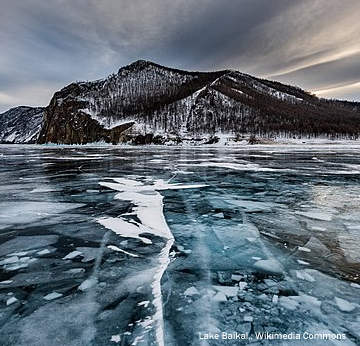
Lake Baikal is located in Russia in the southern region of Siberia, and is the world's largest freshwater lake by both volume (22995 km3) and depth (1741m), containing 20% of the world's fresh surface water. Lake Baikal hides its vast waters under a relatively small surface area (31500 km2). The lake is home to over 1,700 plant and animal species
Lake Superior (82,100 km2) is the world’s largest freshwater lake by surface area, the third-largest by volume, and the largest, deepest, and coldest of the Great Lakes of North America. It is also Canada’s largest lake, bordering Minnesota, Wisconsin, and Michigan in the United States. The Great Lakes Waterway passes across Lake Superior, which means “Big Sea Water,” and ferries commodities and supplies over the water. It is, nevertheless, one of the most dangerous lakes to swim in on the planet, as it can reach depths of more than 400 metres in some areas and is prone to riptides.
Lake Tanganyika (32,600 km2) in Africa is the world’s longest, second-oldest, and second-deepest freshwater lake, with a name that means “great lake spreading out like a plain.” It is also the second-largest lake in terms of surface area. Lake Tanganyika flows across Tanzania, Burundi, the Democratic Republic of Congo, and Zambia, eventually emptying into the Atlantic Ocean. Swimming in the lake, which is one of the Rift Valley’s lakes, is not suggested because Nile crocodiles are known to lurk beneath the surface in some areas.
Lake Victoria (68,870 km2), also one of Africa’s Great Lakes, is the continent’s largest freshwater lake, spanning Tanzania, Uganda, and Kenya. It’s also the world’s largest tropical lake and the second-largest freshwater lake in terms of surface area, trailing only Lake Superior. Lake Victoria, the Nile River’s major reservoir, is home to over 200 different species of fish, including Tilapia, which provide a source of income for thousands of people who live along and around its shores.
Lake Washington with the exception of a few commercial and industrial developments (e.g., Kenmore Air at the north end and the Boeing Company in the south Lake Washington is the largest lake in Washington State west of the Cascade Mountains, with a surface area of 22,138 acres.
Question 2 |
Hawaii is the rainiest state in the US.
A | True |
B | False |
Question 2 :
Answer: True
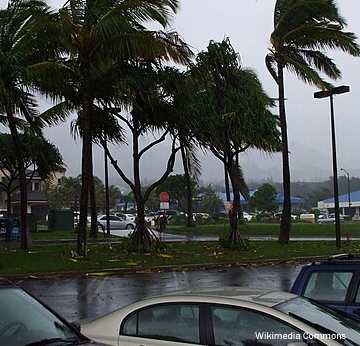
Hawaii overall is the rainiest state in the US, with a state-wide average of 63.7 inches (1618 millimetres) of rain a year. But few places in Hawaii fit the state's average.
Many weather stations on the islands record less than 20 inches (508 mm) of rainfall a year while others receive well over 100 inches (2540 mm).
Hawaii's climate is dominated by moisture-laden air rolling in off the ocean that releases massive amounts of water on an island's windward side, while the other side enjoys a rain shadow. On the Big Island of Hawaii for instance, Papaikou Mauka near the east coast gets 202 inches (5130 mm) of rain a year. But rainfall drops to just 11 inches (280 mm) annually at Kona Village on the island's western shore.
Mt. Waialeale on Kauai not only gets the most rain in Hawaii, but it's also the rainiest place in the United States. A weather station on the mountain from 1931 to 1960 averaged 460 inches (11,684 millimetres) of rainfall a year.
Louisiana: 60 inches of rain per year
Mississippi: 57 inches of rain per year
Alabama: 56 inches of rain per year
Washington: 42.0 inches of rain per year
Question 3 |
What was the cause of the Dust Bowl or the Dirty Thirties in the American and Canadian prairie lands from 1930 to 1936?
A | Decades without crop rotation |
B | Deep plowing of virgin topsoil |
C | Drought |
D | Dust storms |
E | All the above |
Question 3 :
Answer: All the above
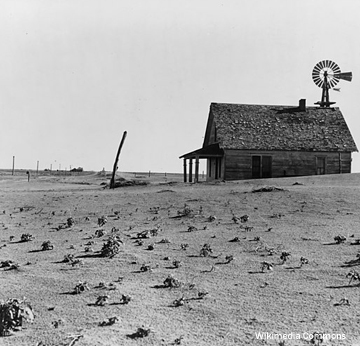
The Dust Bowl or the Dirty Thirties in the American and Canadian prairie lands from 1930 to 1936 was caused by severe drought and dust storms, coupled with decades of extensive farming without crop rotation, fallow fields, cover crops or other techniques to prevent erosion, and deep plowing. This resulted in major ecological, agricultural and financial damage with banks closing.
With natural anchors to keep the soil in place, it dried, turned to dust, and blew away eastward and southward in large dark clouds. At times the clouds blackened the sky reaching all the way to East Coast cities such as New York and Washington, D.C.
For further research:
- Read the novel "The Grapes Of Wrath" by John Steinbeck;
- John Ford’s film adaptation of The Grapes of Wrath
- and The Worst Hard Time in Audiobook (Free Online Listen by Sandie Veronica - Issued by Timothy Egan).
Question 4 |
Name the city with the lowest precipitation on earth.
A | Arica, Chile |
B | Barentsburg, Svalbard (also known as Spitsbergen), Norway |
C | Hualien City, Taiwan |
D | Tenochtitlan, Mexico |
E | Yuma, Arizona, US |
Question 4 :
Answer: Arica, Chile
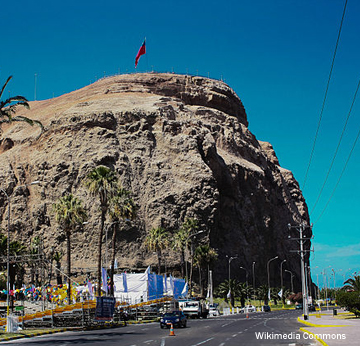
The place with the lowest precipitation on earth is Arica, a port city in Chile, with 0.6 mm annually, and being that it is on the northern edge of the Atacama Desert, the driest non-polar desert in the world we are not surprised. In the USA, the state with the lowest rainfall is the Nevada with 9.5 inches (241 mm), of actual rain given that precipitation measurements for snow are given separately for the Nevada. The driest city in the USA is Yuma in Arizona, having only 2.65 inches (67.31 mm) of rainfall annually It is also the sunniest city in the world, receiving about 4,015 hours of sunshine out of possible 4,456 hours of daylight each year.
Question 5 |
Name first person mentioned in the Bible who fasted for 40 days and 40 nights without food or water.
A | Abraham |
B | Jesus |
C | Moses |
D | Noah |
E | Paul |
Question 5 :
Answer: Moses
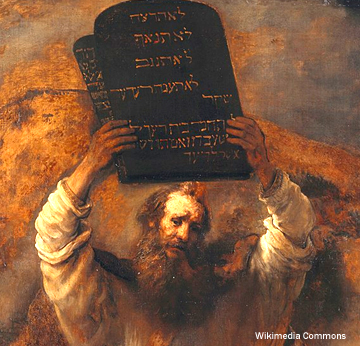
Mentioned in the Bible more than 70 times, the first example of fasting in Scripture is in Exodus 34 – “Moses was on Mount Sinai with the Lord for 40 days and 40 nights. He didn't eat any food or drink any water."
Once you are finished, click the button below. Any items you have not completed will be marked incorrect.
Get Results
There are 5 questions to complete.
You have completed
questions
question
Your score is
Correct
Wrong
Partial-Credit
You have not finished your quiz. If you leave this page, your progress will be lost.
Correct Answer
You Selected
Not Attempted
Final Score on Quiz
Attempted Questions Correct
Attempted Questions Wrong
Questions Not Attempted
Total Questions on Quiz
Question Details
Results
Date
Score
Hint
Time allowed
minutes
seconds
Time used
Answer Choice(s) Selected
Question Text
All done
Need more practice!
Keep trying!
Not bad!
Good work!
Perfect!