Words and photos by Tom Weber
Each summer, the countryside of northeastern Italy is transformed into a golden sea of sunflowers, where sun-kissed fields, quiet villages, and timeless landscapes celebrate the beauty of the season.
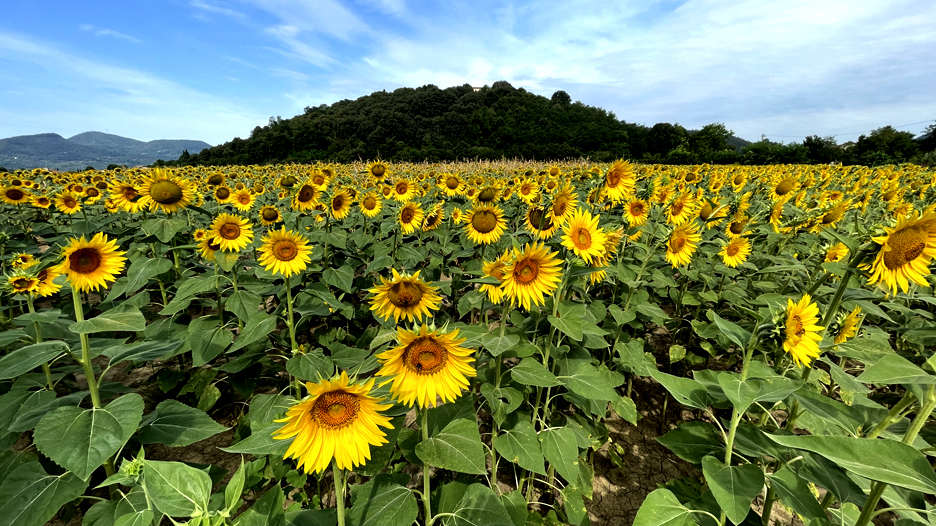
There are few sights more uplifting than a field of girasoli (sunflowers) in full bloom. Across the countryside of northeastern Italy, vast carpets of golden blossoms stretch to the horizon, their radiant faces following the arc of the summer sun as if performing nature’s oldest dance. It is a spectacle that lasts only a few precious weeks, yet leaves an enduring impression on all who encounter it.
From late June through July, the fertile plains of the Veneto and Friuli Venezia Giulia burst into colour. Quiet country lanes weave between fields ablaze in varying shades of yellow, where towering blooms stand shoulder to shoulder beneath cloudless skies. The landscape seems to shimmer in the warm afternoon light, framed by vineyards, orchards, and the distant silhouette of the pre-Alps. Here, the pace of life slows, inviting travellers to linger and savour one of Italy’s most enchanting seasonal displays.
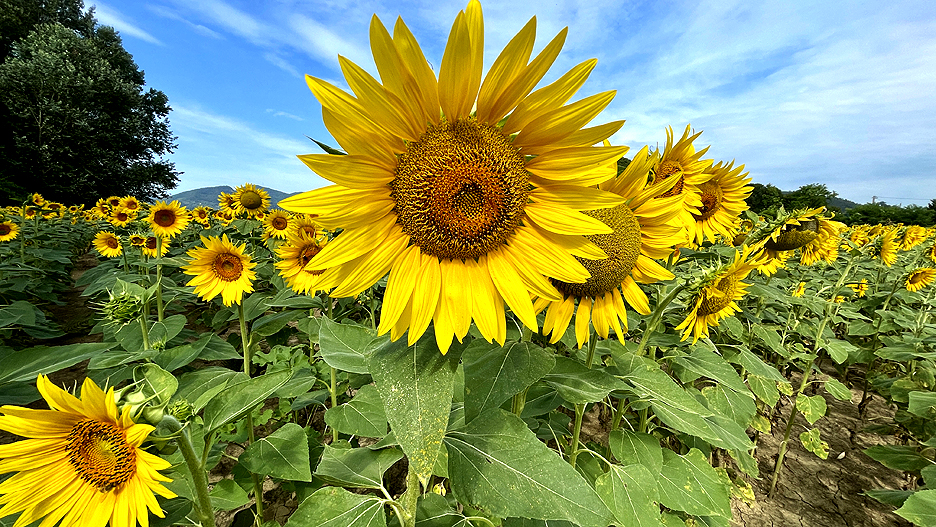
The provinces of Padua, Rovigo, Verona, Udine, and Pordenone are among the region’s finest places to discover these golden landscapes. Sunflower fields often appear unexpectedly beyond ancient farmhouses, beside centuries-old churches, or along winding roads lined with poplar trees. Whether viewed from a bicycle, a passing train, the window of a leisurely drive, or the absolute best way, on foot, each panorama feels like a living painting, rich with colour and light.
Photography enthusiasts, like me, are drawn to the fields during the “golden hour,” when the late afternoon-into evening sun embraces the blossoms in a warm amber glow. Against deep blue skies, the vivid yellow petals create striking contrasts, while morning dew adds a delicate sparkle to the broad green leaves. It’s no wonder these landscapes have become a favourite subject for artists and nature lovers alike. Vincent Van Gogh found the sunflower to be the perfect subject for his thick, impasto brush strokes.
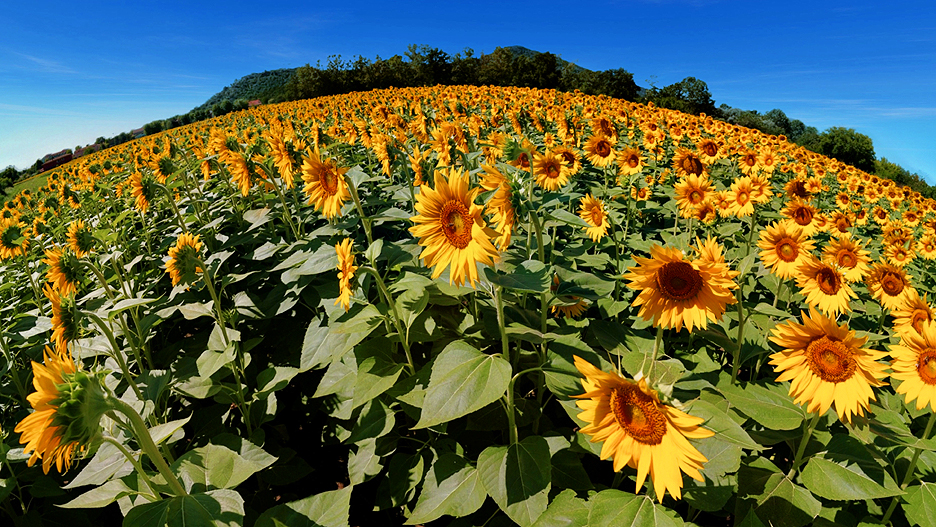
Although admired for their beauty, Helianthis annuus are first and foremost an important agricultural crop. Introduced to Europe from North America in the 16th century, they thrive in the warm summers and fertile soils of the northeast, and elsewhere around the Bel Paese. Today, they’re cultivated for their nutritious seeds and premium cooking oil, while also supporting biodiversity by providing nectar for bees, butterflies, and countless other pollinators. Their deep roots improve soil structure, making them a valuable part of sustainable crop rotation.
The sunflower’s Italian name girasole, literally “turns with the sun,” perfectly captures its enduring fascination. While young plants follow the sun’s movement across the sky, mature blooms settle facing east, greeting each new dawn. This simple natural phenomenon has inspired artists and poets for centuries, symbolising optimism, resilience, and the promise of brighter days.
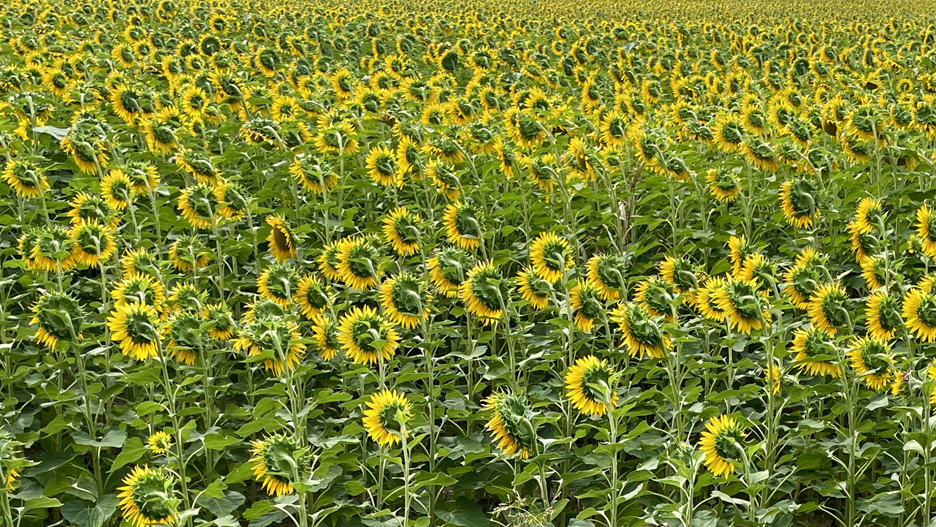
Exploring these golden landscapes is one of the quiet pleasures of an Italian summer. Stop at a village café for an espresso, browse a local market overflowing with seasonal produce, or visit a nearby vineyard where crisp white wines, floral rosè and elegant reds reflect the character of the surrounding countryside. Many of the region’s prettiest villages are only minutes from the sunflower fields, making it easy to combine nature, culture, and cuisine in a single day.
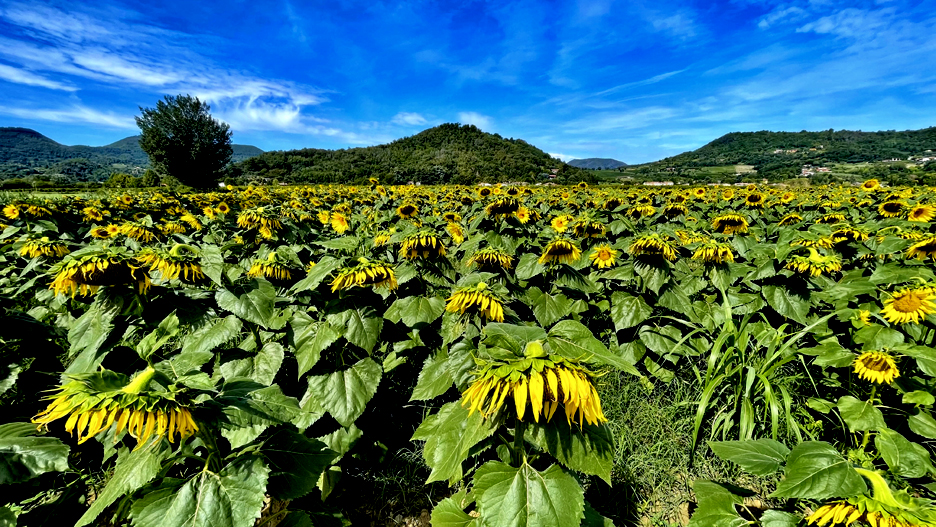
For a few fleeting weeks each year, northeastern Italy is painted in shades of gold. The girasoli bloom, gently rotating toward the light, transforming ordinary farmland into extraordinary scenery. They remind us that some of Italy’s most memorable experiences are found not in famous art-filled museums or bustling piazzas, but in the quiet splendour of its countryside, where summer, sunshine, and nature come together and turn in perfect harmony.