It has always amazed me how the blues have wrapped themselves around our little planet. Magic Sam and Charlie Musselwhite referred to them as a “comforter,” B.B. King thinks of them as medicinal, “they’re good for what ails you.” For Johnny Winter, they break down to pure “emotion.”
No matter how you feel about the blues, the fact is they originated out of necessity as a unique, free form means of communication. Refined shouts and hollers and syncopated work rhythms that could both inform and entertain. Field hands often learned of the latest plantation news while maintaining a steady working pace or they might sing and shout along with songs based on legendary tales or Delta lore. Following that line of thought, the blues could very well be considered the original Internet.
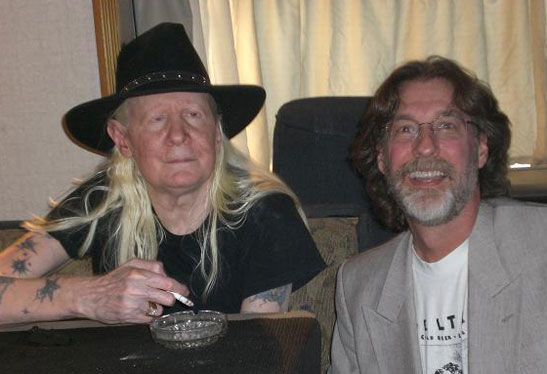
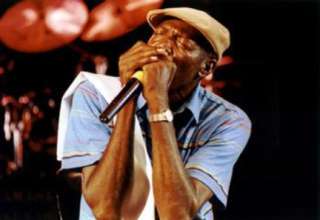
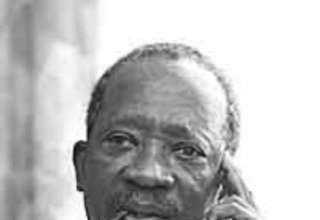
The Blues according to Johnny Winter… “it makes me feel good.
It makes me very happy.” Photo by: Yachiyo Mattox
The Blues traveled out of the Deep South, northward, strapped to the backs of laborers searching for something, anything better. They eventually found both coasts via minstrel wagons, empty boxcars and countless miles of dust-choked roads. Pausing only long enough for donations and scattered applause, the blues could be found at most crossroads, on busy street corners, in jukes, roadhouses and the occasional community fish fry.
Nothing could stop them; not mountains, oceans, or borders, poverty, not even wars. If anything, those challenges just fanned the flames. World War II instantly spread the genre to international shores. When you think about it, it’s impossible to not experience ‘the blues’ when you’re far from home, missing the ones you love and then there’s that little matter of having a country full of people you don’t even know, trying to kill you! Pretty much your ultimate mood breaker.
Chicago harp legend, James ‘Snooky’ Pryor witnessed some of the fiercest and bloodiest fighting through the Soloman Island chain in the South Pacific. He told me after TAPS every night, they would leave the Army PA system hot and Snooky would break out his harmonica and blow some mournful, moaning blues through the dense, jungle battle lines.
You just know, that had to create a major pucker factor for the Japanese fighting forces. Sitting in total darkness, on an island in the middle of nowhere and hearing this woeful, wail drifting through the banana trees and coconut palms. Got those mean old, low down propaganda blues, AGAIN! Amplified, no less….another military ‘blues’ first. And I still can’t listen to Snooky play ‘Judgment Day’ without thinking about that story.
Post war prosperity cast new light and gave players fresh perspective. The blues began to jump and swing more than ever. An edgier sound electrified Memphis and Chicago and as the 1950’s dawned, a younger, hipper and whiter audience began to plug in. I think it was McKinley Morganfield who said it best, “The Blues had a baby and they named it Rock and Roll.”
Carl Perkins, Little Richard Penniman, Elvis, Ike Turner, Jerry Lee Lewis, Bo Diddley, Chuck Berry and dozens of others began to stretch and eventually blur music’s segregated boundaries. Pandemonium ensued. The Rock and Roll onslaught gave much wider exposure to blues and folk music and breathed new life into the musicians that played them.
As the phenomenon spread into 1960’s Europe, it seemed to reign-down heaviest in the United Kingdom. British teens especially, became infatuated with early Delta players and began plumbing blues roots and recordings. Adding their own style and presentation to the traditional, they packed up guitars, amps and drum kits and brought it right back to America. And America discovered the Blues all over again.
An extraordinary route to travel and even Johnny Winter had a tough time explaining it. “It’s very strange,” he said. “I don’t know why it took that. I guess the blues has always been around and people didn’t think much of it. When the English people started doing it, it was a whole different thing and they (American youth) picked up on it.”
Pick up on it, they did and this time on a much larger and more enthusiastic scale. The Newport Jazz Festival in 1960 featured Muddy Waters with his band that included Otis Spann and James Cotton. The Newport Folk Festival provided a showcase for a whole host of the originators, from Son House and Robert Pete Williams, to Sleepy John Estes and Mississippi John Hurt.
Bill Graham’s ‘Winterland’ and both Fillmore venues packed them in with Rock and Blues bills. Johnny Winter, Albert King, Hot Tuna, Janis Joplin, the Allman Brothers and Charlie Musselwhite. James Cotton readily admitted he’d done the East Coast – West Coast Fillmore run so many times, “he half-expected to die somewhere in-between.” Chicago’s Southside clubs spread rapidly into the suburban north side thanks in part to Mike Bloomfield, Big Joe Williams and a few dozen special friends.
The music was breaking down the cultural and racial barriers and replacing them with stronger, albeit ‘tie-dyed’ bonds to a brand new and very receptive generation of fans. The fervor behind the British Invasion added a tremendous amount of alternatives to the mix. And it’s quite possible that the respect shown by overseas fans toward our blues elders became the catalyst for America’s youth to take a second listen.
For a great number of baby boomers, myself included, if it hadn’t been for John Mayall and the Bluesbreakers, the Stones, Zeppelin, Cream and of course our homegrown, Johnny Winter, Jimi, Janis, Paul Butterfield and the Doors, we may have never RE-discovered the awesome talents of Chester Burnett, Willie Dixon, McKinley Morganfield, not to mention those who came before.
Just goes to show, you’ve got to keep those lines of communication open. Either that or invest in call waiting.