Story by Dette Pascual. Pictures by Erlinda Cortez
October draws to a close with a melancholy air. Days are colder, dead leaves flutter to the ground after a last burst of color, before finally drifting away to be tossed by the winds in all directions. Something about this image that inspires vintage, romantic songs like “Autumn Leaves”… and brings memories of a Love, once held close.
How fitting therefore that the world we know, lets go of October with a celebration of the spirit gone into another realm. In many western worlds, they call it Halloween. Adults dress up like ghosts, zombies, etc. and go about trying to scare each other. Later, though, as an influence of Christianity, the affair has graduated to a more convivial , fun thing. It has become like a children’s costume party with lots of angels, demons, princesses, pirates, cowboys, fairy tale characters, witches, etc. Candies and chocolates greet those who come to the door of houses decorated with lighted pumpkins. “Trick or Treat!”
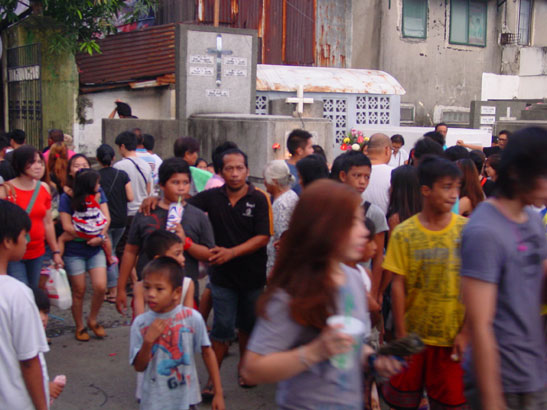
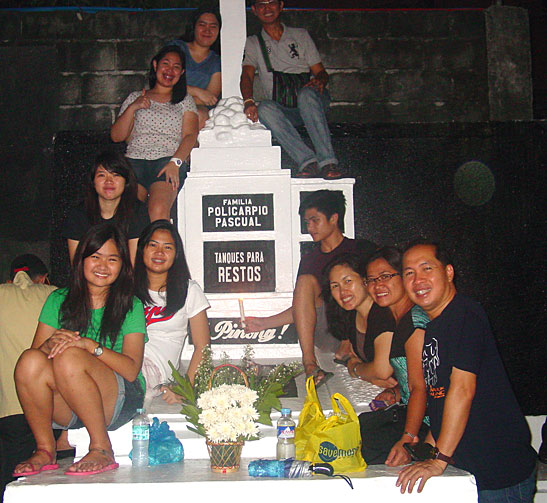
But in the Philippines, there is the tradition of “All Saints Day” (Todos los Santos or “Undas”) which is a way of remembering dead loved ones by prayers, bringing flowers, and lighting candles at their grave. This custom of going to where loved ones are laid to rest, is a hold-over from the Philippine history of being under Spanish rule hundreds of years ago. In Latin American countries, they call this custom, “Dia de los Muertos,” or Day of the Dead. But again, as in the celebration of Halloween, the solemnity of the day of the dead has become a fiesta of sorts.
People still go to cemeteries primarily to visit the graves of loved ones. But over population has turned cemeteries into cities of the living, for at least a day or two. Grave yards are invaded with bright lights, music blaring from boom boxes, food vendors, balloons, relatives and friends turning the visits into private parties. Nothing wrong with this, as long as you do not disturb others around you. People must honor their dead in their own way. I don’t think the dead mind.
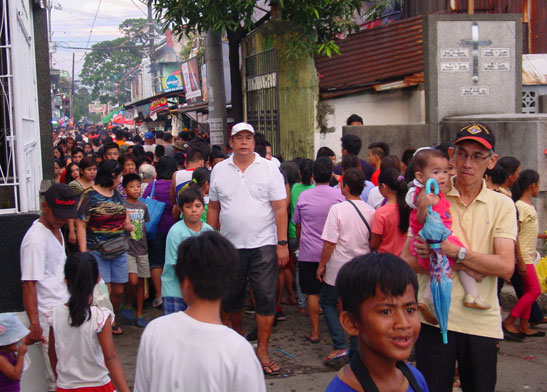
Above (photo) the din of celebration, the underlying theme of recalling those who have gone ahead, has endured. This is what makes Todos los Santos a significant part of the Philippine culture. That no matter how busy the lives of people, Filipino tradition takes time to pause and set aside a day for remembrance. It is said that no one is really gone for good, if those left behind continue to think of them. In the Broadway play of “Les Miserables” there is a beautiful song that expresses this yearning for those who have journeyed ahead:
“There’s a grief that can’t be spoken
There’s a pain goes on and on
Empty chairs at empty tables
Now my friends are dead and gone…”
Relationships continue beyond death like love waves reaching out, holding on to each other through the mystical distance. In Corinthians 13, it says, “Love endures.” So, in a practical sense, this day of remembering is a way for the living to cope with the reality that life on earth ends, to continue to another level of forever. It helps to see that you are not alone in facing this reality. The idea of Dias de los Muertos is to see others, thousands of others, who feel what you feel. Above all, it strengthens the belief that there is an after-life. For how can you stand facing the pain of missing someone, if there is not the reassurance that “someday in heaven, we will meet again?” The candle you light represents that faith, your hopes, your trust in that faith. When you truly believe that there is a God and a heaven above, you can cope with the left-over sadness of a good bye. There is always a morning that awaits you…beyond the evening of Dia de los Muertos.
Interesting Factoid
In a cemetery in Malabon, Philippines, is an infamous tomb that displays a statue of Satan standing above St. Michael. Many people wanted to tear it down but this ominous edifice was erected at the request of Don Simeon Bernardo, the man who was buried there, in 1934. In order to appease the neighborhood that lived in fear of this demonic presence, the townsfolk decided to enclose the characters in a steel cage somewhere around 1970.
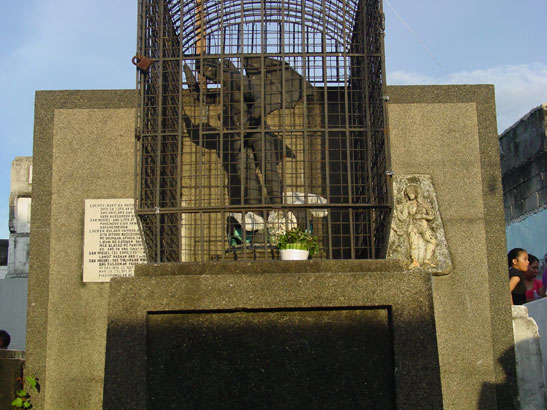
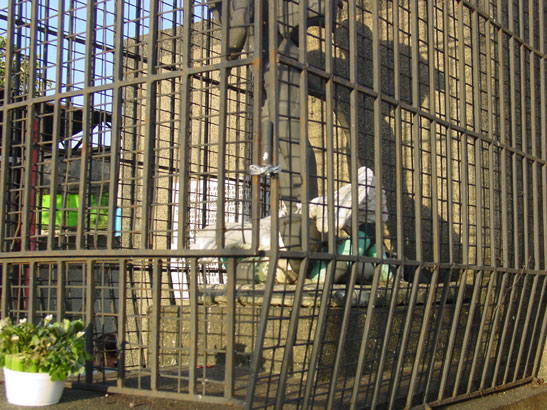
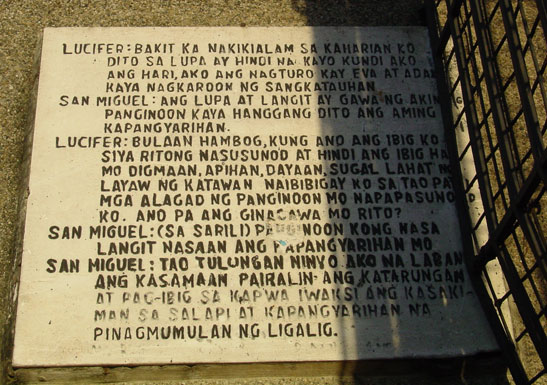
There is a blog in Tumblr.com called Philippine Urban Legends that gets into this in more detail.
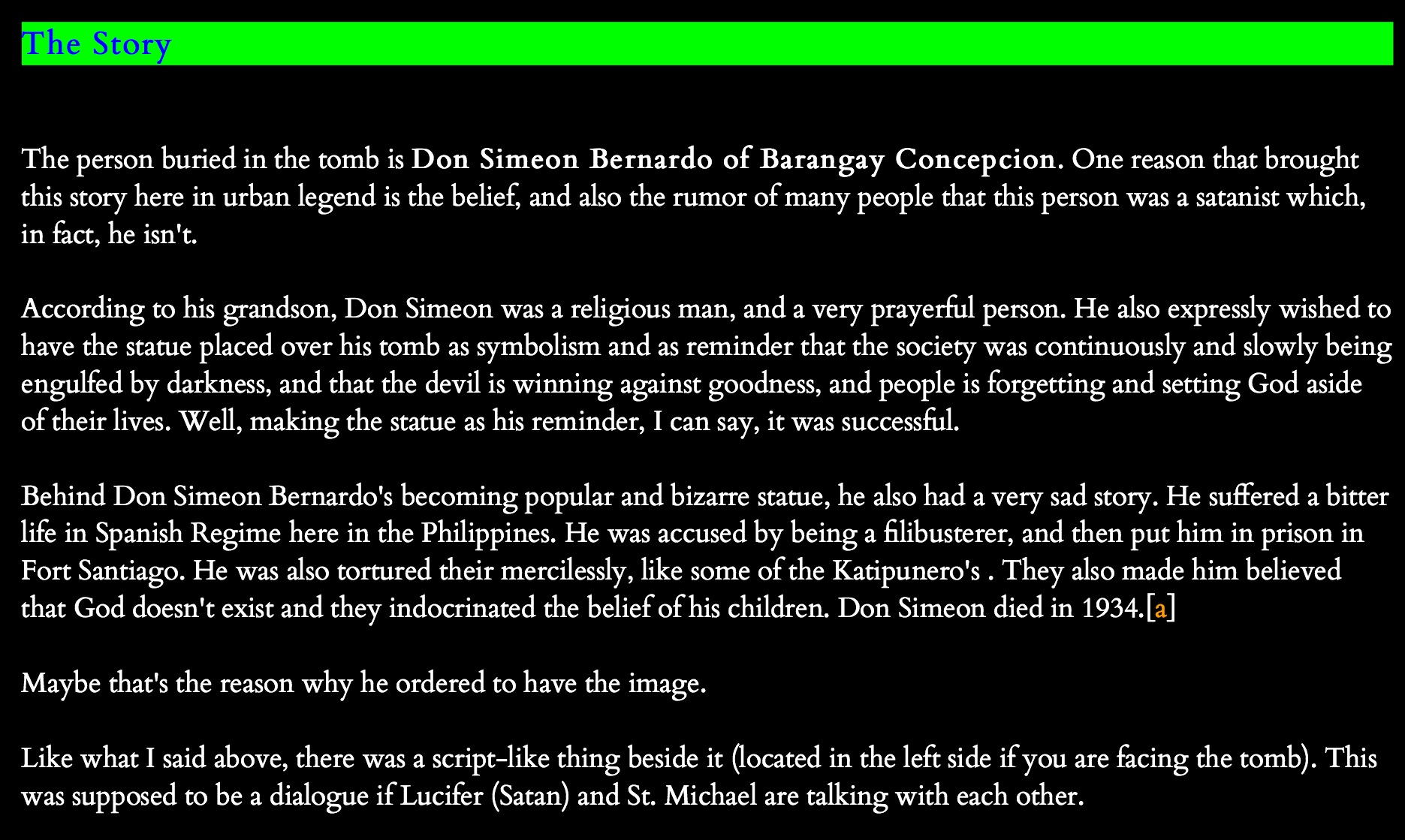
click on image for enlargement
Orinially published in 2009.