Story and photos by John Blanchette

Flying into Prague, the city lies below, red tile roofs fanning over white and yellow buildings sprawling in no apparent pattern around the Vltava River, the result of a natural process of undisturbed development over centuries. Undeterred by city planning, it is what makes this city of spires so surprising, charming and rare.

Prague is one of the most beautiful capitals in the world having never suffered the full brunt and devastation of war and reconstruction.
I was drawn to this landlocked nation in Central Europe by the promise of unspoiled medieval cities and towns preserved like no others in Europe, but I was not prepared for the stunning diversity and grace of the architecture and the lyrical natural beauty of the land. I’d also heard about the glass, porcelain, textiles and other decorative arts, but was most intrigued by the promise of the greatest beer in the world.
Shaped somewhat like a dumpling, the Czech Republic is surrounded (clockwise) by Germany, Poland, Slovakia and Austria and has a population of only 10.3 million. It is roughly the size of Pennsylvania and its countryside is reminiscent of the rolling green hills, mountains and forests of the Pocono region. The economy is strong with only about three percent unemployment.

I explored the western two thirds of the country known as Bohemia. The region is divided into North, South, East, West and Central Bohemia. The Capital of Prague is in Central Bohemia and contains 10 percent of the nation’s population, with the rest scattered about in pristinely preserved small cities, towns and villages.

Bohemia has nothing to do with the artistic life on the Left Bank of Paris or the Beat Generation. It was the name of the Celtic tribe that inhabited the land before the coming of the Slavs in the 5th century.

In Prague, driving is really not an option in much of the city. Its cobblestoned streets were designed for exploration by foot. It has an excellent rail and bus system that will transport you around for 18 Czech Crowns (Koruna), about a dollar. There are lots of walking streets with only the occasional automobile snaking through the crowded, meandering lanes. A circular highway is currently in construction around the outside of the city to funnel truck and auto traffic away from the inner city.
It is useful to learn a few phrases in Czech that will go a long way with locals when asking for help. Most speak some English, but appreciate you taking the time to learn words and phrases like Dobry den (dobree den) hello, dekuji (dye qui) thank you, prosim (proseem) please and pivo is beer. I found pivo prosim quite handy.
The Czech’s drink more beer per capita than anywhere else in the world (adults consume about 80 gallons per year) and it’s cheaper than Coca Cola, costing about $1.25 a glass. Brewpubs are everywhere and, as in Ireland, the centers for social and intellectual life.
If you’re not imbibing, make sure to visit the numerous ornate churches, many of which have been converted to concert halls and offer performances on a daily basis, and the numerous museums, from the puppet and torture museums in the city of Cesky Krumlov to the Mucha, Mozart and National museums in Prague.

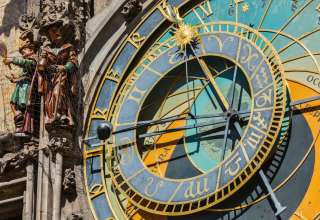
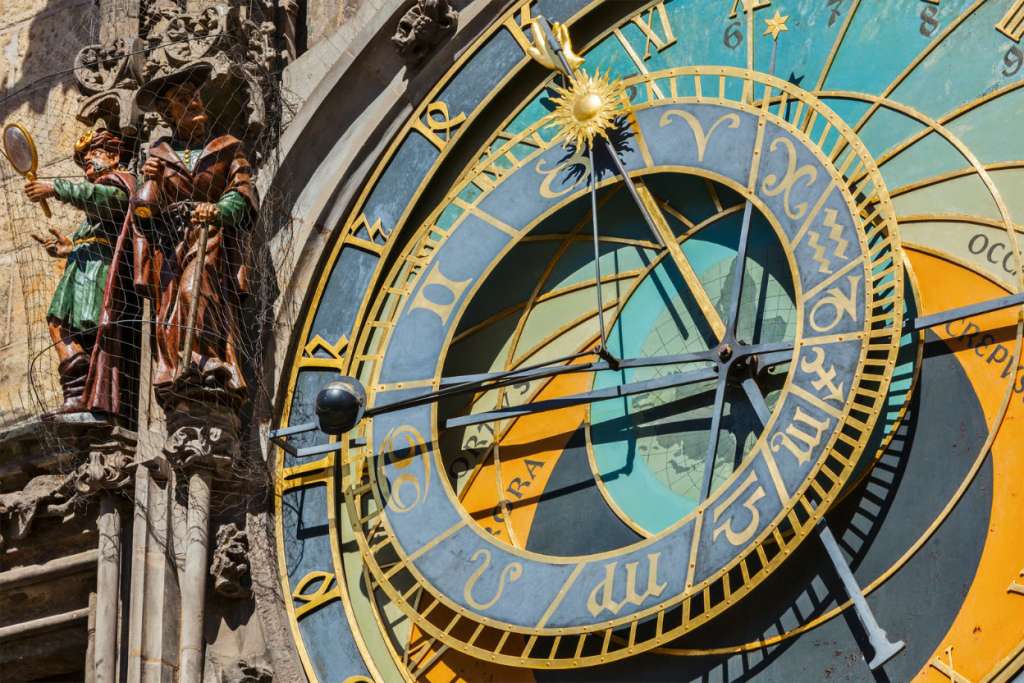
You must also climb the never ending steps leading to Prague Castle and St. Vitus Cathedral, which loom above the city; cross the heavily statued Charles Bridge which links the Old Town with the Little Quarter, explore the hundreds of years of architecture on display in the Old Town Square and wait on the hour for the Astronomical Clock to whirl its figures as hundreds of tourists look on, visit the Jewish Quarter and Cemetery and the whimsical Dancing houses which guard the Jirasek Bridge over the river. Designed by American architect Frank Gehry, they are also nicknamed Fred and Ginger after the dancing duo.

I also sampled quite a bit of the hearty cuisine, which includes lots of pork, dumplings, cabbage and potatoes.

While in Prague I took a cooking class at the Culinary Institute taught by one of the country’s top chefs, Vaclav Fric, who helped us make a spectacular lunch that included crispy roast duck, a delicious cream chicken dill soup with poached egg, the best chewy dumplings I’ve ever tasted and a fruit filled pastry for dessert. He was off to Galway, Ireland following class to participate in the Annual World Oyster Shucking Contest, where he finished 12th last year.

And did I mention the beer? It is worth making a pilgrimage to the Pilsner Urquell Brewery in the town of Plzen, about 50 miles southeast of Prague. Also try the original Budweiser Budvar beer, which began brewing in 1785 in South Bohemia and is nothing like its insipid American cousin. Na Zdravi (nazzdravee – to your health).


You can spot the iron rust in the water.
Renting a car is the best way to see the countryside, but can be expensive with gas costing between $6-$7 a galloon. Plan your excursions wisely. I visited the beautiful and wealthy spa town of Karlovy Vary, close to the German border and about 60 miles northeast of Prague. Here you can take the cure from the healing mineral waters, if you can get past the vile and noxious taste of iron ore, magnesium and potassium. Most people sip the scalding hot waters from little porcelain teapots, but I’d rather drink the local liqueur Becherovka, an herbal digestive served chilled. Visit the Becherovka Museum of Liqueur at the far end of town for a tour and a taste.

Nearby is the world famous Moser glass factory, where you can tour and view the artisans spinning hot glass into delicate and colorfully etched masterpieces, while cooling themselves with up to five bottles of pilsner a day, provided by the company. Cold beer and hot molten material seemed an odd combination, but why fool with success.

Just a few kilometers from the factory is the medieval town of Loket, encircle by the Ohre River, which forms a natural moat. According to locals this was Goethe’s favorite town in Bohemia. Be sure to climb the castle tower for a grand view of the area, and see why Goethe was so enamored. The town is also famous for its porcelain and as a setting for the 2006 James Bond film “Casino Royale.”

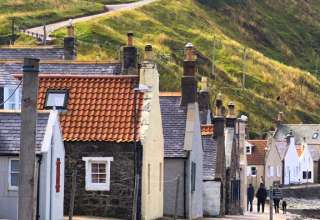
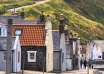
medieval village
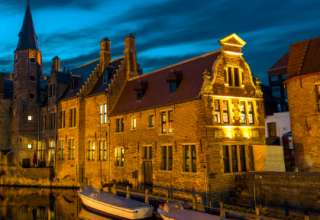
The South Bohemian town of Cesky Krumlov is a UNESCO World Heritage Site. Its photogenic narrow streets, monumental castle, cobbled lanes, tiny shops and inviting riverside restaurants make it second to Prague in tourism. Ballooning over the city in the early morning is a popular and entertaining way to see the sights. In the summer canoeing and rafting down the encircling river is also widely enjoyed.

In the town of Ponesice I visited the local distillery, which makes fruit liqueurs and spirits (Slivovitz). The award-winning Walnut Liqueur is worth the visit. First shot free, others a dollar. I spent a few.
Heading back towards Prague, I stopped in the historic town of Pisek, which has the oldest stone bridge in the Czech Republic.
When You Go:
There are a number of housing and dining options from country inns and local eateries to world-class hotels and restaurants. Every hotel I stayed in had free Internet service. In Prague at the Holiday Inn outside the city and the modern designer hotel Andel’s in the city

I had delicious chewy potato pancakes and a huge roasted pork leg at U Provaznice, a traditional restaurant on a side ally in the city ($12). I also dined on Matylda, one of the elegant riverboats.

In Loket I had lunch at Cisar Ferdinand, a local restaurant that served huge portions at reasonable prices (a recurring theme). In Karlovy Vary I stayed at the Hotel Resort Sanssousi and Hotel Imperial. In Plzen I ate at the Brewery restaurant Na Spilce, a large underground dining hall converted from a fermentation cellar, and stayed at the Hotel Angelo Pilsen. In Cesky Krumlov I dinned at the historic Hotel Ruze and stayed at the Old Inn. In Pisek at the Hotel Biograf.
For brochures, housing, spa and restaurant information and lists of events and festivals, contact the Czech Tourist Office in New York, 212-288-0830, ext. 101, info-usa@czechtourism.com. Website: www.czechtourism.com
Czech please!
Orinially published in 2017.