Article by guest writer Moughees Butt
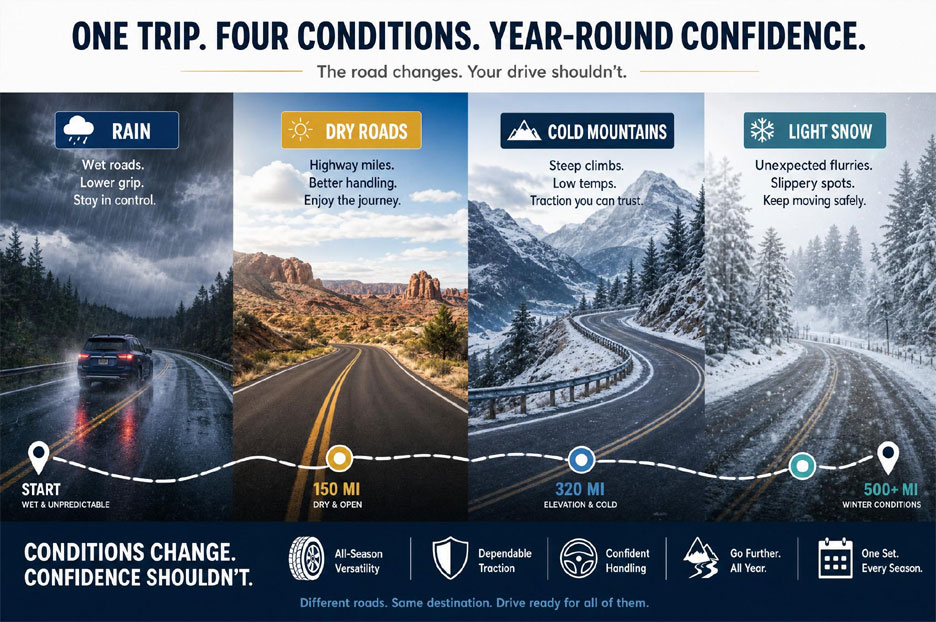
Imagine a sunny morning when you’re about to leave home for a long-desired road trip. You’ve picked your destination, planned out your route, and packed up your car. While nowadays road trips are easier to plan and undertake thanks to modern vehicles and the equipment they carry, the road isn’t as predictable as the destination may be. Because of the conveniences modern vehicles offer, travelers are better prepared to navigate through different weather conditions during one journey.

Although road trippers may keep in mind that temperatures and road conditions change across regions and elevations, they may still be surprised by heavy rain, colder temperatures, mountain road conditions, or unexpected snow. Weather conditions can be unpredictable, especially when traveling through different areas of the country. However, being prepared can help you avoid even the slightest weather-related inconvenience on your next road trip.
Today’s Road Trips Are More Weather-Dependent
The main reason road trips are so popular is the flexibility and spontaneity they offer, something you don’t get when you book a flight. Cross-country road trips, like taking Route 66, offer a unique experience that travelers increasingly enjoy. Mountain getaways and winter escapes become more fun when you start in a sunny place and then travel up a snow-covered mountain. Everyone enjoys a beautiful scenic fall foliage drive, especially when taken through a national park. Whether you go on a spontaneous weekend adventure or plan a coastal-to-inland journey, being well prepared for different weather conditions is the key to a successful trip. As travelers take longer, more diverse trips to see as many attractions as possible, changes in elevation and geography can dramatically affect road conditions.
Why Traditional “All-Season” Thinking Isn’t Always Enough
Preparing for a road trip isn’t just about packing your bags and mapping out routes. Your car needs just as much preparation as you do. The main reason why all season tires are the most common choice is that they can be perfectly suitable in moderate climates. However, while all season tires are designed for different everyday weather conditions, travelers who regularly encounter genuine winter conditions prefer tires with additional snow capability, like all weather tires. This is because all weather tires hit the sweet spot between standard all season tires and dedicated winter tires.
The Technical Difference – Why All Weather Tires Matter
There are plenty of reasons why all weather tires are more convenient for frequent travelers who drive through different weather conditions. They feature a more winter-oriented, aggressive tread design with extra siping that helps the tire grip slush, wet roads, and light-to-moderate snow. Additionally, they use special rubber compounds that help the tire stay effective across a broader temperature range.
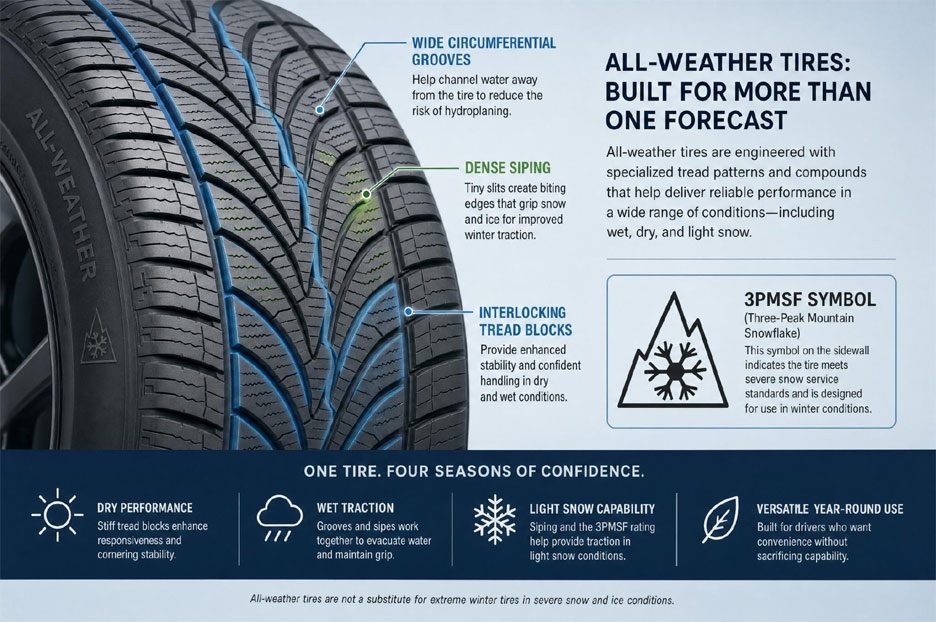
All weather tires carry the Three-Peak Mountain Snowflake (3PMSF) symbol, which is an official winter rating that proves that a tire meets official performance and safety standards for severe snow. The 3PMSF designation indicates that a tire meets standardized snow-traction performance standards, but it does not mean it performs like a dedicated winter tire in every snowy or icy situation.
One Set of Tires, More Freedom to Explore
Maybe you like frequent weekend getaways, or you are planning a longer road trip that will take you across multiple states. This is where having a single set of tires comes in handy because you don’t have to plan your trips around seasonal tire changes. You don’t have to worry about taking your car in to get the tires changed depending on the season, and you don’t have to worry about storing a second set. With a single set of tires, you can load up your vehicle and stop worrying that bad weather will force you to change your itinerary. Overall, having the right equipment gives you more confidence on a long trip that takes you through different weather zones.
Where All Weather Tires Make the Most Sense for Travelers
Maybe you live in a sunny valley and need to drive across a cold, snowy mountain road to get to your office or class. Or you’ve decided to visit a national park, which means you’ll need to take long routes, cross multiple elevations, and go through different weather systems. Perhaps you visit family members every week, and this takes you between warmer and colder regions frequently. Some travel for work or school, some for family obligations, and some simply for leisure, and everyone hates canceling a trip because of bad weather.
Know Their Limits
All their benefits aside, all weather tires also have certain drawbacks. While they are an excellent choice for light-to-moderate snow, they are not suitable for every weather condition. In severe snow, ice, or prolonged winter conditions, it’s better to use dedicated winter tires as they provide superior ice and snow traction and maintain excellent flexibility in freezing weather. Even though all weather tires are suitable for a range of weather conditions, it’s always best to consider your destination, climate, and route, as well as your vehicle type and driving habits. It’s also recommended to carefully inspect your tires before each trip. Check their condition by inspecting tread depth, punctures, scuffs, and pressure, and always make sure you have the correct tire size.
The Road Ahead: Preparing for the Journey, Not Just the Destination
While we go on a trip to reach a certain destination, being on the road is a major part of the experience. Modern-day road trips require flexibility, but travelers enjoy them because they can be spontaneous. Some of the best memories come from switching up the plan and taking an unexpected turn to see a fun attraction or a beautiful sight.
We cannot control the weather, but we can prepare for a long-distance trip by checking the forecast and ensuring our vehicle is properly equipped. As long as the vehicle is set up correctly, including the tires, we shouldn’t be apprehensive about our next trip.

About the Author: Moughees Butt
“Thirst to learn and explore till he finds ecstasy” are Moughees’s pivot charms! He loves to craft and comprehend deeply anything happens around!