This is an abridged article taken from the Wright Museum of World War II, the History Channel and National WW II Museum.
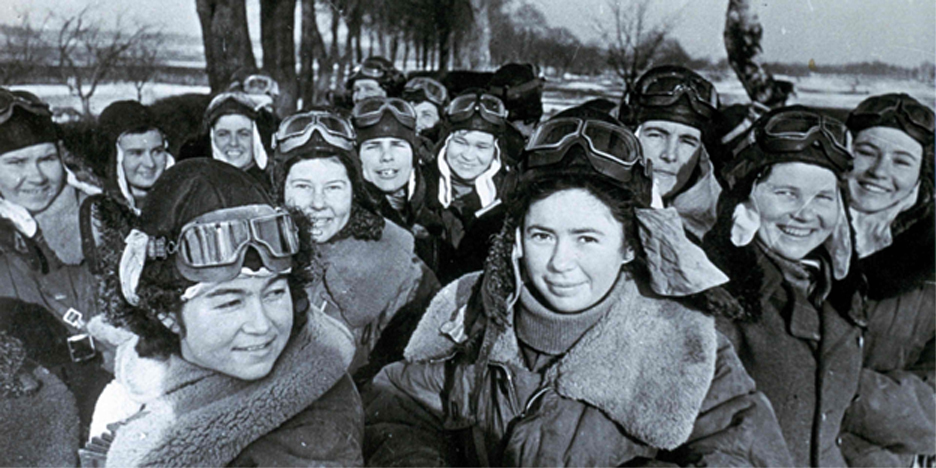
The Night Witches were the all-women pilots of Russia’s 588th Night Bomber Aviation Regiment. In World War II, the Night Witches were the first women military pilots in the 20th century to directly engage an enemy in combat.
One the most horrifying sounds a German soldier on the Russian front could hear in the dead of night was the “whooshing” of the wind off the struts of a Night Witch jerry-rigged biplane bomber. It was described as the eerie sound of a witch’s broom as it quietly glided in to drop its payload of bombs.
Unfortunately, there weren’t enough modern planes to go around. So, the 588th was given out-of-date Polikarpov Po-2 biplanes that were primarily used as crop dusters and training planes. The pilot sat up front and the navigator, who also was the bombardier, sat in the rear. The plane was like a death trap waiting to spring. Some Night Witches likened the rickety Po-2 to “a coffin with wings” because the plane was made of plywood with canvas stretched over it. If a tracer bullet struck the plane, it could easily burst into flames. The plane’s top speed was 90 miles per hour, and it could carry only two bombs, one under each wing. The weight of the bombs and crew forced the plane to travel low, which allowed it to be spotted easily by the enemy. Because of those handicaps, the planes could only fly at night, under the cover of darkness.
The Night Witches carried no parachutes because they flew so close to the ground and parachutes also added extra weight. They also had no modern instruments and had to rely on maps, compasses, stopwatches, pencils, and flashlights to find their way to their objectives. Because the cockpits were open, the pilot and navigator were exposed to the elements, including rain and freezing wind. In extremely cold weather, they could get frost bite. If they put their bare hand on the fuselage, the flesh might come off when they pulled their hand away. The Night Witches also carried pistols to use if they crashed, but would save the last bullet for themselves so they wouldn’t be captured alive.
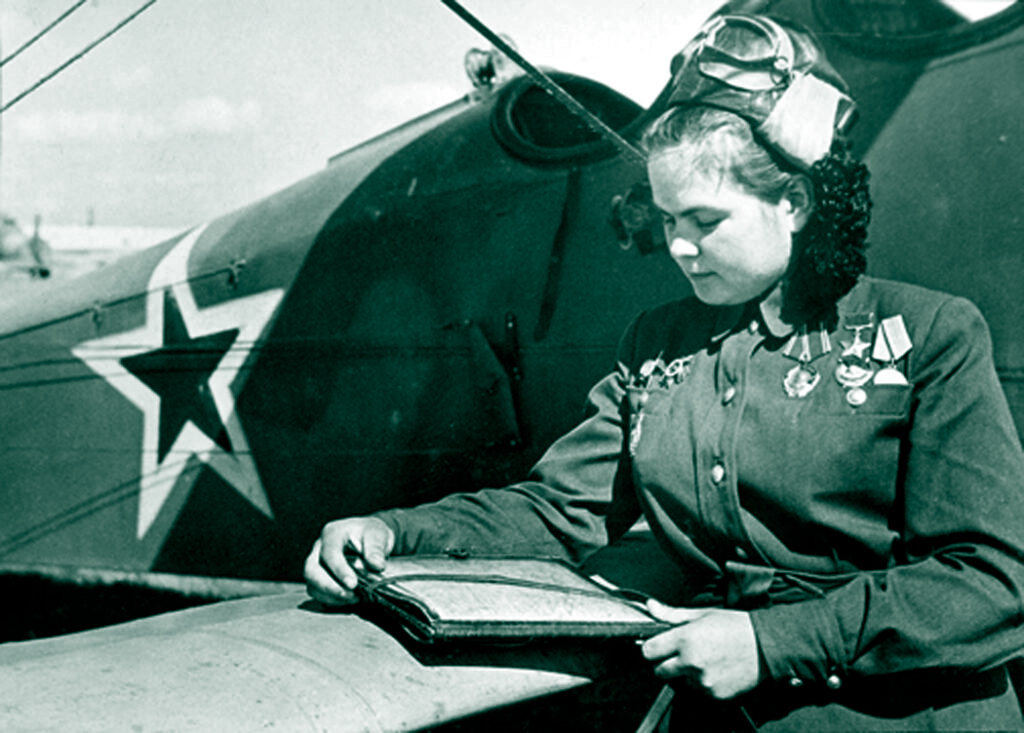
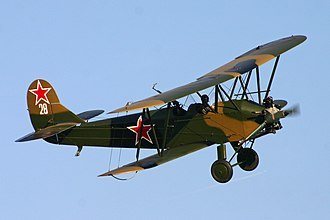
The Po-2 did have some advantages, however. Its light weight made it more maneuverable than the German planes, which made them harder to shoot down. Being made of wood and canvas, the plane didn’t show up on German radars or infrared indicators. And the top speed of the Po-2 was slower than the stall speed of German fighter planes, making it hard to engage from the air. The biplanes also could take off and land almost anywhere. That quality was essential because the 588th had to operate very close to enemy lines, constantly moving operations during the day so the women could fight at night. Because of their combat schedule, the women slept and trained during the day and flew during the night. Understandably, they didn’t get a lot of sleep… but neither did the German units nearby that had to be prepared for nighttime air raids. The psychological effect of the Night Witch raids took a nightmary toll on the German troops.
Because their planes could carry only one or two bombs, the Night Witches flew multiple bombing sorties – from eight to eighteen – in a single night. They’d drop the bombs, return to their temporary base, refuel and take on more bombs, and then fly off on another sortie. Each sortie lasted between 30 to 50 minutes. Sometimes the Night Witches would return with planes riddled with bullet holes. Nadezhda Popova, one of the most famous Night Witches, once returned from a sortie with 42 bullet holes in her plane as well as in her helmet and map. Another pilot lost the bottom of her plane to enemy fire but kept on flying.

Thirty-two Night Witches died in service. Eighty-nine Soviet women won their country’s highest honor, the Hero of the Soviet Union award.