Story and Photos by Ed Boitano*

As recently as 1990 there was virtually no tourism to the Arctic archipelago of Svalbard, Norway. Located in the Arctic Ocean between the Norwegian mainland and the North Pole, Svalbard (“cold edge”) was believed to be discovered by the Vikings in the 12th century. It became a base for many Arctic expeditions, then home to whalers and coal miners. Thanks to companies like Hurtigruten, it is now on the map for the world to see.
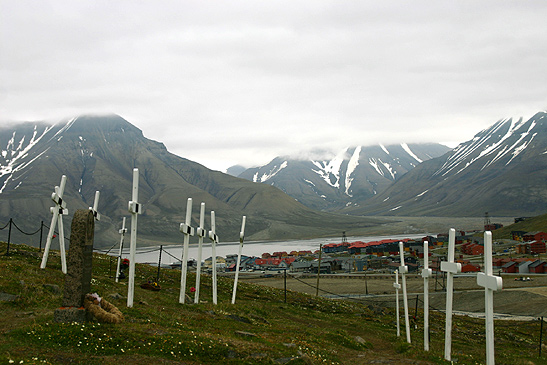
My adventure began with a flight from Oslo to Longyearbyen, Spitsbergen – the largest island in the archipelago. With a population of 1700, Longyearbyen has the distinction of being the most northern city in the world. Once a mining community, it is now a center for science and tourism. Only four land mammals can survive on this barren tundra: the Svalbard reindeer, the Svalbard mouse, the Arctic fox and the polar bear—which has become the symbol of Svalbard. Encounters with this species are rare, but their presence is felt everywhere. They are known to hunt humans on occasion, so people cannot leave settlements without a weapon or armed guide. Accommodations were at the Spitsbergen Hotel, where, like all the area’s hotels and restaurants, you must follow the tradition of removing your shoes before entering. Longyearbyen also offers shopping, galleries and the Svalbard Museum, an essential stop in preparation for the voyage.
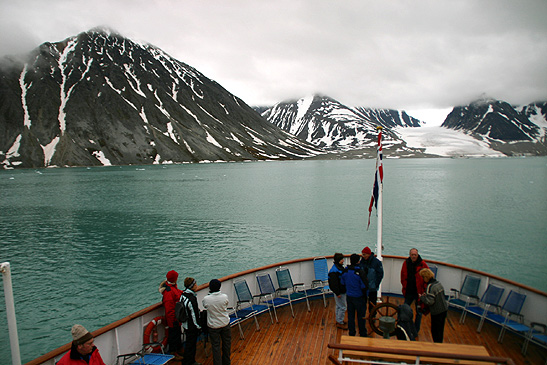
The next day we boarded the 115 passenger MS Nordstjernen. The oldest ship in the Coastal fleet, it maintains the authenticity of a real Arctic expedition vessel. The ship has 54 cruise cabins, all with upper/lower berths. Creature comforts include café, lounge and dining room. Most of the adventure, though, was spent on the wooden deck – where no one wants to miss any of the attractions, clearly in view with 24 hours of sunlight in July.
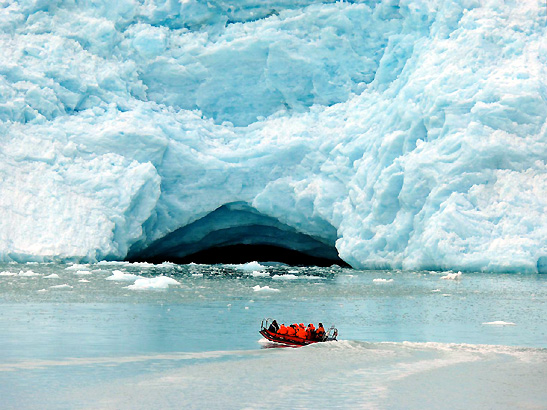
Heading northwest on the coast of Spitsbergen, I experienced breathtaking fjords, calving glaciers, unique animal and plant life, and a midnight sun that refused to set. More than 60 percent of the archipelago consists of national parks, nature reserves, and bird or plant sanctuaries.
A large number of aquatic mammals inhabit the islands, including whales, seals and walruses. It is also a breeding ground for numerous seabirds. I found a remarkable variety of small flowering plants, which use the 24-hour daylight to produce colorful blossoms.
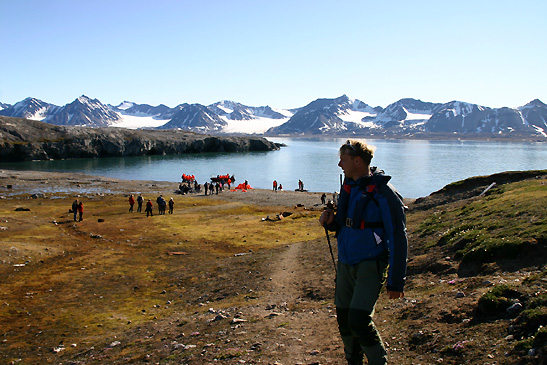
Landings on tenders were conducted by the highly-skilled Spitsbegen Travel guides – a passionate group and walking encyclopedias on all things Svalbard. They also carried rifles and acted as our protectors.
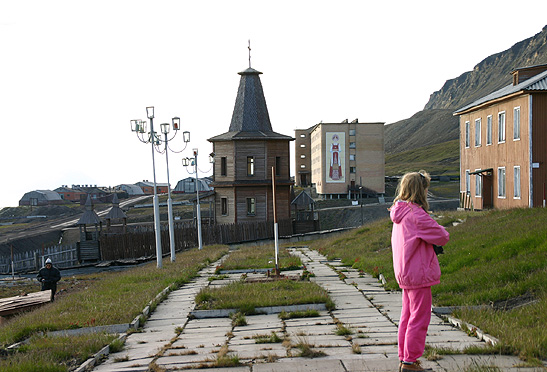
Highlights included a landing at Barentsburg (pop. 500), a Russian mining town and relic from the Soviet era. The group was treated to a Russian and Ukrainian folkloric show, and stopped for a taste of vodka at the settlement’s one hotel.
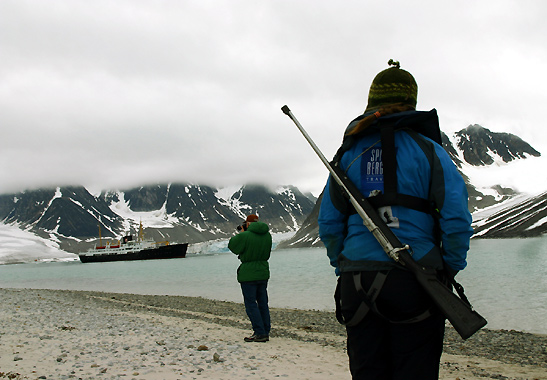
Magadalenefjorden is where Dutch whalers came to bury their dead in the 17th century. Stone gatherings and wooden coffins still remain, as well as blubber ovens. Ivory Gulls made nosedives on the group’s colorful hats when we got too close to their feeding area. Words of caution: don’t look up!.
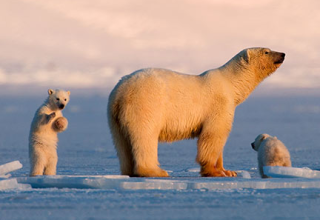
Moffen is a flat island and protected reserve, located north of the 80th parallel. Known for its walrus colony, we spotted fifty of the creatures, many larger than two tons. Enroute we saw two polar bears on an iceberg, who seemed as curious to see us as we were to see them.
Calving glaciers was one of the many marvels of a stop at the Monaco Glacier. We did a tender cruise in front of the glacier and witnessed beluga whales swimming before us. Next was a tour of the former mining community of Ny-Alesund (pop 30), now an important research station.
On the voyage back to Longyearbyen, we assembled on the deck for the presentation of certificates for crossing the 80th parallel. There were also certificates for those crazy enough to go ice swimming in the fjords. Yes, I was one of them. If you are a lover of nature and history, this is an adventure of a lifetime with a landscape that is dramatically changing –so my advice is to book your trip now.
- Original article published April, 2017