The Blue Ridge Mountains, and the infamous parkway that runs through them, are famous for many things: scenic drives; nature tours; hiking trails; fall foliage; farmer’s markets; historical sites, and so much more. And yet none of that covers the most interesting attribute of this Roanoke region in Virginia’s Blue Ridge, the city known as the gateway to the Blue Ridge Mountains, and its Franklin County neighbor. It’s the “Moonshine Capital of the World.” Before, during, and after Prohibition, bootlegging reigned supreme. And it’s no slouch in today’s world either.
First, a little background. During the late 1800’s, distilleries in the area were abundant. The mountain geography provided secluded protection for hidden stills. Corn was plentiful and easily turned into whiskey – and making moonshine was profitable. And then Prohibition hit! Consensus thinking at the time was that it would inhibit drinking and the making of it. But, of course, that was nonsense. Binge drinking probably got its start during Prohibition.
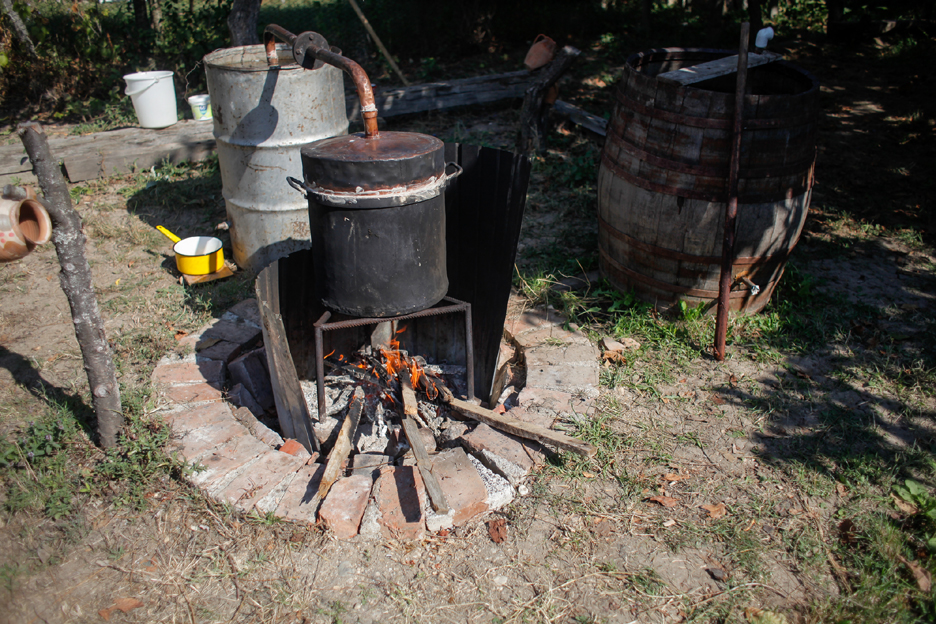
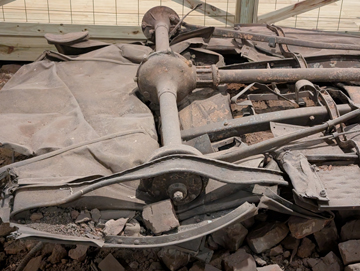
The demand for illegal alcohol skyrocketed – and the Franklin County bootleggers were more than happy to oblige, developing sophisticated transportation routes to move liquor up and down the East Coast. It famously claimed to produce more illicit liquor than anywhere else in the U.S. during Prohibition, entitling them to the moniker of “Moonshine Capital of the world,” a label they remain proud of to this day. My recent visit to the area reinforced that impression. After all, there’s a museum devoted to the very idea – albeit with a slightly different orientation.
The Moonshine Explosion Museum is devoted to just that – a June 11, 1930 literal explosion of two over-heating Model T Fords that drove into a garage for repair. Why did they explode? Trunks full of illegal liquor also over-heated. Charred remains of the cars are still ensconced in the basement of the original building which was built in 1912, but they weren’t discovered until 2017 during basement renovations – although the story proliferated well before and after.
But despite the museum’s singular name, it also paints a much more complete picture of the still celebrated history of moonshine, which kept many an Appalachian family able to survive. The museum highlights the connection between “white lightning” (AKA Firewater, Hooch) and the community, fostering a sense of resilience and ingenuity – and, oh yes, a massive evasion of the law. Franklin County became known for its high-quality moonshine and the persistence of its moonshiners in resisting authorities.
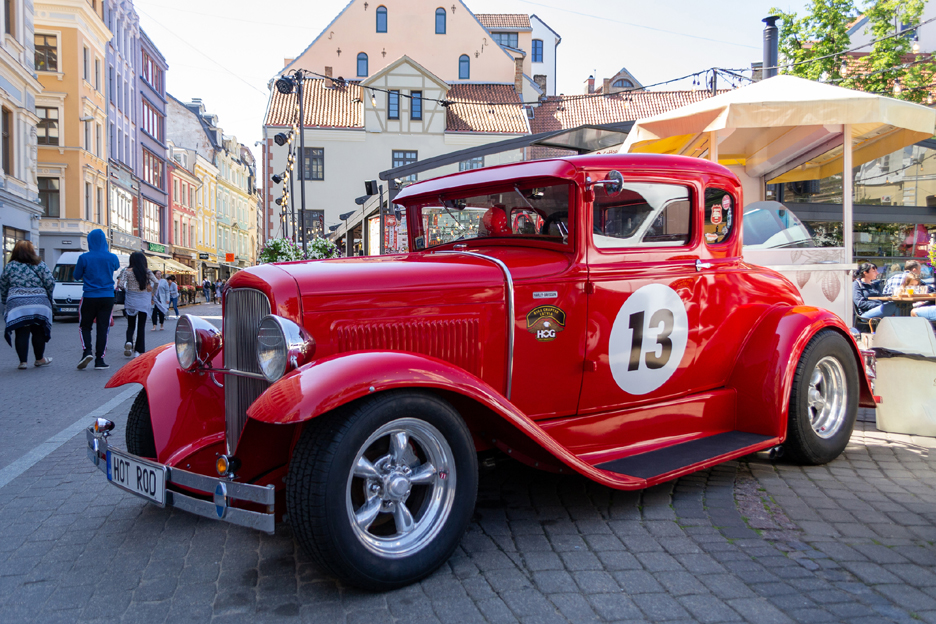
And apparently, ramifications of that questionable ability exist today. Because many moonshiners modified cars to outrun law enforcement, the culture influenced early stock-car racing, and that tradition helped contribute to the origins of NASCAR. Not entirely sure how I feel about that particular legacy….
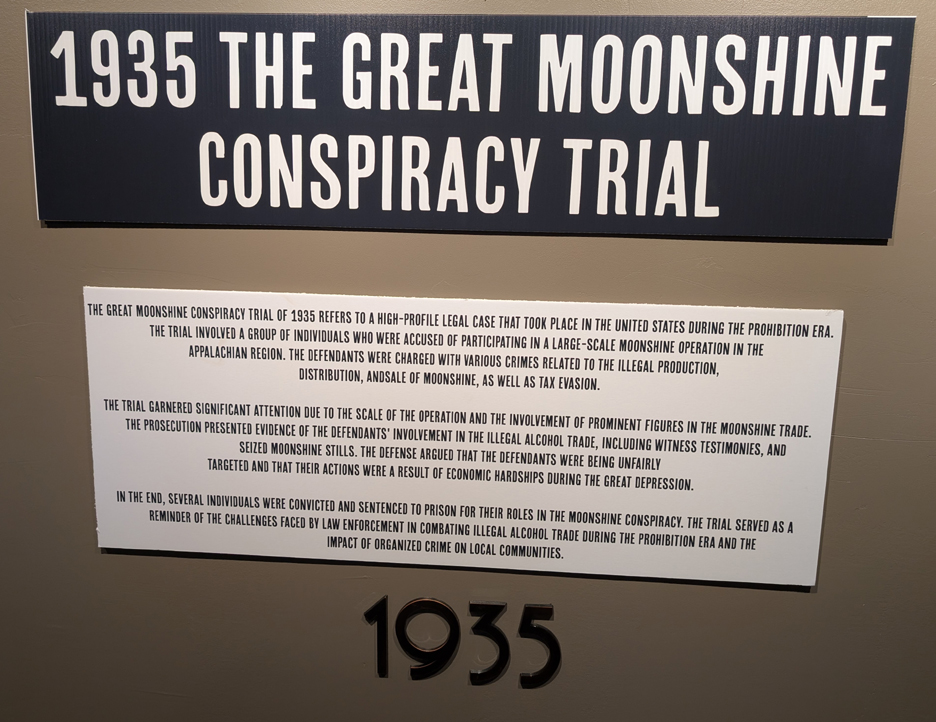
But back to bootlegging – and the notorious Great Moonshine Conspiracy Trial of 1935, the second longest trial in Virginia history. It involved a high-profile legal case involving 23 defendants accused of multiple large-scale moonshine operations. Many were convicted but the illegal operations continued to thrive.
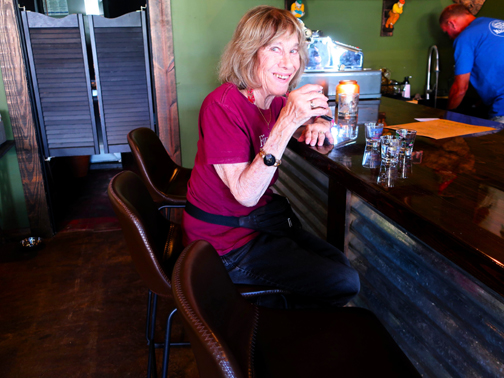
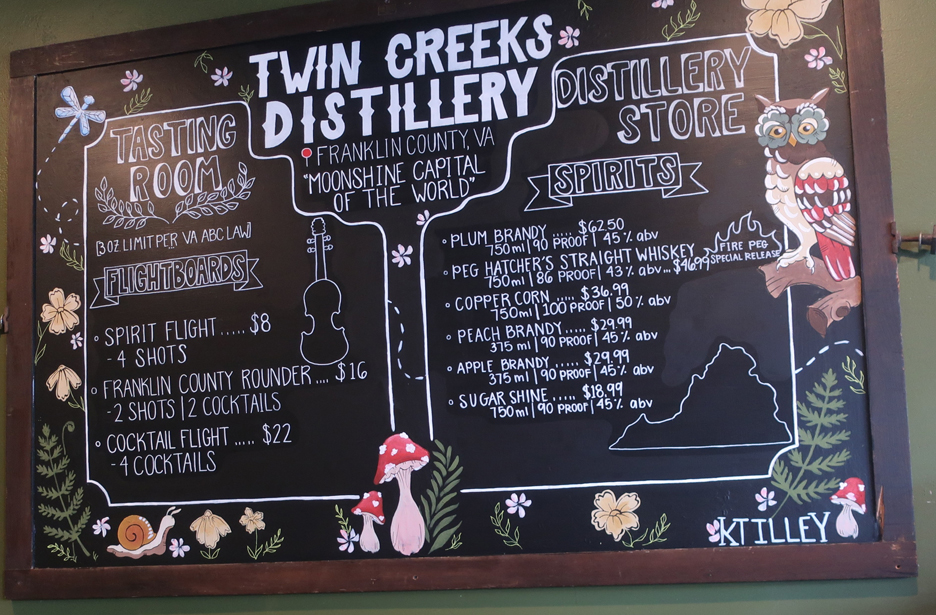
A visit to Twin Creeks distillery underscores the appeal of the original moonshine. For starters, Twin Creeks owner and master distiller, Chris Prillman, is the grandson of Peg Hatcher, one of the kingpins convicted in the Great Moonshine Conspiracy of 1935. That’s one hell of a family legacy! As much as it sounds like an oxymoron, they serve legal moonshine – slightly less high-octane than the mountain variety and government-regulated. It’s the only establishment in the area to do so. And Chris continues to pay tribute to his grandfather by crafting spirits just as he did.
So when I say master distiller, I mean Chris is still making his “bathtub gin” – the colloquial term for stills that are large enough to be utilitarian and small enough to easily hide — at home. Whether he’s still using a bathtub, I don’t know. Back at the distillery, I sampled – okay, guzzled — a coffee moonshine made by a local coffee shop owner who still refuses to divulge his recipe that far and away surpasses any Expresso Martini I’ve ever had.
Flights of “cocktails” adorn the menu. Apparently, fancy cocktails were the norm during Prohibition as bartenders had to get creative in order to mask the taste of poor-quality liquor. Of course, Franklin County probably didn’t have any poor-quality hooch…..
More family legacy is carried on by Twin Creeks’ manager, Kathy, whose father owns three of the original moonshine cars that led to NASCAR, with enhanced power and extra-large trunks designed to transport the profitable product.
According to Steven Ray Tickle, another proud moonshining legacy and star of the surprisingly popular TV show Moonshiners, “People mistakenly think moonshiners just want to break the law, but that’s not true. They just want to carry on a tradition that’s part of the American heritage. They helped found and fund the Declaration of Independence….If you really love your country, you’re gonna have to love moonshine.”
So if you’re thinking that pretty much brings the story of moonshine to the current day, keep reading. On yet another modern-day front, Franklin County’s moonshine era may seem like a relic of Prohibition, but the legal arguments surrounding home distilling are still alive. More than a century after moonshiners in Virginia’s Blue Ridge battled federal liquor laws, the question of who can legally make whiskey — and under what authority the government can stop them — remains unsettled. In an unexpected twist, a debate that once played out on the ridges and hollows of Virginia’s moonshine country – very much still “The Moonshine Capital of the World” — may soon be argued before the U.S. Supreme Court. I’ll drink to that!
For more information, visit visitroanokeva.com; mainlymuseums.com; twincreeksdistillery.com.






























Raoul
July 9, 2026 at 10:27 pm
I love how you always pick the strangest places to visit. I couldn’t help but remember the movie “The Untouchables.”
Did you know that during the prohibition era, San Antonio wineries kept afloat by selling Communion Wine? It’s true. I heard this from the owners themselves.