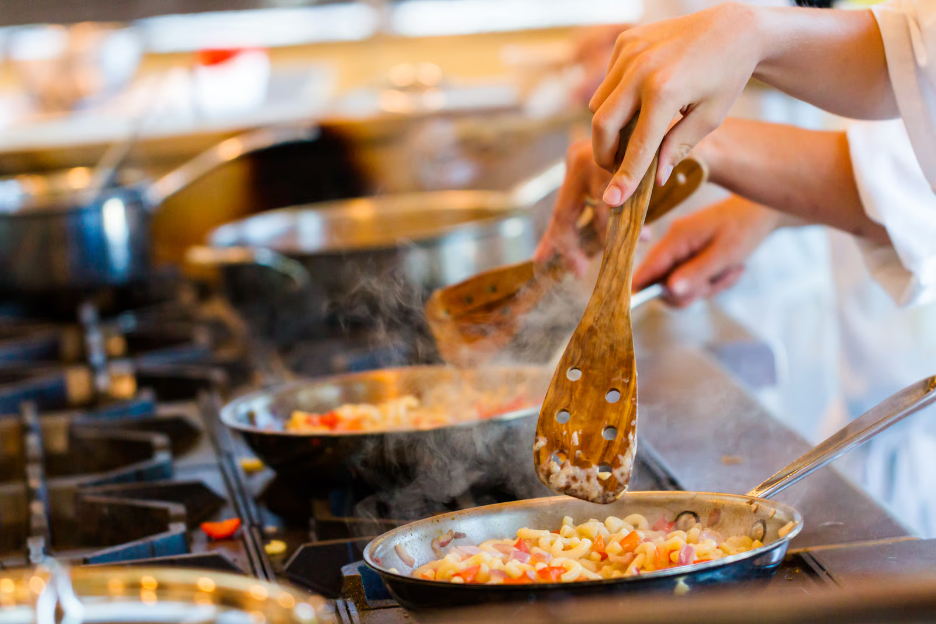
Originally started in 1914 by two women, Gertrude I. Johnson and Mary T. Wales as a typing school with one typewriter and one student, Johnson & Wales University in Providence, Rhode Island has grown into a major university that gives degrees from MBA to degrees in hospitality and culinary arts.
The culinary school created a museum on its Harborside campus in 1979 with exciting contributions to its collections from prominent philanthropists: 4000 menus from all over the world from Jack Hanle, the publisher of Bon Appetit magazine and other mementoes from Earle MacAusland, founder of Gourmet magazine. Famed chef Julia Child and cookbook author Jean Hewitt also donated collectibles and industrialist Paul Fritzsche gave 7,500 rare cookbooks dating back to the 1500’s. The Fritzsche personal collection ranged from Greek texts of the 3rd century “Connoisseurs in Dining” that was translated in the mid 1500’s, to the earliest American handwritten cook book that includes newspaper clips starting in 1798. The legendary Hungarian Louis I. Szathmary, whose incredible bio includes a masters degree in journalism and a PhD in psychology donated more than 400,000 artifacts from his life as an author, broadcaster, lecturer -and avid collector.
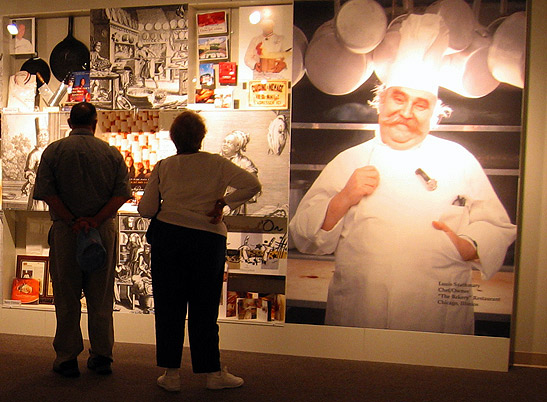
The collections also pay tribute to such diverse personalities as contemporary chef and author Rose Levy Beranbaum, the “Diva of Deserts,” and Heinz Bender, executive pastry chef of the White House. Part of the museum’s archives contain the Bill of Fare for the Inauguration of Abraham Lincoln and menus for a dinner for Teddy Roosevelt 1905; a luncheon for JFK 1962 and a reception for Bill Clinton 1994. The collection now named the Presidential Archives was once called the “First Stomach” showing Providence sometimes doesn’t take itself too seriously.
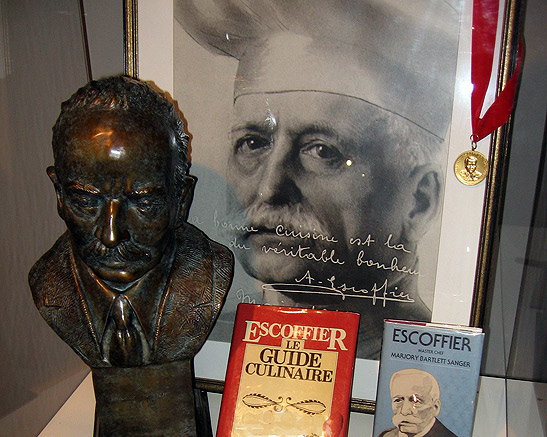
Half million artifacts are stored or on display including of all things, a stove museum. Other exhibits vary from appliances over the years, a collection of presidential plates, kitchen tools from ancient Egypt, tributes to Escoffier and the chef jacket of Paul Bocuse, An interesting item lies on display: a bronze baker’s ring found in the ruins of Pompeii meaning it dates at least from the 79AD volcanic eruption that buried the city. The ring was used to stamp bread dough for tax purposes.
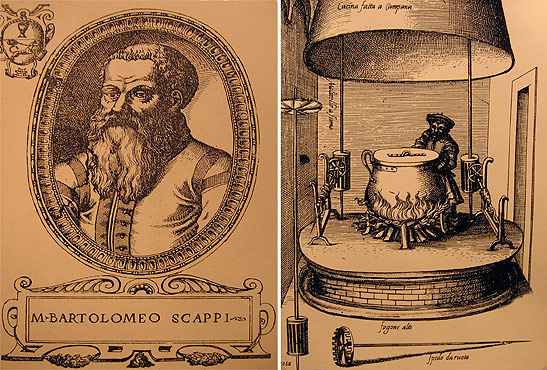
Other artifacts include an 1831 cookbook, the Virginia Housewife. It seems like a contemporary book compared to reproductions of the illustrations circa 1574 in Opera by Bartolomeo Scappi, the epic series of books “Opera” (“Work”) he published a century after the invention of printing.
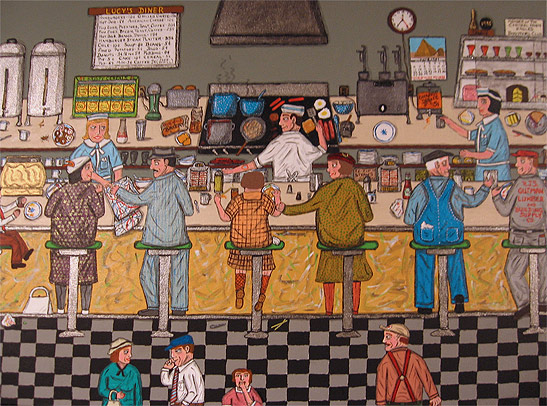
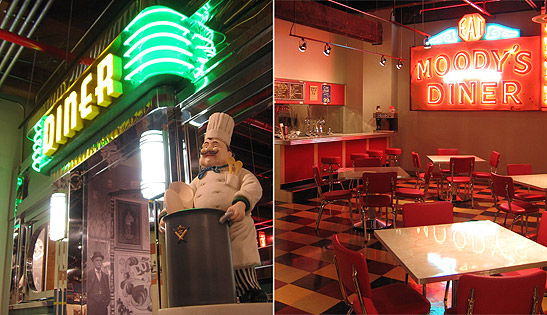
The museum gives visitors a portrayal of a New England tavern and a fascinating history of the American Diner. The American diner was apparently born in Providence in 1872 as Walter Scott’s horse-drawn lunch wagon and was developed further in Worcester, Massachusetts in 1887 when one Sam Jones made it possible for customers to enter his wagon. For the uninitiated a Diner Lingo Glossary hangs on a wall. A “Houseboat” was a banana split with ice cream and sliced bananas, an “Irish Turkey” was corned beef and cabbage, and “Zeppelins in a Fog” was sausages in mashed potatoes.
Those were indeed simpler days, ones we will never see again as we push forward in the high tech search for our future.
Originally posted on 2017,