Paris, London, Rome and Ljubljana. Yes, Ljubljana. This enchanting city is the capitol of the equally charming nation of Slovenia — and it is poised to become one of Europe’s hottest travel destinations. Plus, with the sinking value of the U.S. dollar, it makes a great Back Door to Europe destination that’s much easier on the Yankee pocketbook than other higher profile touristic locations.
SNAPSHOT OF SLOVENIA
Located in Central Europe at the crossroads of where east meets west, the Balkan nation of Slovenia (pop: 2,007,711) was once part of the former Yugoslavia and now a member of the European Union. Bordering Italy, the Adriatic Sea, Croatia, Hungary and Austria, this little nation half the size of Switzerland seemingly offers the best of each of the surrounding countries. Three major geographic regions also meet in Slovenia — you can go hiking on forested alpine mountain trails, swimming in the warm Adriatic Sea or go vineyard hopping in the central plateau — all in one day. Of the seven nations of the former Yugoslavia, Slovenia has the highest income economy and feels more Germanic than Slavic, yet its citizens are stylish, easy going and proponents of Italian la dolce vita.

Credit: Ed Boitano
LIVING LARGE IN LJUBLJANA
The capital city of Ljubljana (pronounced lyoob-lyee-AH-nah) is nestled in the middle of the country, and is the cultural, political and administrative center of Slovenia. With a population of 270,000 inhabitants, it maintains the friendliness of a small town, yet possesses all the characteristics of a metropolis with national museums, world-class architecture and historic center.

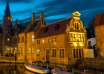
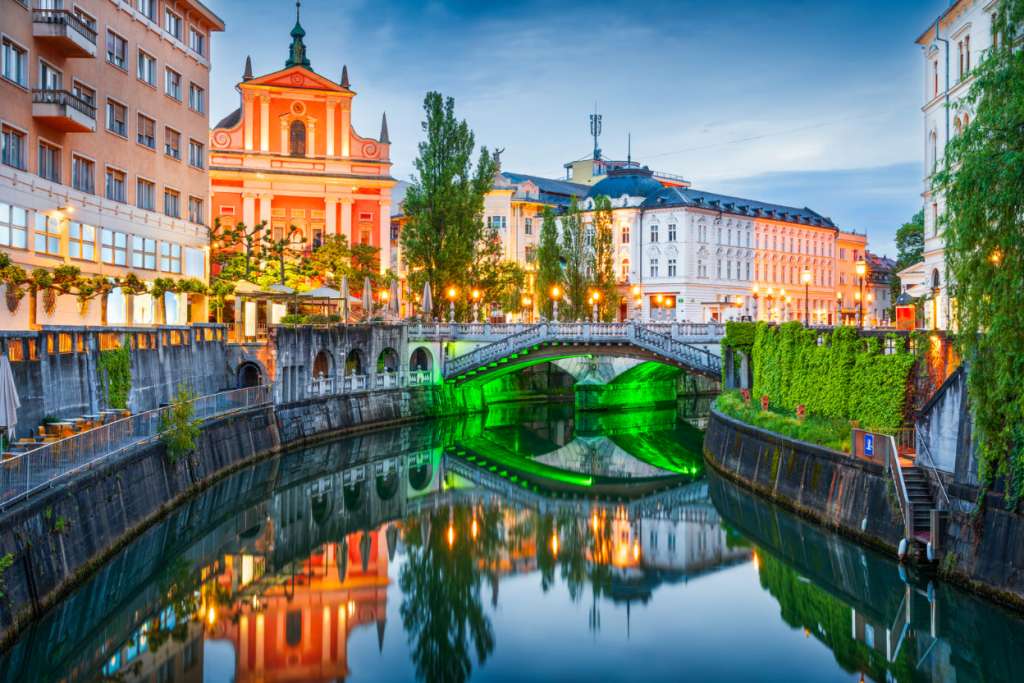
The 12th century Ljubljana Castle rests on top of a hill, towering over the old town, much like the layout in neighboring Salzburg. The summit of the hill was once a Roman army stronghold and has been continuously inhabited since 1200 BC. The Ljubljana River cuts through the historic center’s cobblestone streets, surrounded by the 20th century architecture of Jože Plenik, who placed his own Art Nouveau influenced signature on his native city. He designed the National Library, as well as several bridges, including the famous Triple Bridge, A popular local meeting place is Prešeren Square, named after France Prešeren (1800-1849), considered the Slovene national poet, whose works include the lyrics to the Slovenian national anthem.
Although there is much to see and do in the city center — and the Ljubljana Castle with its 360 cityscape vistas is the first place you must explore — this is a city where one can just stroll and bask in the ambiance. The city itself is a living museum. The Ljubljana River is lined with cafes, restaurants, little wine bars and a vibrant outdoor market. Sit back and let this sublime city take hold of your senses. Soon you will be as calm as the Ljubljana River.

Credit: Ed Boitano
BEYOND LJUBLJANA
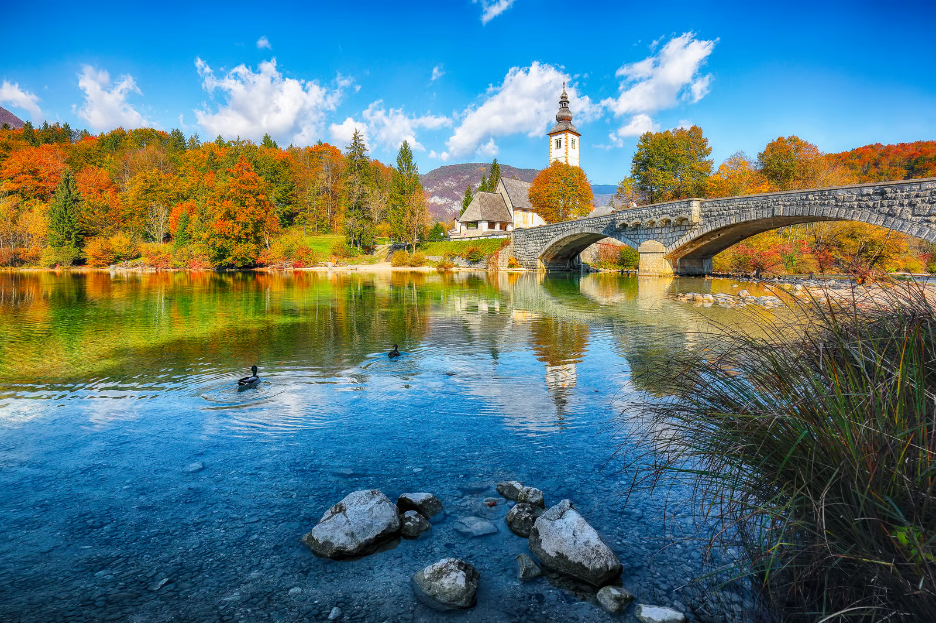
Ljubljana makes an easy home base for exploring Slovenia’s other treasures. Lake Bled, home to The Church of the Assumption on the Island and the medieval Bled Castle, is Slovenia’s leading mountain resort. Marshal Tito himself had a resort villa built overlooking the lake. Vintgar Gorge is located a few minutes by car from Bled, and offers a mile long forested nature walk of boardwalks and bridges, crossing over several waterfalls. The Karst region, an hour from Ljubljana and close to the Italian border, features an amazing network of caves and underground rivers.
WHAT TO EAT
Italians lead the tourist pack to Slovenia, with the activity of choice being none other than sampling the regional cuisine. A third of Slovenia is forested, and wild game and mushrooms play significant roles at the table. So does prust, an air-cured ham similar to prosciutto. Ajvar, an eggplant and bell pepper condiment; and strukliji, dumplings stuffed with cheese or vegetables, are also staples. For desert try ptica, a rolled pastry with walnuts. And while in Bled, the Bled cream cake is an essential ending to any meal. Pizza, pasta, sausages, schnitzels, strudels and sauerkraut are also found in abundance, but prepared with a uniquely Slovenian interpretation.
Slovenia is a nation of wine. Ljubljana is in the center of the various Slovenian wine regions, and is known for being the ‘city of wine and vine.’ Grapevines were first planted on the slopes leading up to the Castle by the Romans. For a non-alcoholic refreshment, have a Cockta — a Slovenian version of a Coke, introduced during the communist era when the sought after American soft drink was unavailable.
HOW TO GET AROUND
Once on the continent, a smart (and green) way to travel is by obtaining a Eurail Pass. Formerly known as Eurorail, this convenient and cost effective way to travel is making a huge comeback due to the return popularity of train travel. You can meander throughout Europe in as many countries and amount of days that that you desire, with virtually no restrictions. Eurail.com
For further information about travel to Slovenia, Ljubljana and Bled, visit Slovenia.info; VisitLjubljana.si; Bled.si/en
This article was originally published in 2008