 |
 |
|

 |
 |
 |
 |
 |
 |
 |
 |
 |
 |
 |
 |
 |
 |
 |
 |
 |
 |
 |
 |
 |
 |
 |
 |
 |
 |
 |
 |
 |
 |
 |
 |
 |
 |
 |
 |
 |
 |
 |
 |
 |
 |
 |
 |
 |
 |
 |
 |
 |
 |
 |
 |
 |
 |
 |
 |
 |








|
Dia delos Muertos
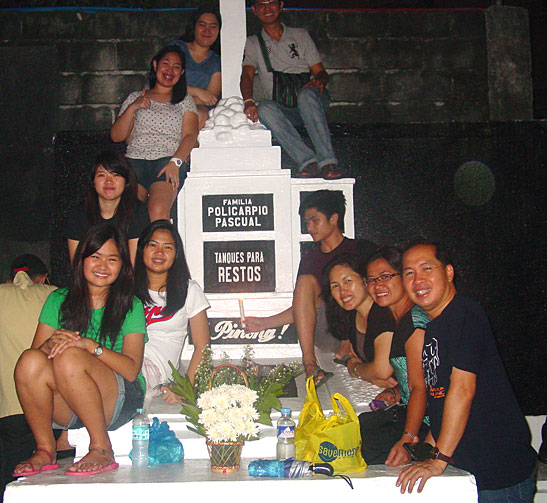
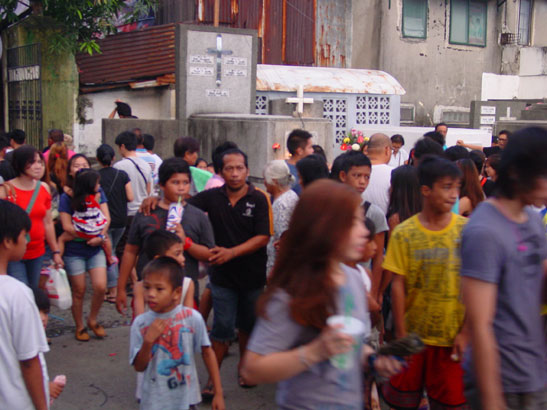
The Day of the Dead: All Saints Day Story by Dette Pascual Pictures by Erlinda Cortez
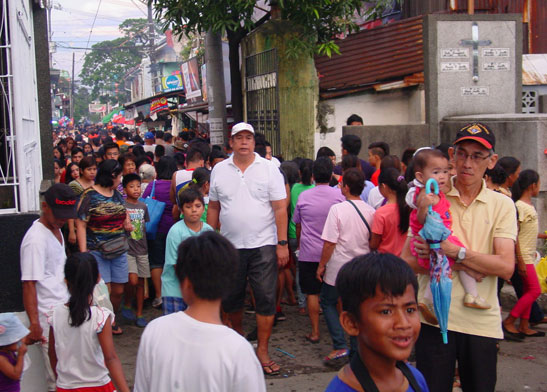
How fitting therefore that the world we know, lets go of October with a celebration of the spirit gone into another realm. In many western worlds, they call it Halloween. Adults dress up like ghosts, zombies, etc. and go about trying to scare each other. Later, though, as an influence of Christianity, the affair has graduated to a more convivial , fun thing. It has become like a children’s costume party with lots of angels, demons, princesses, pirates, cowboys, fairy tale characters, witches, etc. Candies and chocolates greet those who come to the door of houses decorated with lighted pumpkins. “Trick or Treat!”
But in the Philippines, there is the tradition of "All
Saints Day" (Todos los Santos or "Undas") which is
a way of remembering dead loved ones by prayers, bringing flowers, and
lighting candles at their grave. This custom of going to where loved
ones are laid to rest, is a hold-over from the Philippine history of
being under Spanish rule hundreds of years ago. In Latin American countries,
they call this custom, "Dia de los Muertos," or Day of the
Dead. But again, as in the celebration of Halloween, the solemnity of
the day of the dead has become a fiesta of sorts.
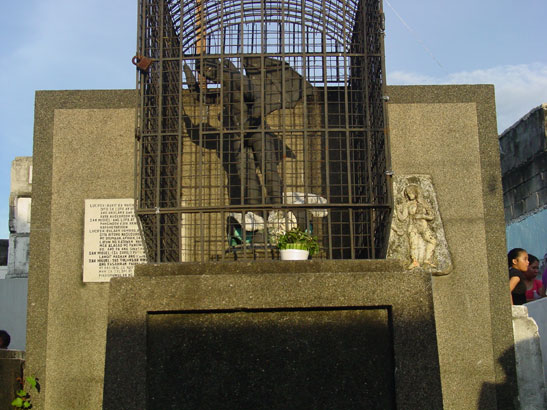
Above the din of celebration, the underlying theme of recalling those who have gone ahead, has endured. This is what makes Todos los Santos a significant part of the Philippine culture. That no matter how busy the lives of people, Filipino tradition takes time to pause and set aside a day for remembrance. It is said that no one is really gone for good, if those left behind continue to think of them. In the Broadway play of "Les Miserables" there is a beautiful song that expresses this yearning for those who have journeyed ahead: “There’s a grief that can’t
be spoken Relationships continue beyond death like love waves reaching out, holding on to each other through the mystical distance. In Corinthians 13, it says, "Love endures." So, in a practical sense, this day of remembering is a way for the living to cope with the reality that life on earth ends, to continue to another level of forever. It helps to see that you are not alone in facing this reality. The idea of Dias de los Muertos is to see others, thousands of others, who feel what you feel. Above all, it strengthens the belief that there is an after-life. For how can you stand facing the pain of missing someone, if there is not the reassurance that “someday in heaven, we will meet again?” The candle you light represents that faith, your hopes, your trust in that faith. When you truly believe that there is a God and a heaven above, you can cope with the left-over sadness of a good bye. There is always a morning that awaits you…beyond the evening of Dia de los Muertos. Interesting Factoid
There is a blog in Tumblr.com called Philippine Urban Legends that gets into this in more detail.
|


 Let Dette know what you think about her traveling adventure.
Feedback for"Dia delos Muertos" It sure captures the essence of this well loved tradition, "Todos
Los Santos"/"Dia de los Muertos" celebrated with the ambiance,
flavor and hoopla making it more fun in the Philippines than elsewhere in the
world. * * * * * * * * * * Feedback for"Bleeding Hearts" You threw everything on this one; juicy items/ chismis
(gossip) about controversial politicians in the running, and role of tears to
draw public sympathy/ attention and hopefully votes.... 'Only in the Philippines!" * * * * * * * * * * * * * * * "Congrats on your interesting columns which never fail
to arouse interest. That's a new angle on tears from politicians. To be sure,
this makes a good story. Crocodile tears go well with a politician's strategy.
Keep the columns going!" You captured the flavour and the various nuances of the major fiesta in Iligan City, that of St. Michael. I like how you managed to adroitly weave in vignettes of your family life --- customs and practices to make the readers aware that once upon a time, life was beautiful. Your description of the early morning prayers and songs dedicated to the birthday celebrant of the day, reminds me of the Mananita of the Manila cursillo days in the 60's and 70's. In fact, I remember when I was in Iligan for the first time, to join your family in celebrating your Mom's 96th (?) birthday, we were roused from sleep by the strums of guitar which accompanied the mananita song of the group of farm hands/tenants greeting your Mom a rousing Happy birthday. Thanks for sharing lovely bits and pieces of your life. --- Chita Almario, Alabang, Metro Manila, Philippines I enjoyed your reminiscences of fiestas in your childhood and youth, and family traditions, particularly that of lavishing the birthday celebrant with the love and attention of the whole family for that one special day, starting with the mananita. The pictures added impact to your article. I always marvel at how cities and towns in the Philippines can come up with lavish costumes during their fiestas. Think of the money, time and effort spent in preparing these street dancing, parades, etc. --- Evelyn Peplo, Quezon City, Philippines For "Traditions, Traditions, Traditions!" - One of my college choirs is singing a very rarely sung Anglican anthem for our Festival of Lessons and Carols is this December: Fanfare for Michaelmas Day--the account from Scripture of Michael defeating the dragon. What a coincidence. The beauty of these traditions was that faith and living were indeed one. One informed the other. However, things became different when the church and the state became separated entities. I think that there is so much to be learned from both situations so that they need not be opposed to each other, but are truly two sides of the same coin, with the emphasis on "same coin" rather than "two sides." --- Joel Navarro, Doctor of Music Arts in Conducting Dear Joel, How interesting that you are involved with a song about St. Michael. Thanks for sharing. You say it is an Anglican anthem. I wonder how it sounds? It interests me because part of the fiesta tradition here is the staging of the fight of the good angels vs. the bad... all done in song like an operetta. I think the songs have been handed down from Spanish times, althogh translated in Visaya [a Philippine dialect]. I am curious how the Anglican music and the Spanish would compare. In the Iligan version, the opening song of Michael the archangel with his warrior angels is majestic with a regular marching cadence , while the entrance of Lucifer and the devils is lively. Their beat is merry, with the devils cavorting and singing. This would bring screams of frightened delight from the kids in the audience. If this were a broadway play, the devils with their red costumes, horns and tails, would be a "show-stopper". Thus, the way of the world , eh? But of course, the angels have their glorious victory in the finale. And the angels all handsome, with white wings that glittered, march down the street in a clash of cymbals and drums. I think the color and contrast of this ancient music would amuse you. --- Dette
For "Few Mountains Left to Climb" (Manny Pacquiao) - I saw the Pacquiao fight and without a doubt, Manny is the greatest fighter of this generation and one of the world's greatest sportsmen. Everyone will continue to ask if he can go out on top by fighting Mayweather before he retires. --- Richard, Miami FL
For Camiguin Island, Philippines. - I love the White Island on Camiguin Island. Reminds me of the time when I was at the Heymann Islands off the coast of Australia and the Great Barrier Reef....wow, I love those low tides. .I'm also interested in old pre-war style houses. I'm thinking of a place like that when I retire . I will get there sooner than you think. --- Mel Odilao, Washington D.C. * * * * * You made me feel nostalgic ....I was there with my daughter three years ago. It was unforgettable; I still fantasize about going back again, hopefully sooner than much later. Congratulations , your articles on very appealing format. Thanks to whoever did the digital features of high-tech. Keep it up for everybody's pleasure. --- Rita Adkins, Maryland. * * * * * Nakakaingit! (Wish I were there!) This is beautifully done. Photos, map, nicely situated in the article. Congratulations. The lay-outting is so professional. --- Precious Javier, Los Angeles , CA. * * * * * Thanks for sharing the beautiful scenery of Camiguin Island. I will put that on my list of places to see. --- Anita Sodusta, Ventura County, CA. * * * * * Thank you for this lovely account. Left my mouth watering for the lanzones and me pining for the chance to go there. Forwarded the article immediately to a couple who like us spend winter months in the Philippines. We had been discussing a trip to Camiguin when we go in January. But perhaps we should do that during lanzones season, October to November right? Would you permit me to forward your article to a friend who might want to publish it in our local Philippine newspaper? I wish to entice Filipinos in U.S. to explore the rest of the Philippines, rather just stop in Manila. --- Eduarda Macaranas, Washington, D.C. Anytime of the year is a good time to visit. In fact, off-seasons, hotel accommodations may be cheaper. Aside from lanzones, Camiguin has other sweet fruits to offer like mangoes and tropical bananas that tastes so good when cooked in coconut milk and panocha. (brown sugar, freshly made from sugar cane juice.) They are available year round. Publishing to your local newspaper is a great idea. --- Dette * * * * * Sounds like Camiguin Island is a paradise to behold. But I was struck by the awesomeness of the narration; beautifully written and emotionally laden. Terrific impromtu haikus too. Thanks for sharing this. --- Pete Recinto, Virginia Thanks for joining our Elago bash. Dette, I do love your article for Traveling Boy. You captured the spirit of our togetherness in your article. How could we ever forget this blessing! Here’s my own haiku contribution to that adventure: “ White Island beckons/ Dazzling in the horizon/ Captivating hearts.” May I use some historical tidbits on Camiguin which you cited in your article? I can use this for my own account of the Elago reunion. Besos y abrazos, --- Aida D'Orazio, Toronto, Canada Of course, feel free to use the article. Since it is now the property of “Traveling Boy”, just be sure to acknowledge this. Thank you once more. The pleasure of joining your family reunion was ours. --- Dette * * * * * How beautiful and heartwarming is your column, Dette, like a poet voicing her sentiments. It is well written and researched. That part about the little boys was especially touching. Tigidig tigidig echoes in my mind and heart. Bless those boys. May their angels always keep them safe. May they love and serve the Lord. Our Mindanao sojourn will remain in our memory for years to come. Thanks to you and Aida and Chita, everything came together. --- Evelyn Peplow, Quezon City, Philippines * * * * * Thanks for writing such a beautiful article. I felt envious for not being there with you, nostalgic for a place I have not been to , and wishing I could write haiku as easily as you all did . --- Tina Aragon, Maryland * * * * * This is probably one of my favorite pieces that you've written so far. You write so well...the whole "tigidig tigidig" thing interwoven throughout--very nice touch! --- Pia Hugo, Los Angeles, CA * * * * * Thank you for this poignant and lively travelogue. To write so regularly, have an active lifestyle, enjoy friends, and travel with such adventure is good modeling behavior for all of us in the middle years. We are a blessed humanity to know that God's green earth is always full of magnificent surprises. We are at wonder at every turn, and the people we meet on the road are virtual mirrors that reflect his image. --- Joel Navarro, Grand Rapids, MI * * * * * I'd like you to know that your captivating article on Camiguin for Traveling Boy is more than a travelogue as you portrayed the charm, the essence and the mystique of the island born of fire. I loved the way you ended it, on a poignant note: the refrain of tigidig by the little diver boys which left us misty-eyed as the ferry pulled away from the pier; this segued on to the tale from Polynesia about leave-takings. This is exactly how I felt when we said our good byes. --- Chita Almario: Alabang, Metro Manila, Philippines * * * * * I thoroughly enjoyed the vicarious pleasure of reading about your Camiguin adventures and the pictures, not to mention the haikus. You even gave us a historical perspective . --- Blanche Gallardo, Alabang, Metro Manila * * * * * Your words were so picturesque and your details included lots of local color. It made me want to visit Camiguin. love it, --- Hannah Suderland, Monrovia, California
For The Cherry Blossoms of Washington D.C. - Hi ...I was surfing the net looking for leads to Blanche Gallardo and found your interesting piece on the Cherry Blossoms of Wash. DC. It seems that the original idea for flowering trees in the capital came from Mrs. Taft herself... who reportedly missed the sight of the annual blossom display of similar trees when her husband was stationed in Manila as governor general. My scholarship is in Manila's urban history and the only possible strand of showy trees then would have been either the wonderful acacias (samanea saman) on what eventually became Taft Ave. or the fire trees (delonix regia) on P. Burgos leading from the old Plaza Lawton to Luneta and the Manila Hotel - this was the route that Mrs. Taft would have taken for late afternoon paseos at the Luneta. Cheers, --- Paulo Alcazaren , Manila, Philippines * * * * * Your article was an appeal to my senses. How romantic! After I've read your article, I remember the beautiful cherry blossoms in the movies Memoirs of a Geisha and of course The Last Samurai. --- Elsie, Iligan City, Philippines * * * * * What a feast for the senses indeed! Wish you could do the same thing about autumn in Canada. --- Aida, Toronto, ON * * * * * Yep. Pollyanna you might be but I couldn't agree with you more about "How so much more harmonious this world could be if nations exchanged plants instead of bullets." I say amen to this! --- Blanche Gallardo, Manila, Philippines * * * * * Words give life to pictures. You do it so well! Thanks. --- Tina, Hagerstown, MD
Dear Dette, I enjoyed reading your articles, especially the philosophical musings. --- Dading, Washington D.C. * * * * * Dear Dette, Your articles make me feel good about life. I enjoy reading them and look forward for more. --- Arabella, Maryland
For Dolphins Ahoy! - Dear Dette, Thanks for your fascinating article about the dolphins. You raise a thought-provoking question about how they got to drift to that unusual part of the Pacific Ocean. Certainly raises serious questions about environmental factors that may be the cause. I just read last night some stats -- one claiming that human consumption and lifestyle impact the ecological environment resulting presently in the demise of other living forms about 1000 more times than the recorded average. That's a pretty astounding estimate !! In my RP [Republic of the Philippines] visit in 2000, I went to Mindoro and observed -- to one's dismay -- that non-biogradable items such as the common plastic containers and the like that we use and generally throw away anywhere, not to mention real toxic industrial and medical waste, end up in the shore of that beautiful seaside barrio of about 400 families, ruining not only the view but the life of several sea-based creatures, including whatever edible fish and seafood that the barrio thrives by. Obviously, the small population could not have consumed that vast amount of plastic, etc. It turned out, I was to learn, that the waste comes from tthe garbage dumps of urban parts as far as heavily populated Manila, as well as the garbage dumped by passenger vessels that ply the inter-island routes --- with, obviously, no regulatory disposal systems. --- Rita, Virginia
|

This site is designed and maintained by WYNK Marketing. Send all technical issues to: support@wynkmarketing.com

|