|
For "Ride With John Aboard Europe's Most Dazzling
and Luxurious Train":
You and your trains and boats and planes, you always make
me want to get off my more-than-ample behind and travel! Thank you again
for yet another vicarious adventure.
Richard F., Saugerties, NY
Yes, Richard, THANK you for your
kind words, so delighted you (with all YOUR worldly travels) enjoyed it.
Travel journalism has given me the opportunity to be aboard and relish,
some of the best and finest in train travel. The Orient Express was THE
thrill, THE total enjoyment, of the best of the best. So good to hear
from you.
From "Always training John."
* * * *
For "Harry Potter's 'Hogwarts Express'":
Loved the Hogwarts Express article.
Nancy – Hawaii
* * * *
For "Tantalizing Takeoffs, Trains, Trips and
Tennis":
Dear John,
Lovely story as always, and your photos are superb. You
do have a way with words.
Corinna – Washington DC
* * * *
John,
That is indeed an interesting and enlightening article.
I will remember how to get away from the airport and to London proper.
Wimbledon looks spectacular; I suppose they're going to use some of it
for the Olympics?
Mary J. Purcell – London
* * * *
John - excellent as usual and full of interesting details
and anecdotes. Masterful writing!
Agnes Huff – London

For "Exciting Adventures in London — By
Way of San Diego":
Hello John,
I enjoyed reading your article on London by way of San
Diego, it was a fun and informative read. You flew past Carlsbad on your
way to San Diego. Have you visited Carlsbad lately? When you have a couple
of days available I would like to invite you to visit Carlsbad. You can
get to Carlsbad by train as well. I look forward to part 2 of the article.
Frankie Laney – Carlsbad, CA
* * * *
Thank you very much for your story to me and Old Town
Trolley Tours. I am happy you had a nice tour and that we were referred
to you! I enjoyed reading your story and can't wait until I forward this
email to my Manager and the General Manager tomorrow,
Yoli – San Diego, CA
* * * *
John,
That is wonderful! I really enjoyed Part one of five....awesome
writing skills you have!! A true gift!!
Best regards,
Agnes Huff, PhD – Los Angeles, CA
* * * *
Great stuff, thanks for sending this through and the other
emails – great read…
Val Austin, Senior Visit Britain International Press
Visits officer, London, UK
As a subscriber to Traveling Boy, I love reading your
stories John. I send them through to my Mum as she appreciates them too!
Lisa, Australia
For "Must See Attraction" in Northern
Spain:
Hi John! Loved your article and Castro de Santa Tegra
is added to my "want to see" list. Would love to visit Portugal
and Spain and this added to the desire.You are a marvelous source of information
and I'm sure Travel Boy will appreciate your experience and information.
I look forward to reading more of your articles.
Nel Stingley, Hermosa Beach
* * * *
Mr. Clayton,
Thank you for your intriguing article on Castro de Santa
Tegra. Quite literally, I have never even heard of the place, but it it
is now officially on my 'bucker list.'
Brock Alston, Boulder, CO
John,
I saw that! That was so cool! I wasn't expecting it, so
when I started reading it I was thinking, "Wow, another person wrote
something similar to what I was saying to John!" Hahahaha! I didn't
recognize it at first. :) That was really nice - thank you for answering
me regarding the UK. I'm going to buy a travel book and check out the
places you were talking about. Your experience about Normandy got me appreciating
visiting battle "destinations," if you will, so I'd like to
check out a couple of those that you mentioned.
Always a pleasure,
Cristina Lovett
Museum Educator, The Banning Museum
My dear Cristina,
If you go to the current Traveling
Boy website, and click on my current story about crazy signs around the
world, at the end of the piece you’ll see your question and my answer/suggestions
about your travels.
John
* * * *
John, your ardent love of travel and discovery, seem to
be the grist for your excellent writing skills.
Having just returned from a visit to France, to visit old friends, and
enjoy that lovely country, it is not hard to comprehend how travel truly
spawns, witin all of us, inspiration out the "gazoo."
Terry Hare
My dear Terry,
Thank you so much for your wonderful
and very, very encouraging words. They made my day - hey, it made my month!!!
Hugs,
John
(The letter below was sent in response by a reader
to the article A
Most Unusual Tourist Attraction)
Did you ever serve in the army? Were you in a combat zone?
This affinity/hobby of war for the sake of the competitive and challenge
is beyond me. I served 3 years (mandatory) in the Israeli army and was
only involved in it while I had to be there (even that seems like too
much). This article is inspiring to me because of the answer of the cemetery
official and the figures of dead on both sides. I can not understand saluting
to a person who did his best to kill as many people as possible. If you
live out of fear or brainwash you will never stop killing and harming.
Does that deserve a salutation or pity?
On Behalf Of Etan, USA
Etan, Greetings:
Many thanks for your thoughtful
email with regard to my Traveling Boy story about my visit to the German
cemetery in Normandy. To answer your first question, yes I did serve in
the Army although NOT in combat. I‘ve been in this great country, the
USA, for 48 years and was born in London, so when I was 18 I had to spend
time in the Army doing (what was then called) National Service. I was
in North Africa and Malta. Although I wished I’d been in combat, I never
was. As a travel journalist I was, obviously, very happy that you found
what I wrote inspiring, based on the comments of the French manager of
the cemetery, and of the tragedy of how many young lives were lost on
all sides due to that dreadful conflict.
He, the old, guy, was a fascinating
individual, and I really enjoyed chatting to him. I’ve always had a (and
let’s call it what it is) fascination with war, and the military, and
have watched (almost!) every show on the Military channel, the History
Channel and the Discovery Channel, countless times. I’ve also been to
many WW2 sites around the world. Yes, I agree with your view that war
is terrible, but what if we – the Allies - had not done anything about
Hitler? Could we, or should we have allowed him to run amok around Europe
and the rest of the world? I think not.
As terrible as war is, it seems
human beings cannot find another way to settle certain problems – although
I’m hugely encouraged by the approach of the EU and how so many people
now realize that fighting is NOT the answer. So I live in hope war might
be a thing of the past, but I doubt it.
My saluting M. Wittman’s grave.
As I stood there I was, to be totally honest, in awe of the fact that
I was standing above the grave of this incredible Nazi tank Ace who was
the top, or among the top scoring tank commanders in the Panzers. I saluted
not who he was, nor – certainly – what he stood for – but for his talents
as a tank tactician. Most British and American historians of that war,
and who are really interested in such things, will confirm to you that
whatever else one might think about Wittman, he was a brilliant tank commander.
That, and only that, was what I was recognizing.
For 16 successful years – 1992 to
2007 – I was on three top LA radio stations (KABC, KKGO/KMZT and the KNX)
with my show “John Clayton’s Travel with A Difference” and I always enjoyed
hearing from my listeners - even though at times what they sent me might
not have been what I was expecting. In other words, I found it fascinating
to hear both the upbeat, offbeat and down beat. When I wrote what did
I knew that it would generate some responses like yours. While
I do not (NOT!!) advocate TBoy's writers' doing stories that are provocative,
the fact remains that human beings (whether they admit it or not) like
controversy - witness Glenn Beck, O'Reilly etc and of course R. Limbaugh.
What I am saying is that if you, as the writer, feel strongly about something,
you MUST put those thoughts down in your story. While I abhor all things
that guys like Wittman did as a Nazi, the fact is he was a brilliant tactician.
I must share with you yet again
how delighted I was – and still am – by your words, and I’m so glad
you wrote and said what you did, and that you took the time to share
your feelings. I do hope you can – at the very least – accept my thoughts
and ideas that I’ve laid out in this email on this very sensitive subject.
Perhaps even more so, for someone from Israel.
With best regards,.
John
John, Your refection on how young those can be who die
in war reminded me of the A.E. Houseman poem at the entrance to the Fighter
Command museum in London (beside the photo and engine of the RAF fighter
pilot who died in the Battle of Britain): "Here dead lie we because we
did not choose to live and shame the land from which we sprung. Life,
to be sure, is nothing much to lose; But young men think it is, and we
were young."
Eric, San Diego, CA
Ringo and Deb can have their Oasis - this to me smacks
of heavenly travel - thanks for the article and photos.
Brenda - Richland, WA
Hi John,
I have read a few articles about R for Robert, but yours
by far is the best. My grandfather was co-pilot John Slatter (my Dad's
dad). It is so neat to hear about ancestry. There is actually a book published
called R for Robert. Another interesting detail.... I live in NH, and
in 1985 a lawyer with many interests from Concord,NH and a sonar exploration
company from Salem, NH were the ones who started the project to pull the
Wellington out of the Loch. I am always trying to find information about
that side of our family, and love to read articles such as yours. Thanks
for the piece.....
Cyndi - Raymond, NH
* * * *
Greetings my dear Cyndi
I was born in Kensington in London,
and although I've been in this great place called the USA for 48 amazing
years, if it is still true that Brits ARE noted for understatement, let
me tell you that your email not only made my day, but gave me a huge,
huge thrill.
I am a WW2 aficionado, and had one
of the biggest "thrill sensations" of my life, when the French
government invited me to the 60th Anniversary of D-Day on June 6th, 2004.
In fact, I sat 50 feet from world leaders like Bush, Putin, and Queen
Elizabeth. When I went to Loch Ness and heard (and saw!) that a wonderful
Wellington had crashed there, and that it also pin pointed WHERE it had
happened, I was in nirvana. I stood on the side of the road and, as I
gazed out at the cold and forbidding waters that day, I was instantly
transported back to the time and day when it happened - and in my imagination
I saw and heard it all. So to get your amazing and (to me) riveting letter,
was and is totally amazing - and wonderful.
John
Hello John,
Ed Boitano (who I met on a Star Clipper cruise in the
Mediterranean last July) has sent me a link to your above article on the
'Little Steam Trains of North Wales' which I read with interest. One of
the photo captions mentions a sign above the train in Welsh, which says:
FFORD ALLAN GOFYNN'R DEITHWYR DDEFNYDDIO'R BONT I GROESI'R LEIN. Rougly
translated it is a Notice to travellers to use the bridge to cross the
line. In Welsh bont is a bridge or archway, Groesi is a crossing, Lein
a line, (in this case a rail line or alternative it could mean a line-out
(as in Rugby football - but that's another game!) Although born in Wales
as Ed may tell you my Welsh is very limited, but trust this answers your
question and it amuses! Kind regards,
John Dann - Hove, East Sussex, England
* * * *
Hi
How wonderful to know that people
in Hove (for heavens sakes!) are reading Traveling Boy. I remember --
with much fondness --- visiting Hove during my early years in the UK -
charming and very British, so I hope it is still that way and that it
has NOT been over run with neon signs and crass commercialism.
Thanks too for your comment about
the Welsh wording on the bridge. There were so many wonderful things that
intrigued me about Wales, and one of them was - and is! - the language.
I mean you'd see this long series of words in Welsh, and then underneath
it would give the British translation, and it'd very often be only one
or two words. I attach a photo I took of a road sign to illustrate my
point. In any event, thanks for your kind words and interesting feedback.
MOST appreciated.
John
Dear John,
Your website is fantastic. I am building a Messerschmitt
BF109E Model in Balsa Wood and I have a problem in finding the numbers
of its original colour (BF 109E-3 with a Donald Duck painted at rear of
Romania.)I've been looking around and tried to see through the internet
but can't find any help. Please if you have this information and can help
me, I would appreciate it very much and I thank you in advance I send
you my best regards,
Philip Vella - St. Julians, Malta
* * * *
Hi Philip,
Very nice to get your email and
I'm so glad you like what you've seen and read on Traveling boy. Sadly,
I do not have the answer to your question either. I do, however, have
one suggestion and idea.
Among all my aviation books form
that period, I have one called "Aircraft of World War 2." It
is published by Chartwell Books, 114 Northfield Avenue, Edison, New Jersey
08837, USA. The editorial and design was done by Amber Books at Bradley
Close, 74-77 White Lion Street, London N1 9PF, England. Their website
is www.amberbooks.co.uk.
As the above book is jam packed
with fascinating facts about all the aircraft from WW2, I feel that if
you write to both of them with your question, they might be able to help
you. The book is written by Robert Jackson and he seems to be a mountain
of information. Google his name and see what comes up.
John
Hello John, I don't know if you remember me or not but
my name is Cliff Pleggenkuhle, Jr. I flew for Cal from 1964 to 2003. I
got the article you did on Wes Coss from the Cal Chief Pilots office.
The communications people forwarded the article to them. Anyway, I sent
the article to the Golden Contrails editor and he is going to include
the article in our next edition. The contrails is the publication of our
retired group the Golden Eagles.
I have read the book and it was great. It would make a
good movie. I also sent your article to my old banker, who is a airplane
and WWII nut and I think he is sending you an article about the underground
in WWII. He writes articles of interest in a weekly local paper in Liberty
County, TX.
I will quit rambling and just wanted to let you know your
fine article on Wes will be appreciated by many.
Regards,
Cliff Pleggenkuhle, Jr., Huffman, TX
* * * *
Sir...A good friend, a captain with Continental Airlines,
Cliff Pleggenkuhle sent me your website. Indeed, your story about the
great escape (albeit brief) was one that should be shared. Chuck Yeager
also made his way to Spain and his story was somewhat similar. But it
takes a real writer to set the plan in motion (and I really mean...motion)
as you have done.
I'm taking the liberty to send you a copy of my newspaper
column about another hero that I have known. Ironically, your mention
of the escape of Wes being true can set aside the Great Escape of Stalag
whatever. The untrue part that it was led by an American pilot when actually
it was a Dutch pilot named Bob Vanderstock and others. When I went to
Belgium with my friend Pieter Cramerus, a Dutch ace who flew Spitfires
during WWII for the RAF, he told me about his friend Vanderstock's escape.
Then, he introduced to me this fantastic former agent of the Belgium Underground
who married his cousin. The rest is in the article. I hope you enjoy it.
Thanks again for your expertise in writing the word.
Bob Jamison, Dayton, TX
* * * *
You're getting some serious journalism on your site! Literary
indeed. Award-winning potential, and I'm not just talking about YOUR stuff!!
Terry Cassel
* * * *
Greetings....
Of all the stories I've written
in my lifetime, I cannot think of any one that gave me as much pleasure
and joy, in writing the piece about Wes. It required all my best "creative
juices," and also - truly thrilling for me - gave me a marvelous opportunity
to put words together about battle, about flying and about military history.
Knowing how important editing is to any story, and to a reader's enjoyment
of same (in other words it has to flow freely and be very concise) I wrote
the article in one sitting, and then re-wrote it six times.
I have no idea who this Terry Cassel
is, but I cannot tell you how thrilled and how, yes overwhelmed I am,
by his brief (editing again proving that less is more) comments about
my story. Thank you Ed for giving me this opportunity to put THIS story
on the amazing Traveling Boy website. And Wes, thank you for allowing
me to chat with you and glean from you (and then your book!) all the fascinating
stuff that came together as my article.
Thanks must also go to my wife and
my two daughters who have always believed in me, and who (as Father's
Day has just passed) gave me the most wonderful and heart wrenching Father's
Day cards imaginable. I have always told them that anything is achievable
and possible, and that one should NEVER give up. Keep on knocking on doors
and even if 20 are closed in your face, if you find yourself knocking
on the 21st one, that'll very probably will be THE one that opens up for
you - and demonstrates that your determination to never take NO as any
sort of answer is a key part of success.
Finally, all of this has only been
made reality, by my living and working in this place called the United
States of America. Thank you all for everything.
John
Thanks so much for sharing this great story - I am going
to copy it to VB who runs the Travel Journalism awards.
Fiona Stewart, Edinburgh
* * * *
John,
Nice piece. I adore Scotland, wish I could live there
someday...
Chris, Pawling, NY
I enjoyed reading your piece on France; it was very informative.
Unfortunately, I've spent very little time in France; it's more to the
favor of my oldest brother. But your words painted a good picture.
Danny Simon
Hi John, I am a friend of your daughter Heidi and she
sent me your link so I could read your articles. I have heard so many
things about you from her but reading your article I can see why she is
so proud to call you her Dad. Your writing transported me to Chewton Glen,
I hope to one day be lucky enough to stay there!
Frances Crymble, Auckland, NZ
You describe a city on wheels - er, wings - and an absolutely
perfect way to travel. SHOWERS & FLOWERS! Amazing! I love that your passion
for all-things-aviation comes through in this story about an almost unbelievable
airplane. Thanks for breaking the news in such an engaging way!
Richard Frisbie, Saugerties, New York
Good article on the biggest commercial airplane in the
world. Very interesting. Love your easy personal writing style. Can't
wait to get inside one of these sky monsters. I wonder how they will ever
recoup their expenses. But then again, with the Arab nations overflowing
with cash I shed no tear of sympathy. If anyone has to beta test these
babies, it should be them.
Peter Paul, South Pasadena
Dear John Clayton:
Thank you very much for your enthusiastic report on the
Zeppelin Museum. I am very pleased you like it as we -- the people working
there -- do. We try to collect everything on Zeppelins and to make it
available to visitors. Only the number of visitors I would like to correct:
since the opening in 1996 we hosted more than 3,600,000 people. So we
are among the most visited museums in Germany.Thank you very much again
-- and kindest regards,
Ursula ZellerDirector
Hi John,
I know the places you describe in your aticle, and I usually
feel exactly the same as you did, when I wander in the countryside - I
live in this region. How could this places, so peaceful today, be such
a hell for some men? But if you're attentive to many details in the ground
and the scenary, finding shell shrapnels and tumb stones for example,
then you begin to understand
Thank you John.
Florence L.
City: France
John,
It's as if I was there with you. I grew up with Sgt York
comic books. To see the real place where a real person so heroically saved
the day is something I never expected to experience. Thanks for the historical
detail and great photos.
Richard Frisbie
City: Saugerties
John,
As a history and Churchill buff, I found your article to be chilling.
I hope someday to make it to the museum. Is the CWR at all part of the
Imperial War Museum? I don't know how I missed it in my only trip to London
back in 2000.
Thanks again,
Gary Avrech
City: Santa Monica
* * * *
Hey Gary....
Yes it is. If you go online and
click on the IWM website, you'll find out even more information about
this intriguing museum. Thanks for your times and words.
John
John,
Very excited to see your appearance in the Boitano Blog. I don't know
who the hell all those Boitanos are, but I know who John Clayton is! Hey,
I wrote a note on your column on the Cabinet War Rooms. I'll be a regular
reader. I certainly hope all are well and happy on the Peninsula and that
all your travels are still terrific.
Ed P
John,
I urge anyone traveling to London to put the Cabinet War Rooms high on
their "must see" list. All who've taken my advice have thanked
me, just like I thanked you, and do so again, for recommending the museum
to me years ago. But then, it's just one of many suggestions of yours,
every one brilliant!
Ed
Port St. Lucie, FL
| 



































































 he
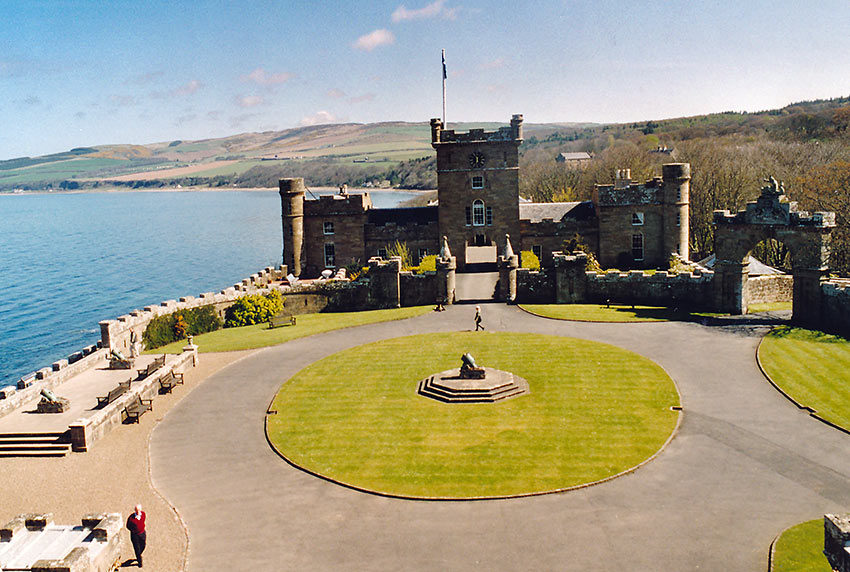
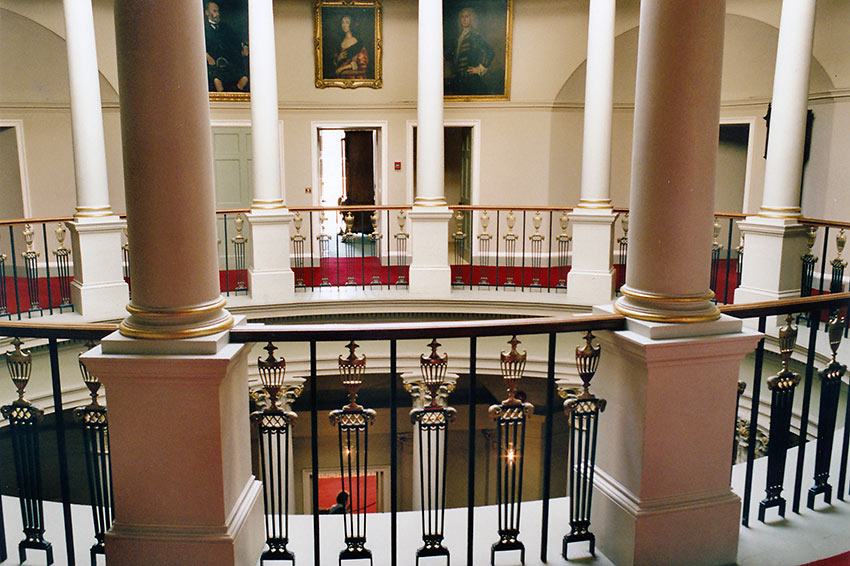
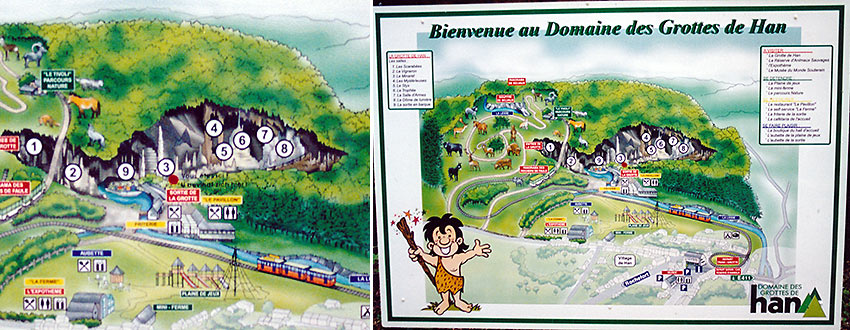
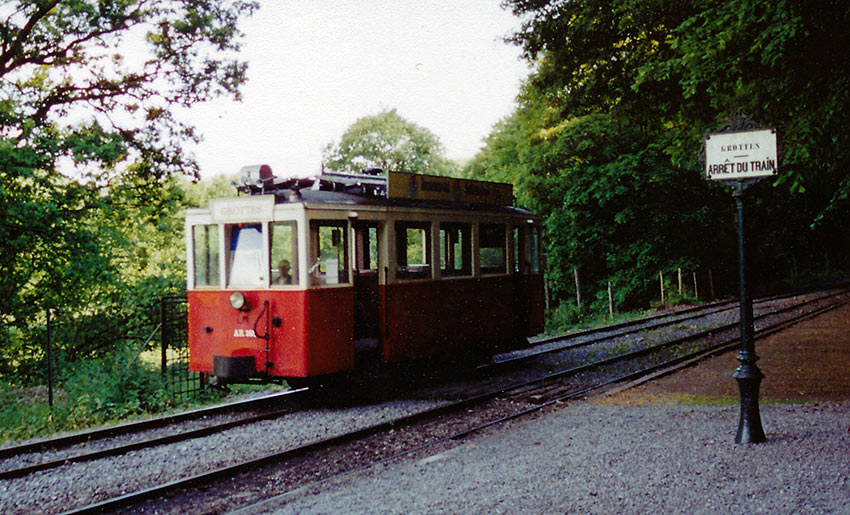
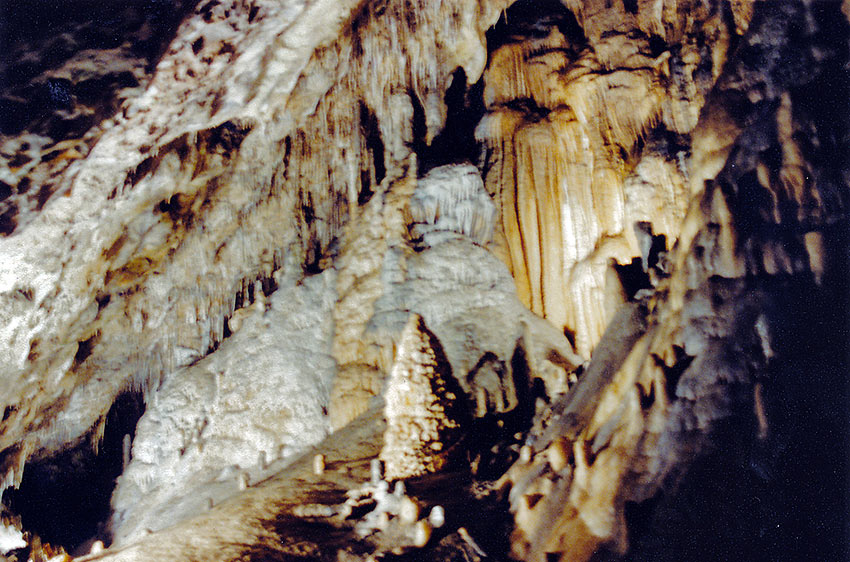
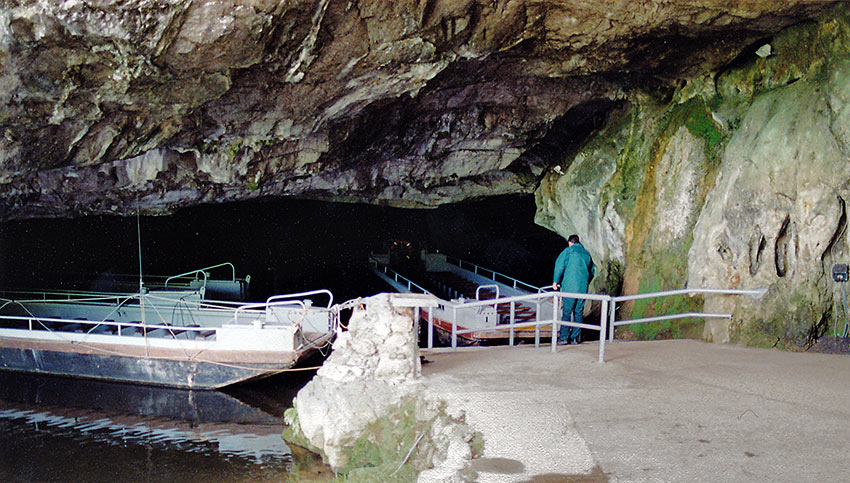
Han Grotto and Culzean Castle. As the name of my Traveling Boy feature
IS "Travel With a DIFFERENCE," it's important
to me to always bring you offbeat and unusual tourist places around
the world you may not know about. These two fit that category to a T,
and they're absolutely worth a visit. One's in Scotland and one's in
Belgium. Culzean (pronounced CULLANE) Castle is located near
Maybole, Carrick, on the Ayrshire coast of
he
Han Grotto and Culzean Castle. As the name of my Traveling Boy feature
IS "Travel With a DIFFERENCE," it's important
to me to always bring you offbeat and unusual tourist places around
the world you may not know about. These two fit that category to a T,
and they're absolutely worth a visit. One's in Scotland and one's in
Belgium. Culzean (pronounced CULLANE) Castle is located near
Maybole, Carrick, on the Ayrshire coast of