I was lucky but didn’t know it. My high school years were spent at Queen Anne High School, nestled on top of one of Seattle’s seven hills. With views of the Space Needle, Puget Sound, downtown and Mount Rainer. We had a joke, if you could see this volcanic mountain, it meant it was about to rain. But we didn’t care, taking our lofty location for granted.
Mount Rainer was sacred to my family. It was where my parents had their first date, picnic prepared by mom’s mother. This time the joke was on my dad. He had thought that the elegant picnic basket, full of delectables, was made by my mom, later realizing she could barely boil an egg. Today, she can.
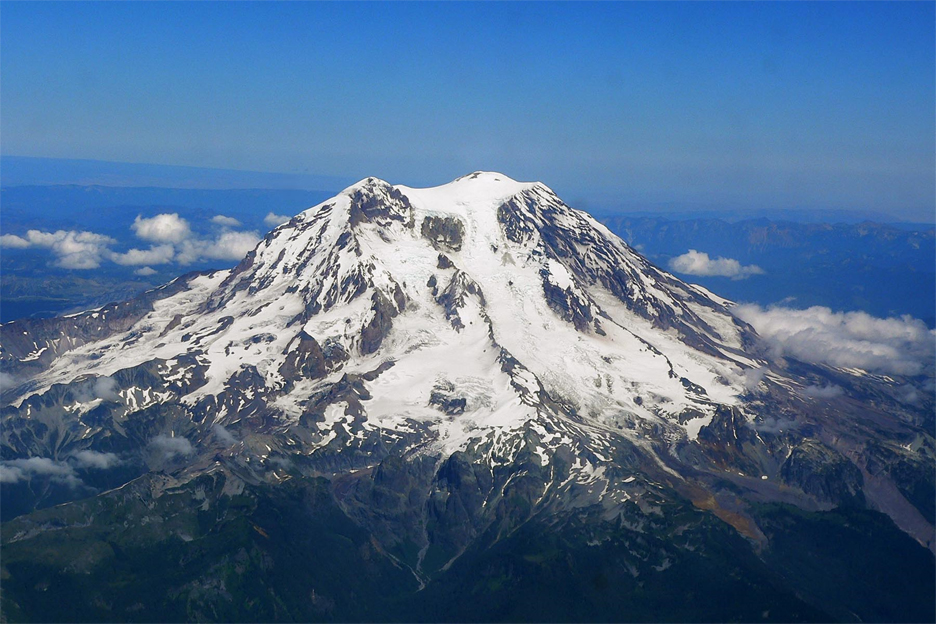
Mount Rainier National Park serves as an icon for Western and Central Washingtonians. The park is about 65 miles southeast of the Seattle-Tacoma metropolitan area and 65 miles west of Yakima in the Cascade Range.
It’s an active volcano, strewn with glaciers, wildflowers, wildlife and well-designed hiking trails, ideal for seniors and children.
Mount Rainier National Park covers about 236,381.9 acres. This area includes all of Mount Rainier, a 14,410 foot stratovolcano (a tall, steep-sided composite volcanic cone built by alternating layers of hardened lava, ash, and rocks), along with surrounding valleys, waterfalls, subalpine meadows, and over 91,000 acres of old growth forests. Ninety seven percent of the park is designated as wilderness under the National Wilderness Preservation System.
The park spans a dramatic elevation range from roughly 1,600-1,700 feet at its lowest points to the summit of Mount Rainier, and it is home to more than 25 named glaciers, the largest glacier system in the contiguous United States.
Around 10,000 climbers come from around the world each year to attempt the summit.
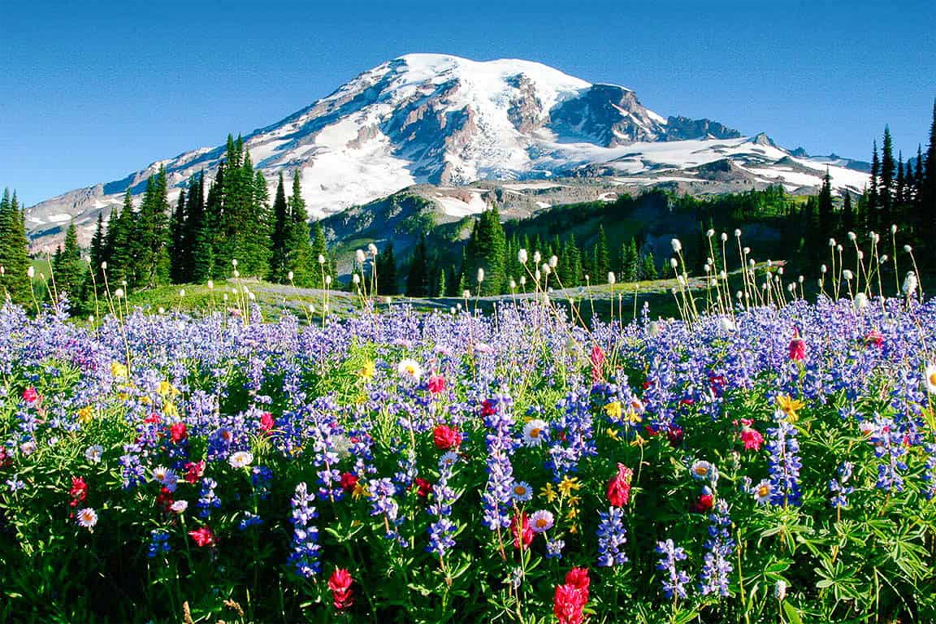
Paradise, at 5,420 feet elevation, is my favorite. In August it is blessed with wildflowers, huckleberries and blueberries. Mount Rainier National Park was recognized by the United States Congress. This made it the fifth national park in the United States. The park was created to protect and preserve Mount Rainier, once again the tallest volcano in the contiguous U.S. outside Alaska, along with its natural and cultural resources.
Mount Rainier National Park was established by an act of Congress signed into law on March 2, 1899, by President William McKinley. While
McKinley signed the bill, the park’s creation was the result of sustained local advocacy in Washington state. Efforts began in 1893 when state lawmakers introduced multiple bills in successive
congressional sessions to set aside the area. The campaign drew support from local mountaineering clubs, newspaper editors, University of Washington faculty, and conservationists like John
Muir, who praised the region’s natural beauty.
Mount Rainier National Park is open all year, 24 hours a day. Visitation is at its peak in July and August, when the weather is warm and dry and the wildflowers are blooming. If you are planning a summer trip to Mount Rainier, consider visiting mid-week, which is generally less crowded..
For further information, visit Mount Rainier National Park (U.S. National Park Service)