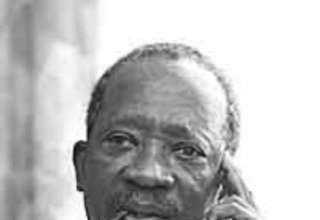
John Primer is a busy man. Earlier this year he was honored in his home state of Mississippi with an official Blues Trail Marker near his family origins in Camden. In May he picked up another Blues Music Award in the Traditional Blues Male Artist category at the annual ceremonies in Memphis. If that wasn’t enough, Primer has gifted his fans this summer with a new recording entitled ‘John Primer & Friends Tribute to Theresa’s Lounge.’ Each an incredible achievement, but Primer has accomplished them while endlessly playing clubs and bars around Chicago sprinkled with the occasional road tour with his Real Deal Blues Band. Did I mention that John Primer turned 81 this year? Eighty-One!
The man has spent a lifetime making music, or what he likes to call “traditional blues, the way it was played, the way it was made.” He has circled the globe, recording and performing with some of the most legendary names in the blues genre; yet his road can be traced right back to his roots in Mississippi.

I’ve had the privilege of sitting down with John on several occasions and I’ve always been amazed at his unlimited energy and drive. This time we spoke just prior to a show in San Diego and the conversation included his road, his music and the debut of his own daughter, Aliya; and the next generation of blues.
Is it true that you made your first instrument, a diddley bow? “Yeah, I did.” John says. “I used some wire that came out of my grand mama’s broom or sometimes we’d burn up a car tire and get the wire outta’ there. That was the best one, the best one to make a diddley bow out of. But my uncle and cousin had one made up already and I learned from that until I started making my own. It was just one string and you’d nail it to the house or wherever you could nail it and use a bottle to get sound out of it and that’s where I started from, you know?”
Tell me about your first musical memories or when you first heard the blues? “My grandma’s record collection is where I first heard the blues and stuff like that; it was from a record, yeah. We had 78s and 45s. I had a cousin that lived down the hill from me, she had a wind-up phonograph. So my cousin had it and I’d get up in a chair like this, so I could reach it and play it. I’d play Bo Diddley and Muddy Waters. Get in that chair and wind it up and listen to it play those 78 records. Muddy Waters, ‘Can’t Be Satisfied’ John Lee Hooker…” (John breaks into song) ‘…my baby got somethin’ I sure do love…my baby got something.’”
Being from a share cropping family, you grew up working? “I did, yeah. We couldn’t go to the fields until we got twelve years old, I started in the field then. But picking cotton and stuff wasn’t my…I never wanted to do that kinda’ stuff, I wanted to play guitar and be a musician. I didn’t think I could do good picking cotton or pullin’ corn; too rough for me. But I did it, yeah.”
Do you remember the first time you actually played on a guitar? “Uh, I was about three or four years old. I had a cousin who had one, it was an acoustic guitar but I don’t remember what the name was, I was too little to know. I couldn’t read then, I was too young.” But you knew you wanted to play it. “I wanted to play guitar, all my life I wanted to be a musician.”
You leave Mississippi for Chicago in 1963. “I came to Chicago when I was eighteen years old. It was great! Music was everywhere, comin’ all out of people’s houses, bands playing and rehearsing in houses. When I was growing up in Mississippi I thought all those guys that were singing the blues back then were up in blues heaven; thought they’d passed. But when I got to Chicago I found out this is where they all was…in Chicago.” (laughing) “Howlin’ Wolf, Jimmy Reed…all those guys were in Chicago.”
Talk a little about Maxwell Street. “In 1963 I used to go down there all the time, every Sunday. I used to see a guy named One Arm John (Big John Wrencher) and I knew him really well, I couldn’t figure out how he could blow that harmonica with one arm, but he was a good harmonica player. And you’d see Muddy Waters down there and John Lee Hooker. I just wasn’t familiar with all these guys because when I was in Mississippi, I was familiar with Lightnin’ Hopkins and Arthur ‘Big Boy’ Crudup… all the old guys, Big Bill Broonzy.”
The clubs and bars in Chicago in the 50s and 60s were pretty rowdy places to play. “Yeah, it was insane. They’d be fighting in there or they get drunk and some of the men would get jealous because some other man was talking to his woman. I remember when Little Walter played, he was a handsome dude and the women were crazy about him, so there’d be a fight even before the show was over. Little Walter was crazy.”
Snooky Pryor told me about a place called the ‘Bucket o’ Blood’ you ever play there? “I remember that. There was a place called the ‘Bucket o’ Blood’ and we weren’t allowed to go in there. My friends…it was in Chicago and my buddies, you know I’d hear them talk about the Bucket o’ Blood and I knew where it was, but I was too afraid to go in there!” (laughing)
When you listen to John Primer’s blues, you hear influences from the Delta, there’s some funk and R&B as well. How do you get all these styles to flow through your music? “I learned when I started to play guitar and I kept learning when I came to Chicago. See, when I grew up I came up with all that music. All the blues, the old-time blues they were creating back then, everybody was playing it. That’s why I know so much old blues from way back. I’m just like an elephant; I don’t forget nothin’…I remember! I could play the blues when I was down in Mississippi but when I came to Chicago I studied all types of music.”
‘She Do the Right Thing All of the Time’ – John Primer
Tell us about your association with Sammy Lawhorn? “I got the chance to play at Theresa’s Lounge with him. I didn’t know nothin’ about Sammy and I started working at Theresa’s in 1972 and Sammy was the guitar player ‘cause Muddy had fired him. He played with Muddy for 15 years. He fired him because he’d always go onstage and get drunk and be playing, you know? He’d get drunk at Theresa’s when I got down there, he’d get drunk and I’m a rhythm guitar player and that was the worst time. When he’d get drunk, I was so nervous and scared, what am I gonna’ do?”
What did you learn from that relationship? “Oh man, I learned…7 years. He (Lawhorn) told me, ‘learn what I play, but you can’t be me.’ Learn what I play, but I won’t be here forever and you’ll be playing this. I started learning slide by listening to him.”
You worked at Theresa’s Lounge for seven years? “Seven years; seven nights a week!” With Junior Wells and Sammy Lawhorn, that’s crazy. “Yeah, Junior Wells and Sammy Lawhorn. I’d just stay in the back and watch people drink and get drunk.” (laughing) “…drinking whiskey and stuff. All the musicians hung out there, Willie Dixon, sometimes Muddy Waters came through there, Louis Myers and the Four Aces, Johnny Winter and Mike Bloomfield. They all came out and hung out there and played. I learned a lot down there. But I played with Louis Myers and Dave Myers, the Four Aces, Fred Below all those guys would come down there and play sometimes.”
How did your association with Willie Dixon’s All-Stars come about? “I was playing at Theresa’s and Willie Dixon came down and I’d be singing all the Howlin’ Wolf and Muddy Waters stuff. I was lookin’ who is this big guy sittin’ there? I didn’t know who he was. In 1979 he needed a guitar player to go to Mexico.” (Willie Dixon’s All-Stars) Primer in his best low growl Willie Dixon impression… ‘Hey, I like the way you play. You know my stuff and I need a guitar player to go to Mexico, you interested?’ I said Yeah! ‘Do you have a passport?’ I said no. ‘Tell you what, I’ll be by your house on Monday and we’ll go downtown and get you a passport. You got any money?’ I said no. A passport cost $80 bucks, man. ‘You can just pay me.’
That late 70s All-Stars tour had some talent. “Koko Taylor, Muddy Waters, Big Bill Broonzy, the guy that had the guitar strings all tied up there.” (laughing) “Larry Davis. That’s when Muddy heard me play…with them. Before they came up to play, Muddy and Dixon were back there talking and Muddy ask him (Primer in his best Muddy impression) ‘who-who’s that young man…playing that guitar…up there?’ (Primer does Dixon’s growl) ‘That’s John Primer…he works down at Theresa’s.’ Muddy responded, ‘That man sure knows my music.’ So, in 1980 when Muddy’s band quit, he called Willie Dixon and asked for me.”
You worked with Muddy till he passed? “Yeah,” John says. “About two and a half years.” From listening to Muddy when you were a child, then getting that call to come play with him…I just can’t imagine. “It was my dream; I had a dream when I was in Mississippi at about 14 years old about playing in Muddy’s band. So my dream came true. I was jumping for joy when they came down there and got me. Mojo Buford came down there.” Primer in his best Mojo impression… ‘Muddy needs a guitar player, he sent me down to ask you, did you want to join the group?’ “What? Man, I jumped for joy. Lovie Lee playing piano, Jessie Clayton was the first guy to play drums but he didn’t want to go out of town, he didn’t want to leave his wife. So I took Lovie Lee and we went and got ‘Killer’ Ray Allison and a guy named Rick Kreher; Rick is playing on my CD, ‘Hard Times.’ The last guitar players to play with Muddy Waters…was Rick and me. So, I gotta’ chance to play with Muddy, man. I was full of joy; I didn’t even go to sleep that night, waiting for Mojo to come get me.”
There are so many people that you’ve played with, but I gotta’ ask about playing with the Stones and Muddy at the Checkerboard Lounge…that’s just wildness. “That one video, it helped me out, a lot.” John remembers. “People didn’t really recognize me too much when I was playing with Willie Dixon but when I got with Muddy Waters; it really put the icing on the cake for me. The thing I learned from Willie Dixon was how to write blues. I try to write the blues the same way he did. He was a great writer and bluesman, he was the greatest. So that’s the way I try to be, I just try to keep it traditional and keep it real so the young generation can know what it was because a lot of them haven’t ever heard it before…so they can keep the blues alive for the future, you know? That’s my plan, yeah.”
Muddy Waters at the Checkerboard Lounge with the Rolling Stones. “Baby Please Don’t Go.’
You also played on James Cotton’s ‘Take Me Back’ album.(laughing) “Aw man, James Cotton was something else, man. When he’d come back in town, that’s where he’d come; Theresa’s! And they’d hang out all night and be out until daylight…Whiskey and Cocaine. I toured with him all over, Phoenix, Denver he was trip, man.”
Then came the Holt’s… “Magic Slim! It was right on time for me ‘cause Slim was another guy like Muddy; workin’ hard, a workin’ man and workin’ all the time. Thirteen years.”
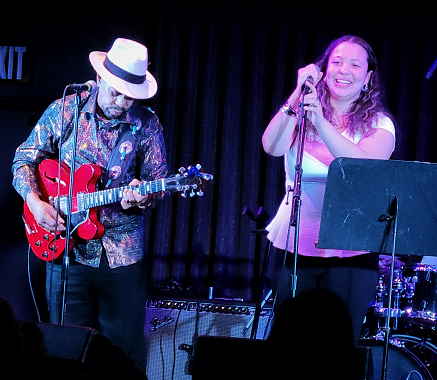
Let’s talk a little about your current band and the fact that it now occasional features someone very special singing with you. “My daughter, Aliya.” You can see John’s eyes light up when he speaks of her performance in San Diego a year or so ago. “It was her debut.” He grins. “She’s was learning how to play guitar and she’s doing good. She wouldn’t tell me but she came home and told her mom, ‘I don’t want to play guitar, I want to sing! And I think I want to sing the blues. I want to be just like dad and play music, something everybody loves.’ He’s smiling again. “She can sing.” He beams. “We used to take her on tour with us everywhere…she was two or three years old and traveling around.”
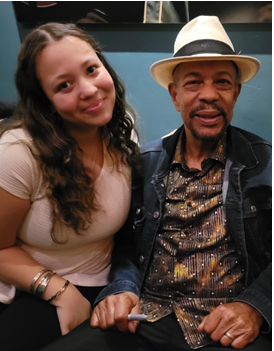
Well, let me ask you Aliya…what’s it like playing with your father? She smiles, “It’s crazy!” They both laugh. “You can’t really explain it, just the major opportunities that I have. That I was born into automatically…”
You literally grew up on the road, touring with your mom and dad. “Yeah, I was in Turkey when I was three years old, I don’t even remember. But I started out touring with them way back then so it’s always been a major part of my life. I’ve always been around the music business, so it just seemed natural that I’d want to continue that.”
Although your debut on stage is relatively new, you already have studio session work on your resume, appearing on a couple of different albums. Guest vocalist credits on a Bob Corritore project and two of your dad’s records; ‘The Soul of a Blues Man’ and ‘Hard Times.’ That’s an awesome way to kick-start a career. “Well, when I was working with Bob Corritore, it was kind of crazy and chaotic just getting to the studio. Dad and I had just gotten off the plane…we had travelled to Arizona, got off the plane, got into the studio, recorded, got it done and got out of there…and that was my first experience.” Welcome to the life of a musician. “The guys are such pros and they make it seem so easy and natural. It was such a fun time and it didn’t seem like work at all.”
You sang lead vocals on the song ‘Tough Times.’ “We were in the studio with just me and my mom and my dad and all of us just hanging out, so that was just really low-stress, easy and fun for me to do. I really, really enjoyed it.”
John and Aliya Primer ‘Tough Times.’
John, as you look down the road do you see a future with blues in it? “Well, I hope people will pay more attention to the blues, just to see what it’s all about. There’s not many people around now playing the real stuff. You can put whatever you want into the blues and I say this all the time, you cannot change the blues. You can add rock and roll players and call it blues. It’s not the real blues, but I like what they do and I’ve got nothing against it because… they’re keeping the blues alive! So I give them the respect.”
And if you had to describe John Primer’s blues. “It’s the traditional blues, the way it was played, the way it was made. That’s the way I play it. I don’t try to change it. Not just blues, but all music has got to have a feeling. My feelings come from hard times and hard living and that’s the way I play…from my heart. Everything you see me playing on stage is going to be real close to the original stuff.”