“Real misfortune is not just a matter of being hungry and thirsty; it is a matter of knowing that there are people who want you to be hungry and thirsty.”
“The development of Africa will not happen without the effective participation of women. Our forefathers’ image of women must be buried once for all.”
― Ousmane Sembène
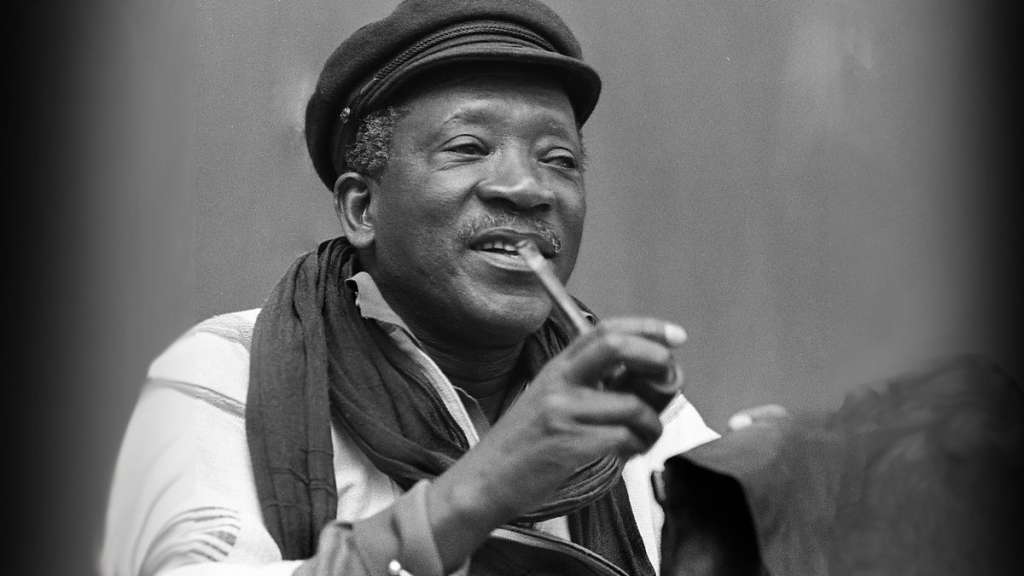
Ousmane Sembène, the son of a poor Senegalese fisherman and wife, taught himself to read and write in French. His maternal mother primarily reared and greatly influenced him.
Recurrent themes of Sembène’s films are the history of colonialism, the failings of religion, the critique of the new African bourgeoisie, and the strength of African women in French colonial Senegal.
Sembène’s knowledge of French and basic Arabic besides Wolof, his mother tongue, were based on many of his life experiences in menial labor jobs. Sembène stowed away to reach France, where he worked at a Citroën factory in Paris. He went south to work on the docks at Marseille, where he became active in the French trade union movement. Soon he joined the Communist party. During World War II he was drafted into the Senegalese Tirailleurs (a corps of the French Army).]His later World War II service was with the Free French Forces. After the war, he returned to his home country. In 1947 he participated in a long railroad strike, on which he later based his seminal novel God’s Bits of Wood (1960). In the narrative, the character, Diaw, writes a novel, which is later stolen by a white woman and published under her name. When he confronts her, he accidentally kills her. He is tried and executed.
His debut novel marked the beginning of Sembène’s literary reputation. The success of the novel provided enough financial return for him to continue writing his second novel, (1957) O Pays, mon beau peuple! (Oh country, my beautiful people!), which tells the story of Oumar, an ambitious black Senegalese farmer who returns to his native Casamance with a new white wife and ideas for modernizing the area’s agricultural practices. Oumar struggles against both the French colonial government and the village social order, and he is eventually murdered.
Sembène’s third and most famous novel is Les Bouts de Bois de Dieu (God’s Bits of Wood, 1960); which most critics consider his masterpiece. The novel is a fictional treatment of the railroad strike on the Dakar-Niger line, which lasted from 1947 to 1948. Although the charismatic and brilliant union spokesman, Ibrahima Bakayoko, is the most central figure, the novel has no true hero except the community itself. The people band together in the face of hardship and oppression to assert their rights.
Key Films
As an author concerned with social change, Sembène wished to touch a wider audience. He realized that his written works would reach only the cultural elites, but that films were “the people’s night school” and could reach a much broader African audience, many of whom were illiterate. He was often seen riding a bicycle which carried cans of film to small villages. Along the way he would attach movie posters to buildings.
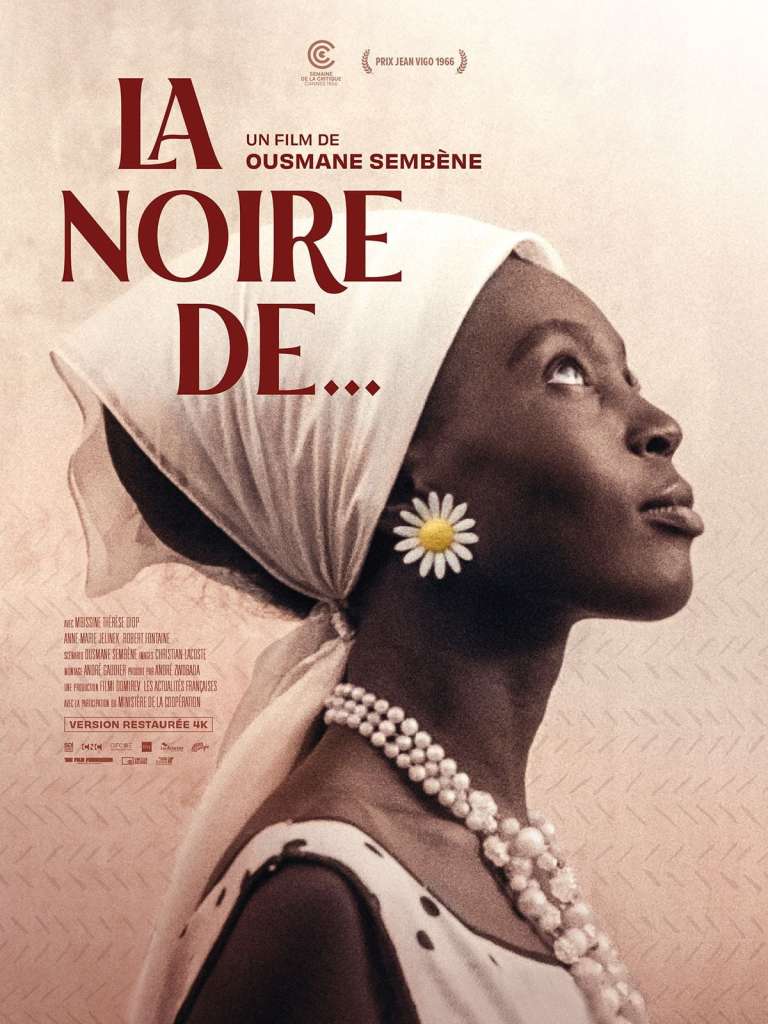
In 1966 he produced his first feature film, La Noire de...(Black Girl),based on one of his own short stories; it was the first feature film ever released by a sub-Saharan African director. Though only 60 minutes long, the French-language film won the Prix Jean Vigo, bringing immediate international attention to African films. The story is where a Senegalese girl becomes a servant to a wealthy French family, where she is tricked in thinking she was a nanny, but really a maid and treated with little respect. Her suicide, complete with high heels and her most expensive gowns, in a bathtub is harrowing.
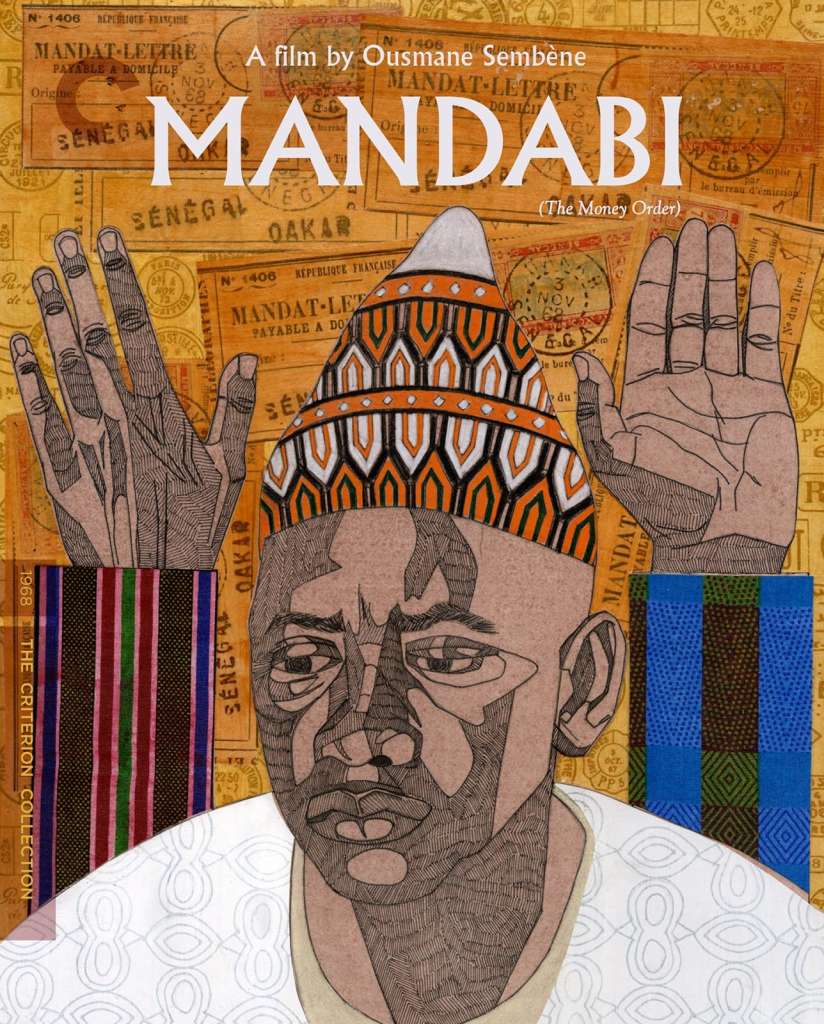
Sembène followed this success with the 1968 Mandabi, where a Senegalese man is forced to cope with a money order from Paris. This achieved Sembène’s dream of producing a film in his native Wolof language.
His later Wolof-language films include Xala (1975), a comedy about a corrupt politician with three wives, who is cursed with impotence. This takes place when the French depart from Senegal, where the politician only drinks French bottled water and wears expensive suits made in Paris. After the ‘Xala’ commences, he is finally reduced to ‘humiliating’ tribal customs, orchestrated by a village witch doctor.
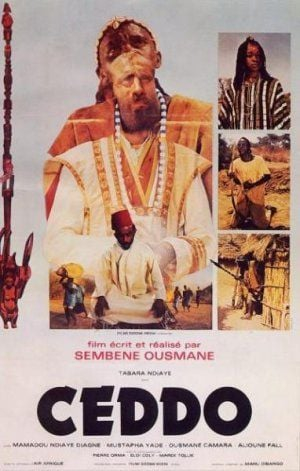
Ceddo (1977). The story takes place in Senegal, sometime after the establishment of a European presence in the area but before the imposition of direct French colonial administration. The ‘Ceddo’ (the outsiders, or non-Muslims) try to preserve their animist traditional culture against Islam, Christianity, and the slave trade. The Senegalese release of Ceddo was heavily censored, ostensibly for a problem with Sembène’s paperwork, though some critics suggest that this censorship had more to do with the government’s interpretation of what could be considered anti-Muslim content in the film.
His final film, the 2004 feature Moolaadé, is set in a small African village in Burkina Faso, which explored the still controversial act of female mutilation.
Death
Ousmane Sembène died on 9 June 2007, at the age of 84. He had been ill since December 2006, and died at his home in Dakar, Senegal, where he was buried in a shroud adorned with Quranic verses. Sembène was survived by three sons from two marriages.
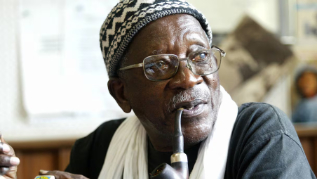
Seipati Bulane Hopa, Secretary General of the Pan African Federation of Filmmakers (FEPACI), described Sembène as “a luminary that lit the torch for ordinary people to walk the path of light…a voice that spoke without hesitation, a man with an impeccable talent who unwaveringly held on to his artistic principles and did that with great integrity and dignity.”
South Africa’s Pallo Jordan, Minister of Arts and Culture, went further in eulogizing Sembène as “a well-rounded intellectual and an exceptionally cultured humanist…an informed social critic [who] provided the world with an alternative knowledge of Africa.”