Story by Ed Boitano. Photographs mostly by Deb Roskamp
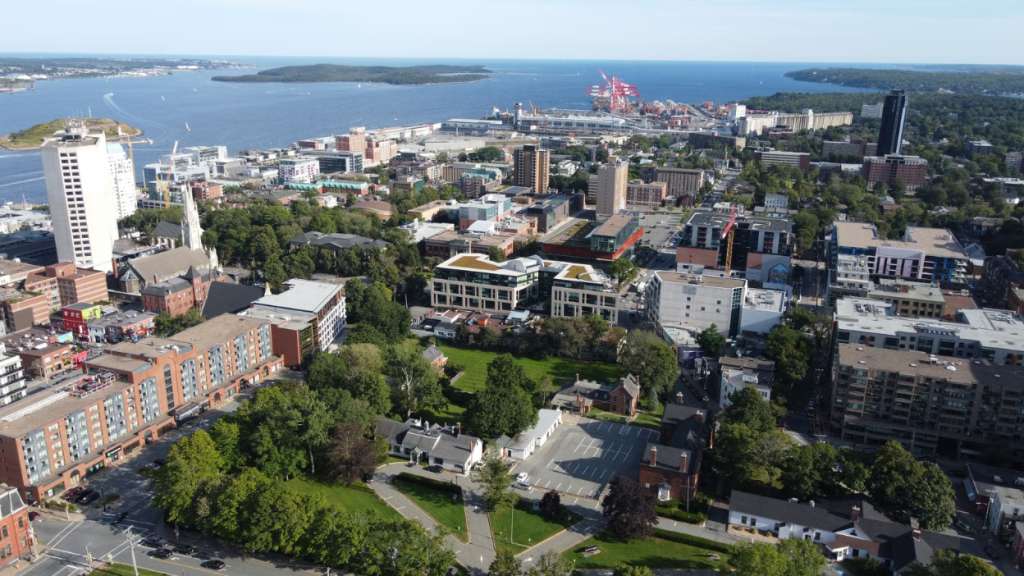
The Old Town Clock sits on a grassy bluff, overlooking Halifax’s historic downtown waterfront. Erected in 1800 for the British garrison at the Citadel, it is the most important symbol of Halifax’s rich historical past. As I rested on the lawn below the octagon tower, I could see a hybrid city of elegant 18th-century architecture alongside modern buildings of glass and steel. Groups of tourist, locals and laughing school children strolled past me, while ships glided in the distance on the world’s second largest natural harbor. As the September sun shone down, I realized I could sit there forever, or at least for the next four days – which was the short time allotted for my visit to this pristine part of Atlantic Canada – but this was not that type of trip, for my plan was to see as much of Nova Scotia as four days would allow me. Tomorrow I would rent a car and head north, but the rest of today would be devoted to exploring Halifax, the provincial capital of Nova Scotia. As the clock on the tower hit 2 pm, I realized it was time to get moving.

Day One
Established in 1749, Halifax was Canada’s first permanent British town. Due to its proximity to the British Isles and the Caribbean, it has been Canada’s leading port city ever since its founding. Even today, as I wandered down narrow streets, now lined with galleries, pubs and sidewalk cafes, all roads seem to lead to the waterfront, where 19th-century privateers’ warehouses have been transformed into boutiques and restaurants. An essential stop was the Maritime Museum of the Atlantic, which covers almost 140 years in the history of Nova Scotia. Special exhibitions are devoted to the Halifax Explosion of December 1917, the largest man-made explosion prior to the Atomic bomb; the sinking of the Titanic, which met her doom just 700 nautical miles east of Halifax; and the history of Sailing Ship Rigs

Dinner that night was on the waterfront for local scallops and a solid micro-brew. The whole city seemed to be out. Live music played from three different venues. It became obvious that this was a city filled with people who liked living here. Accommodations were at the elegant Lord Nelson Hotel, located across the street from The Victorian Halifax Public Gardens (circa 1867).
Day Two
Morning began with a tour of the Halifax Farmers’ Market, considered the oldest in North America. Once again it was a setting packed with happy Haligonians as well as the bounty of the season with items like local berries, fruit and maple syrup. I loaded my rental car with delicacies, knowing they would come in handy for the long day on the road.

The Town of Pictou is located on the stunning Northumberland Shore. Coined the “Birthplace of New Scotland,” it is here that the first Scottish immigrants landed in 1773. After a stroll through the quaint little town, I drove over to the historic Pictou Lodge Resort, a quintessential Nova Scotia oceanside resort that features log cottages and its own private beach.

It had been a scenic, but taxing two-hour drive from Halifax, so I decided to make camp at the resort and conserve my strength for the next two days of driving. Besides, I overheard that the lodge’s restaurant was serving local crab and halibut that night.
Day Three
Today, I would have to put the peddle to the metal. My goal was to make it to the legendary Keltic Lodge on the world-famous Cabot Trail (named for Italian explorer Giovanni Caboto) by nightfall. I knew, though, that I would have to make two important stops. The Alexander Graham Bell Museum is located in the very New England-like town of Baddeck, where Bell was to make his vacation home in 1885. The museum is devoted to the life of this inventor of the telephone and significant figure in the education of the deaf. The other stop was the Gaelic College; spread over 350 acres of woodland overlooking St. Ann’s Bay. Founded in 1938, it is the only college in the world devoted to the study and preservation of the Gaelic language, and Celtic arts and culture. The college is so renowned that once while visiting Scotland’s Outer Hebrides, I found a number of locals were sending their children there to study Gaelic language and culture, much of which had been destroyed in Scotland by the English in the 18th century. They were literally traveling to the New World to learn about their own history, culture and language.

After a few more hours back on the road – thank heavens for the snack at the college – Cape Smokey came rising out of the sea and soon I was at Keltic Lodge. Resting on a peninsula, overlooking Ingonish Beach, this is one of those historic resorts that feature its own 18-hole golf course, swimming pool, tennis courts, kayaking and hiking trails. After touring the grounds, it seemed logical that a full lobster dinner in the Purple Thistle Dining Room was the appropriate way to end the perfect day, plus regain my strength for tomorrow’s long drive.

Day Four
Cape Breton Highlands National Park consists of 366 square miles of magnificent highlands and rugged coastal wilderness. Established in 1936 as the first national park in the Atlantic Provinces, it is for many the highpoint of a journey to Nova Scotia. The Cabot Trail runs through the park, offering seemingly endless hiking opportunities. On foot, I spotted whales, bald eagles and even a moose, swimming across a lake. From the car I enjoyed picturesque valleys and unforgettable vistas of the Gulf of St. Lawrence.
On the other side of the Park is the Acadian town of Chéticamp. La Société Saint-Pierre is a cultural center whose main objective is to preserve Acadian heritage in Cape Breton. The French-speaking Acadians pre-dated the arrival of the English, but most fled the area after the defeat of France by the English in the French and Indian War. Many headed down to Louisiana to an area now known as Acadiana, where the Acadian name evolved into Cajun. The center features traditional crafts and food items. I made a note that Acadian chowder, unlike New England chowder, consists of a clear broth. I followed it with a cheese sandwich and a local berry pie, wisely knowing that nourishment would be required for me to make through the rest of the day.

My final night of accommodations would be at the Glenora Inn & Distillery, located on Nova Scotia’s spectacular Céilidh Trail. The Glenora Distillery is the first single malt whisky distillery in North America. The distillery rests on a rural 300 acre site with buildings housing malt, kiln, milling production, warehouses, bottling and lodging facilities, constructed in a traditional style, similar to distilleries found in Scotland. Tours are offered as well as a sampling of their 12-year old heather and honey tasting “uisge beatha” (Gaelic for “water of life”). Single malt is a whisky produced exclusively from malted barley that is not blended with another whisky. After my tour and hearty seafood dinner, I was told to expect something special for there was to be a céilidh in the distillery’s pub. A céilidh is a traditional Gaelic musical social gathering that originated in Scotland. Céilidhs flourished in Nova Scotia, where Scottish immigrants would meet with friends for an evening of song, dance and generally whisky. Everyone in the room is invited to participate. I was pleasantly surprised to see one of the men sharing my table standup and sing a song in Gaelic. It was the perfect setting to enjoy a wee dram of Glenora’s water of life. I decided it best to book a room for the night in Glenora’s inn. After all, I needed to conserve my strength for the long drive back to Halifax to complete my five-day journey of Nova Scotia.
For further information about travel to Nova Scotia, contact (800) 565-0000 or go to NovaScotia.com.
Originally published September 2013