Story by Richard Carroll. Photography by Halina Kubalski
With incredible stories to tell, the remarkable roadway is as earthy as a blues singer, as touched by fatigue as an aged opera singer, and as wonderfully passionate as a Hollywood diva, and conveys surprising charm around its every bend.
Tagged “The Road of Dreams,” “The Main Street of America,” and “The Mother Road,” as portrayed in John Steinbeck’s novel “Grapes of Wrath,” the currently dubbed Historic Route 66 offers astounding possibilities for folks with a sense of discovery and those willing to relinquish freeway clutter and the monotony of Interstate Highways.
The great pathway, a long silk ribbon leading to a gleaming pot of gold in the far distance, was established in 1926 extending from Chicago to California, a whopping 2,448 challenging miles of sweeping scenery. Originally ending in Los Angeles the highway was later extended to Santa Monica, and, according to historians, entirely paved by 1937.
Winding through Illinois, Missouri, Kansas, Oklahoma, Texas, New Mexico, Arizona and California, Route 66 was the first ever United States transcontinental highway, and from its launch was the legendary setting for overflowing sagas of broken dreams, and innumerable tales of first-person adventure encountered along the lengthy journey. During the Great Depression of the 1930s and the devastating Midwest drought that created the Dust Bowl, when countless families lost their farms and homes and in desperation turned to migrant work, Route 66 became their paramount prospect for a new beginning.
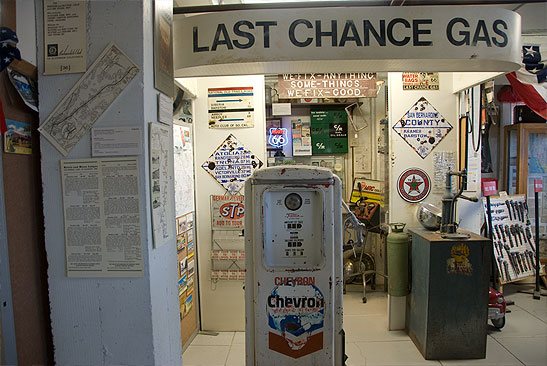
Last Chance gas pump
The highway beckoned like a mischievous rascal, yet despite the prospects of a difficult journey, travelers shared lofty expectations and hoped for a touch of luck and an opportunity to find work and some palm-laden sunshine out west.

The popular catchphrase “California Here I Come,” was ringing on the lips of Route 66 travelers as they cautiously maneuvered overloaded vehicles not up to the task, discovering that gas stations are not always conveniently located, that flat tires and boiling radiators were a given, and that blazing neon-lit hotel signs glowing like beacons in the night all too often included the ominous and unwelcoming “No Vacancy.”
California’s 286 miles of Route 66 meandering through San Bernardino County can capture the hearts of those with a bit of imagination. The county, with an area of 20,105 square miles, is the largest in the United States by area, larger than 71 different sovereign nations. History buffs with camera in hand, and a tank of petrol, can enjoy the awaiting nostalgia, and experience an era of Americana that remains an enduring legend.
With much of the vast landscape, rolling hills, lingering night sky, and enormous horizons locked in the remarkably unchanging California time capsule, one can picture the original travelers negotiating San Bernardino County and hear the humming whirl of a million tires. Today, large numbers of Historic Route 66 aficionados, as well as club members from the United States, Holland, Germany, and the California Historic Route 66 Association, are reliving Route 66 history and the captivating highlights.
Through the 1960s weary travelers from the east were ecstatic upon arriving at Needles, the first California Route 66 stop. A proud town of 5,000 residents established in 1883 on the Arizona border and now bypassed by the Interstate Highway, Needles is lined with buildings from the first half of the 20th century, and was a location for the 1940 movie, Grapes of Wrath, and the popular Route 66 television series.
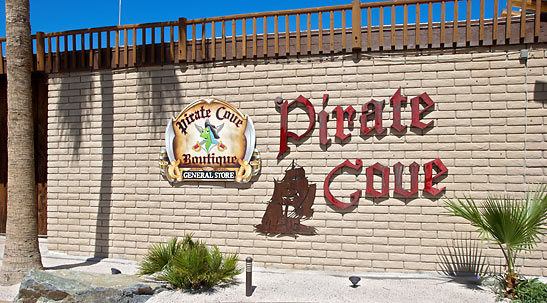
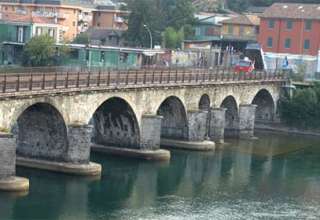
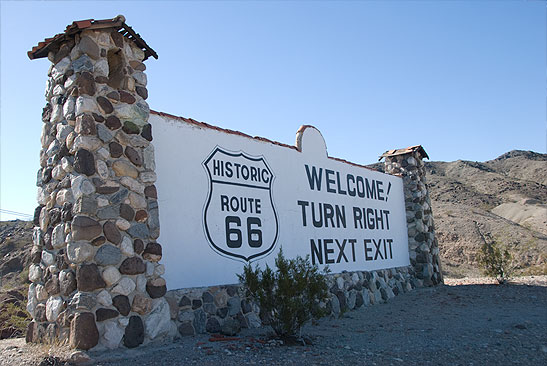
Eleven miles southwest of Needles at the Moabi Regional Park tucked away on a Colorado River channel adjacent to Route 66, Pirates Cove Resort & Marina hosts a large Historic Route 66 sign on the original signposts. Nearby is the trusty Old Trails Arch Bridge, a pathway across the Colorado River for dust bowl immigrants and other travelers from 1916 to 1947. Converted to support a utility line, the bridge remains in use today.
Opened after the heyday of the Mother Road, the resort, a large family-style RV and boating destination, is an opportune pause for today’s Route 66 travelers, offering narrated boat trips on the Colorado River, nature walks, dining opportunities, and exclusive, five-star, kitchen ready, river-front accommodations.
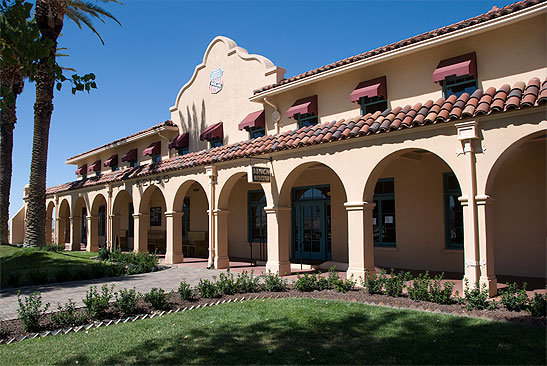
The Kelso Depot Visitor Center was once a booming center for the Union Pacific Railroad during the time of the mighty steam engines. Today it is a designated U.S. Historic District located in the 1-6-million-acre Mojave National Preserve, a fascinating side excursion via I-40 and Kelbaker Road, and a shard of a desert ghost town. The depot, circa 1924, has museum exhibits, historically restored rooms, café, theater, bookstore, and an amusing outdoor, freestanding jail, perfect for the over-served ruffians of the day.
Southwest of Kelso off Kelbaker Road, the Kelso Dune Field, covering 45-square-miles, rises some 650-feet into the sky. Accessed by a three-mile gravel road, the wind-swept dunes, at times, can be heard singing a timeless, wordless and unending desert song.
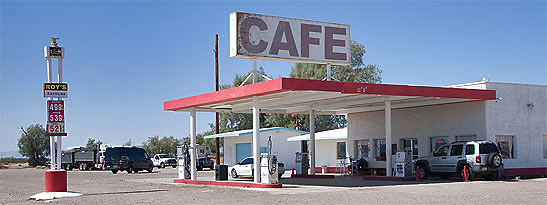
Returning to Route 66 via a thirty-minute drive to Amboy, population eight, today’s travelers can stop by Roy’s Café (named for one of the owners), an historic landmark in Route 66 lore, noted as the only food, lodging, and gasoline stop for miles in the eastern part of the Mojave.
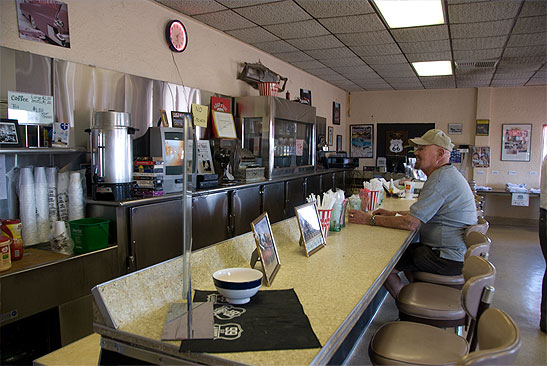
Visitors can sit at the original 1940s lunch counter, enjoy Roy’s famed Route 66 Root Beer, and feel as if the Mother Road is giving you an endearing embrace. The lone gas pump is a bit ragged around the edges, while across the highway a small post office mails “wish you were here” postcards stamped Amboy.
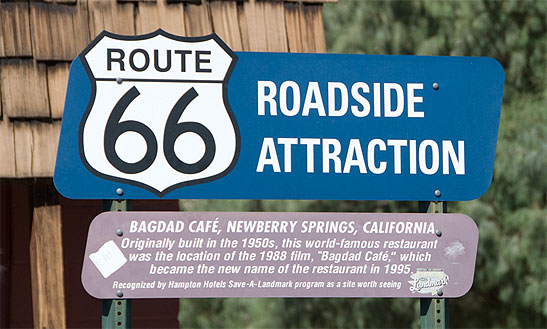
A few miles west the Pisgah Crater and the 6,000-year-old Amboy Cinder Cone Crater, emerge on the horizon. Further down the highway is the famed Bagdad Café, popular with Europeans who descend by the busload. Sometimes it is frivolous French tourists beset with the celebrated café’s awesome ambience, who pose for pictures as if in the throes of a Paris fashion shoot. Other days German fills the air, or the sibilant lisp of Castilian Spanish. Prince Albert of Monaco, forgoing a bus, also has memories of the Bagdad Café.
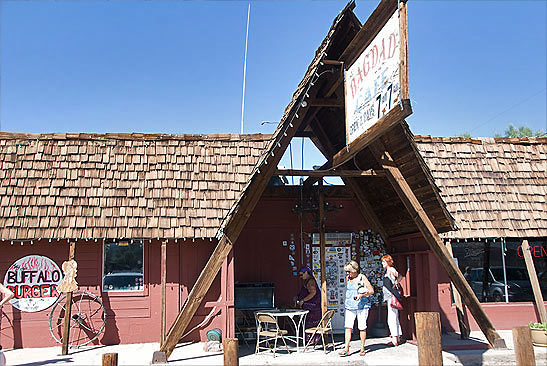
The 1988 cult film Bagdad Café, borrowing characters from the café and starring Jack Palance, was filmed here creating yet another chicken-and-egg conundrum: Was the café chosen because it already gave the appearance of an uproarious movie set, where anyone from Elvis to Bogart could be standing around enjoying the place? Or did that look rub off on it during filming? Either way, it has a Hollywood look all its own.
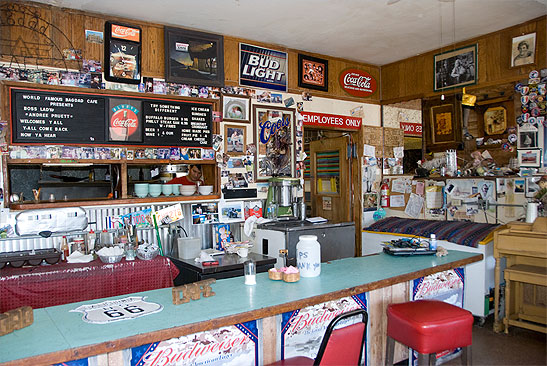
Walls are plastered with travel memorabilia from every corner of the world. Hundreds of hats line the ceiling while an old jukebox on its last legs is willing to play after a kick or two, just loud enough to be heard over the noisy floor fan working hard to cool a few tables.
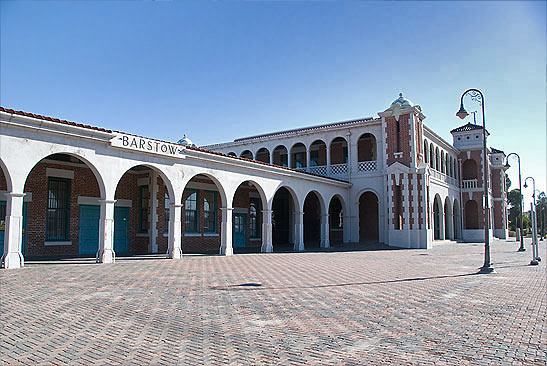
Barstow, a 30-minute drive from the Bagdad Café, is another Route 66 bonanza.
A bypassed desert jewel, the tree-lined roadway runs smack through downtown past 15 huge wall murals and the site of the fascinating Route 66 “Mother Road” Museum tucked away in the historic Casa del Desierto Harvey House, dating to 1911.
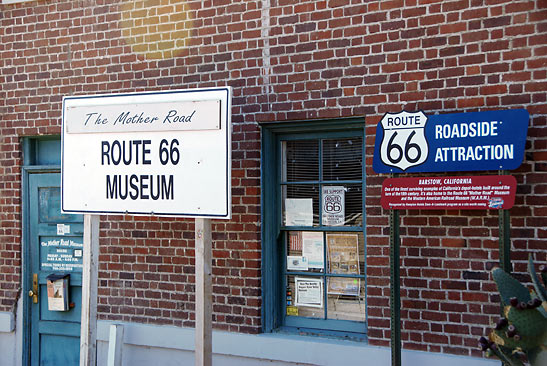
Visitors can pick up a t-shirt and browse among the exhibits. Near the west end of town the Route 66 Motel, one of the oldest motels in the city, in keeping with the era, has rusted vintage cars and Route 66 memorabilia decorating its yard.
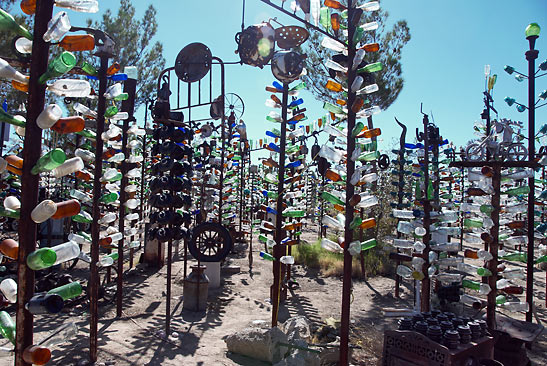
The first sight of The Bottle Tree Ranch, 20 minutes from Barstow, etches itself in the memory as an outrageously whimsical vision of life on the other side of somewhere. Friendly owner Elmer Long created a forest of 200 one-of-a-kind bottle trees using a mish-mash of junk yard treasure items such as typewriters, pistols, telephones, deer horns and road signs including one that reads Route 66, Bagdad, CA 1893.
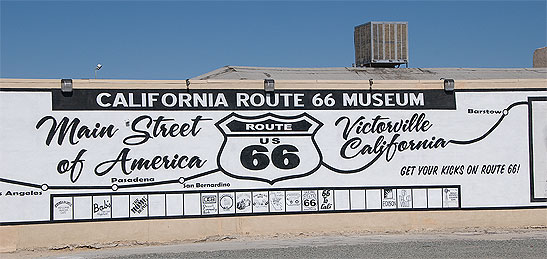
Greeting visitors after the short drive to Victorville is a large sign reading, “Old Town – Route 66.” Nearby is the celebrated, five-star, Route 66 Museum, noted as one of the largest and most complete museums on the Mother Road.
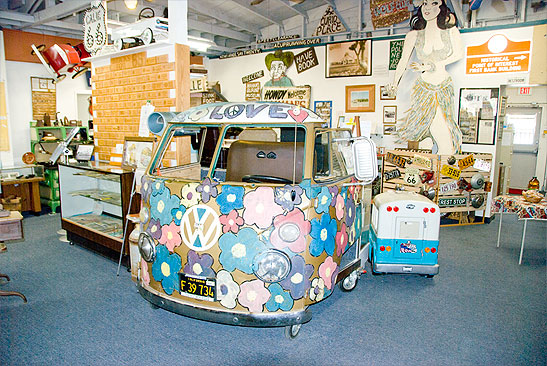
The museum showcases everything from a 1966 Volkswagen and classic teardrop trailer, to old Pepsi machines, juke boxes, signs reading “Gas, 18 Cents,” and joyful memories of Route 66’s glory days and driving holidays. Sharon Foster, a Museum Board Member said, “Admission is free, there is parking for everyone, and remarkably, 60 percent of our visitors are international.”
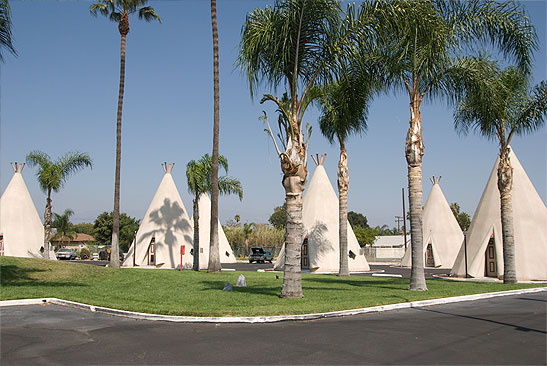
The historic discoveries along Route 66 are endless. The notable 1949 Wigwam Motel, 42-miles from Victorville, on the border of Rialto and San Bernardino, was depicted in Disney’s Pixar film, Cars, along with Route 66 and Roy’s Café. At the Wigwam nineteen 30-foot-high teepee-style accommodations created for Route 66 travelers of concrete and stucco live on.
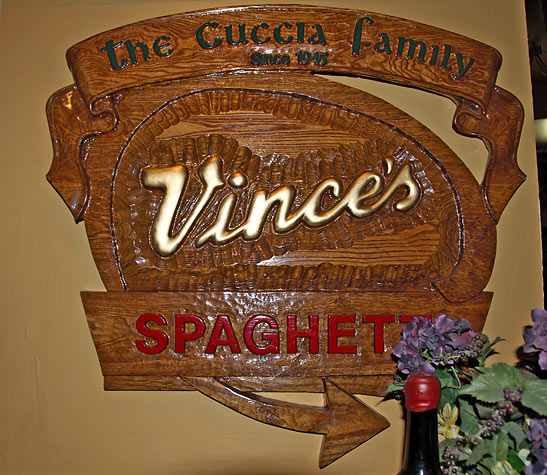
The Mother Road, sharing its name with Foothill Boulevard runs through the heart of Rancho Cucamonga past Vince’s Spaghetti Restaurant, a family tradition since 1945, serving spaghetti and meatballs to eager diners on Saturdays.
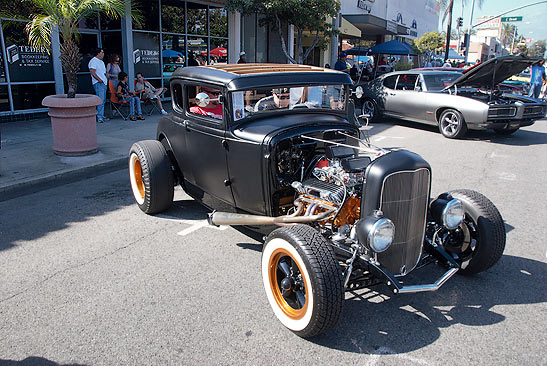
Though Ontario is a few miles south of the original Route 66 route, the city celebrates Route 66 with the Route 66 Cruisin’ Reunion Festival. For three days each September several thousand classic cars are on display along with 16 rotating bands, dancing and food stands.
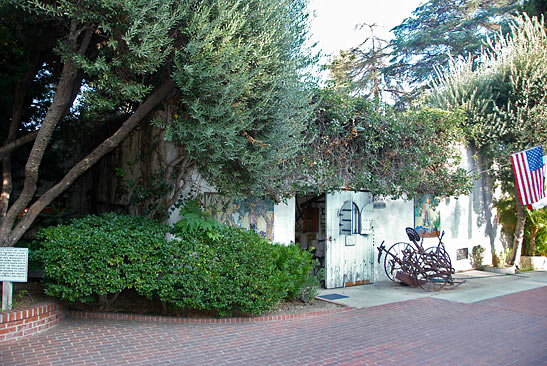
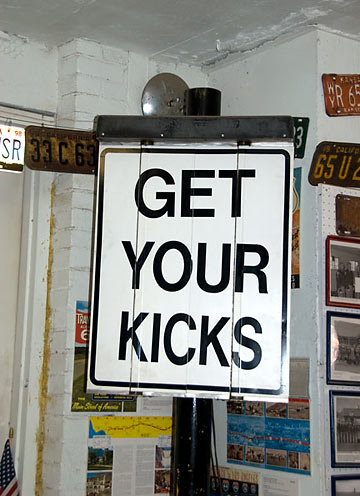
Those with a clamoring for a taste of olives can tour Ontario’s world-renowned Graber Olive House producing olives since 1894. Located on 4th street, Graber has been awarded numerous honors with their hand-based equipment. There is not a computer to be seen and family members reside here helping to create a friendly feel in the packinghouse.
A couple from Chicago enjoying their second Route 66 journey and the classic car festival in Ontario remarked, “The future is somewhere ahead, the moment is now, but nostalgia is forever.” It is the perfect motto for Route 66 travelers young and old.
When You Go
County of San Bernardino, California; www.sbcounty.gov/
This article was originally published April 2017.