Did I say ‘Once’ around the world. It was revolutionary then, where the ‘jump cuts’ and ‘freeze frames’ of the various New Waves made TV commercials as standard fare today.
It all began with the French New Wave, which inspired the British New Wave’s Kitchen Sink Realism, New German Cinema, Japan’s New Wave, the Hollywood Renaissance; it seemed to be everywhere.
Background
The Australian film industry almost collapsed by the early 1960s, but The Gorton (1968-71) and Whitlam governments (1972-75) saved it from extinction with the funding of film production and the training of film makers through the Australian Film, Television and Radio School, which created a new generation of Australian filmmakers who were able to bring their visions to the screen. The 1970s saw a revival of the Australian film industry, producing almost 400 films between 1970 and 1985, altogether more than the entire backlog of Australian films.
The Australian New Wave was a period of resurgence, beginning in the early 1970s and lasted until the mid-late 1980s, which also led to Ozploitation, a film genre by the exploitation of colloquial Australian culture.
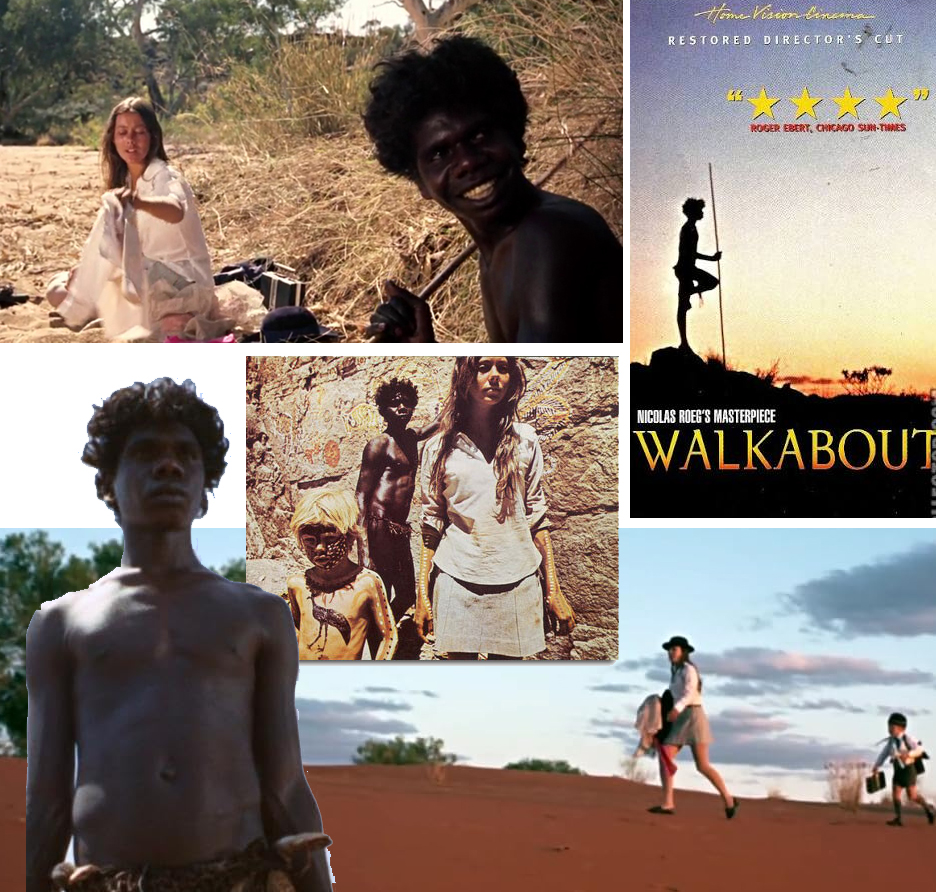
For me, as a young film student in Seattle, the precursor to the Australian New Wave began not with an Australian film director, but rather the English director, Nicholas Roeg. In his 1971 film Walkabout about two Anglo-Australian children, one a teenager and her much younger brother, who had lived a comfortable city life, but were abandoned by their father who had committed suicide on a road trip deep into the Outback. Struggling to survive in this unbearably hot and harsh terrain, they are saved by a young Aboriginal man, who is on a ‘walkabout,’ a rite of passage for Aboriginal males on the cusp of manhood. He teaches them to eat lizards, find water and hunt for lizards and wild game. The role is played by David Gulpilil, who at the time did not speak a word of English, which added to the film’s authenticity. The controversial nude swimming scene with Jenny Agutter still raises eyelids today. It is her rite of passage of emotional freedom.
KEY FILMS AND DIRECTORS
Peter Weir
Picnic at Hanging Rock is a 1975 Australian mystery directed by Peter Weir from a screenplay by Cliff Green, based on the 1967 novel by Joan Lindsay. The plot involves the disappearance of several schoolgirls and their teacher during a picnic at Hanging Rock, Victoria on Valentine’s Day in 1900, and the subsequent effect on the local community. One of school girls is never found, and, the ones which were, are mystified, unable to explain what had happened.
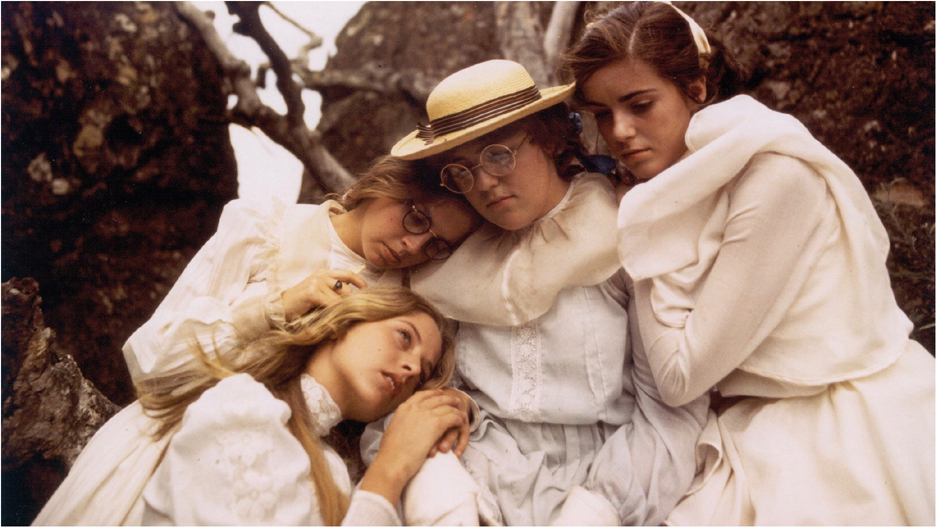
The film stars Rachel Roberts, Dominic Guard, Helen Morse, Vivean Gray and Jacki Weaver, who reappears on screen decades later as a middle-aged crime boss in the Australian drama, Animal Kingdom, then in Hollywood’s Silver Lining Playbook.
Weir’s protagonists are generally outsiders in their own worlds, characters out of place, facing danger, uncertainty or betrayal. These figures often undergo a loss of innocence or spiritual awakening, where the camera captures their subjective states through oneiric compositions, distorted sound, slow motion, and unconventional lighting. His cinematography is atmospheric, almost bordering on surreal, creating a sense of place that becomes essential to the narrative.
Picnic at Hanging Rock was a commercial and critical success and helped draw international attention to the then-emerging Australian New Wave. It is considered one of the most iconic and defining films of the New Wave.
Other notable Peter Weir Australian films: The Last Wave (1977), The Plumber (1979), Gallipoli (1981).
Fred Schepisi
The Chant of Jimmie Blacksmith is a 1978 Australian drama film directed, written and produced by Fred Schepisi, and starring Tom E. Lewis, Freddy Reynolds and Ray Barrett.The film also featured early appearances by Bryan Brown, Arthur Dignam, and John Jarratt. It is an adaptation of the 1972 novel The Chant of Jimmie Blacksmith by Thomas Keneally.
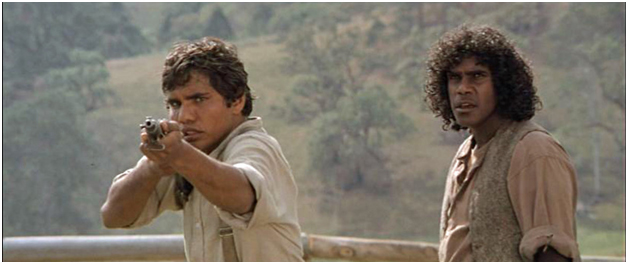
The story is about an exploited Aboriginal Australian who commits murder and goes into hiding. It is based on actual events.
The cast, a mix of professional actors (most of them white actors) and amateurs (most of them Aboriginal actors), was described by Pauline Kael as “a triumph of casting and coaching.”
Schepisi frequently sets his plots in a historical or cultural context, with precise attention to period detail. This is evident in The Chant of Jimmie Blacksmith (1970s Australia), where he integrates authentic locations, costumes and social atmosphere to immerse the audience. His work often explores themes of redemption, isolation, and the human condition.
Bruce Beresford
Breaker Morant is a 1980 Australian biographical war drama film directed by Bruce Beresford, who also co-wrote the screenplay based on Kenneth G. Ross’ 1978 play of the same name. It stars Edward Woodward as the title character, Lt. Harry Harbord Breaker Morant, along with Jack Thompson, John Waters and Bryan Brown.
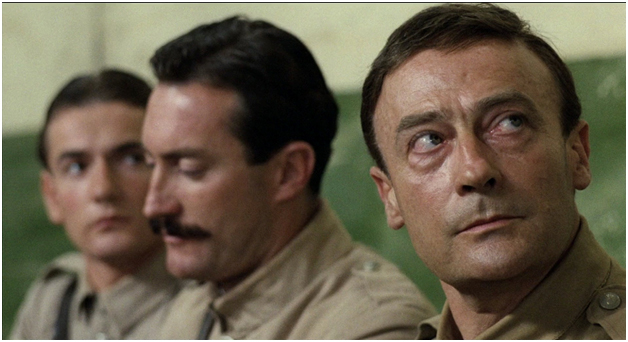
It is about a 1902 court martial of lieutenants Morant, Peter Handcock and George Witton, one of the first war crime prosecutions in British military history. Morant, Handcock, and Witton, Australians serving in the British Army during the Second Anglo-Boer War, are accused of murdering captured enemy combatants and an unarmed civilian in the Northern Transvaal. The film covers the exploration of the Nuremberg Defense, the politics of the death penalty and the human cost of total war. As the trial unfolds, the events in question are shown in flashbacks.
The film won ten 1980 Australian Film Institute Awards including: Best Film, Best Direction, Best Screenplay, Best Leading Actor (for Jack Thompson) and Best Supporting Actor (Bryan Brown). It was also nominated for an Academy Award for the Best Adapted Screenplay.
Breaker Morant remains the movie with which Beresford is most identified and has “hoisted the images of the accused officers to the level of Australian icons and martyrs.” In a 1999 interview Beresford said Breaker Morant “never pretended for a moment” that the defendants were not guilty as charged. He had intended the film to explore how wartime atrocities can be “committed by people who appear to be quite normal.”
Beresford films showcase their ability to evoke empathy and provoke thought, often blending intimate personal stories with broader social or historical contexts. His camerawork is often unobtrusive, allowing performances and story to take center stage. This is particularly evident where music, setting or period detail enhances the emotional tone.
Other notable Beresford Australian films: Don’s Party (1976).
George Miller
Mad Max is a 1979 Australian dystopian action film directed by George Miller in his directorial debut, who co-wrote the screenplay with James McCausland, based on a story by Miller and Byron Kennedy. Mel Gibson stars as “Mad” Max Rockatansky, a police officer turned vigilante in a dystopian near-future Australia.
Filmed on a budget of $400,000, it earned more than $100 million worldwide in gross revenue and set a Guinness record for most profitable Australian film of the year. The success of Mad Max has been credited for further opening the global market to Australian New Wave films.
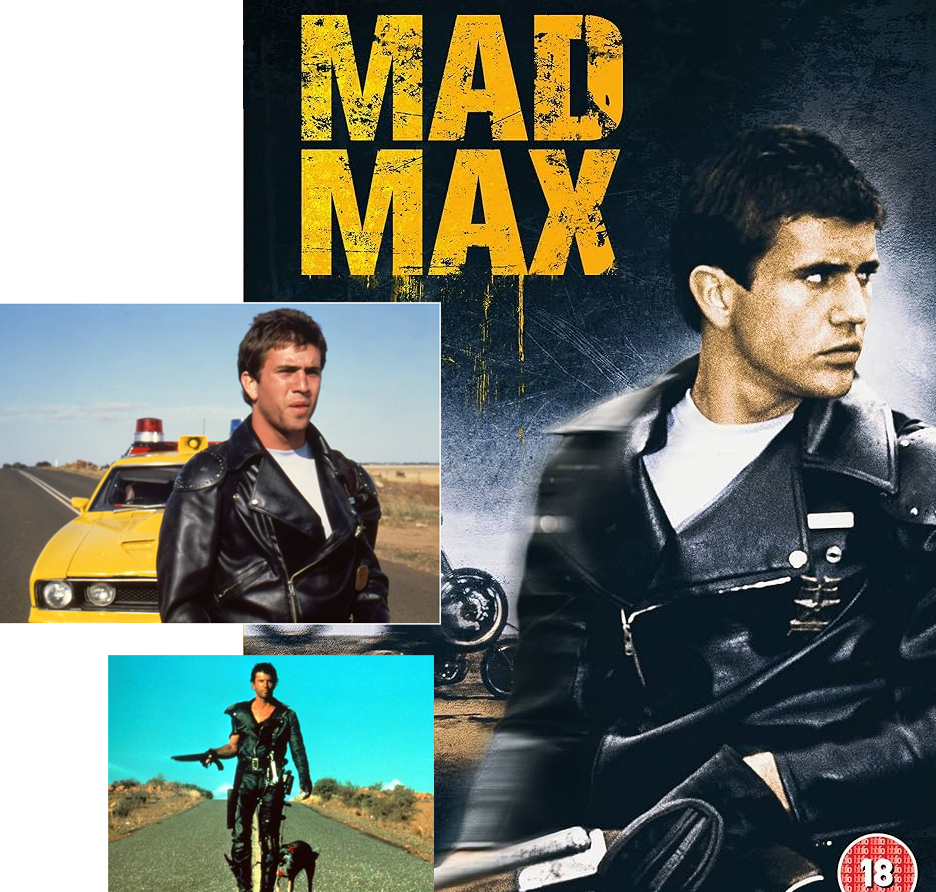
Mad Max became the first in the series, giving rise to three sequels: Mad Max 2 (1981), Mad Max Beyond Thunderdome (1985) and Mad Max: Fury Road (2015).
In the original 1979 Australian version, Mel Gibson spoke with a thick Australian accent. But for the American release it was redubbed with American voices to make it easier for U.S. audiences to understand. The U.S. dub also replaced Australian slang with American equivalents (e.g., “Oi!” became “Hey!”, “very toey” became “super hot”) and altered some sound effects.
George Miller’s style is defined by spectacular, practical filmmaking, archetypal narratives, thematic duality, and genre flexibility, all underpinned by a consistent empathy for his characters and a belief in cinema as a universal storytelling medium.
Philip Noyce
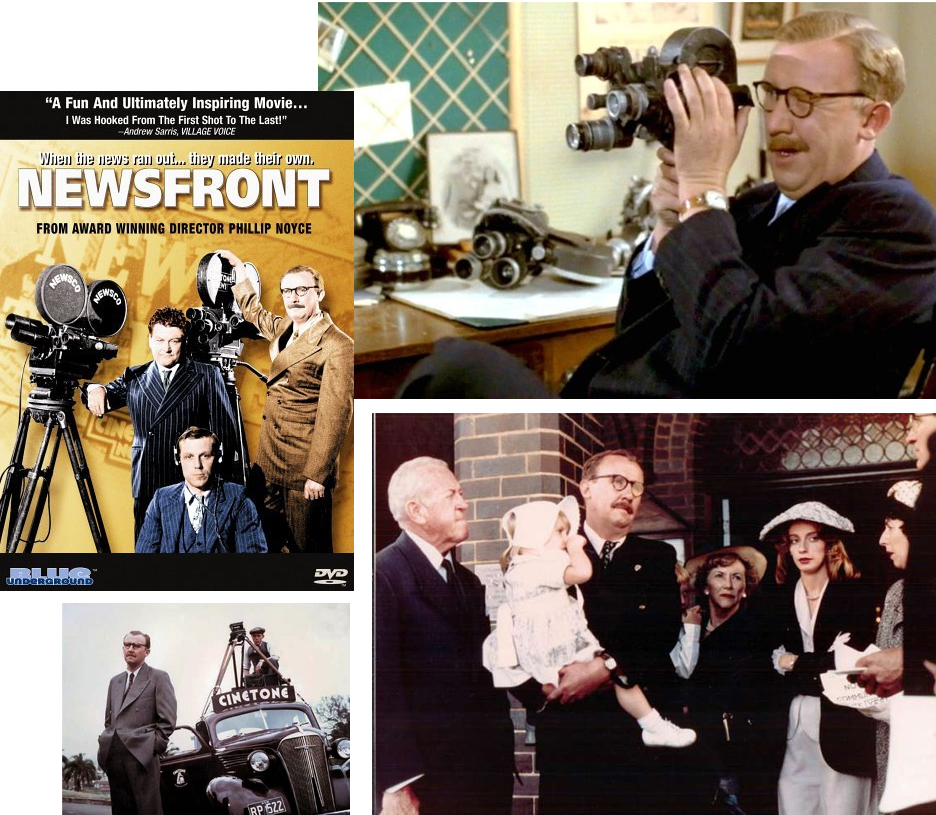
Newsfront is a 1978 Australian drama film directed by Phillip Noyce, and starring Bill Hunter, Wendy Hughes, Chris Haywood and Bryan Brown. The film is shot in both black and white and in color, incorporating actual newsreel footage.
Newsfront is about newsreel cameramen who are committed to finding compelling footage of newsworthy events. The film begins in 1948 and ends in 1956, when television was introduced to Australia, and follows the destinies of the cameramen’s quest within the context of sweeping social and political changes in their native Australia. I learned a lot.
Noyce often combines tight, tension-filled sequences with vivid environmental settings; urban landscapes, natural backdrops, or period-specific locales. He integrates action with deeper narrative exploration, ensuring that even the most spectacular scenes serve the story.
Gillian Armstrong
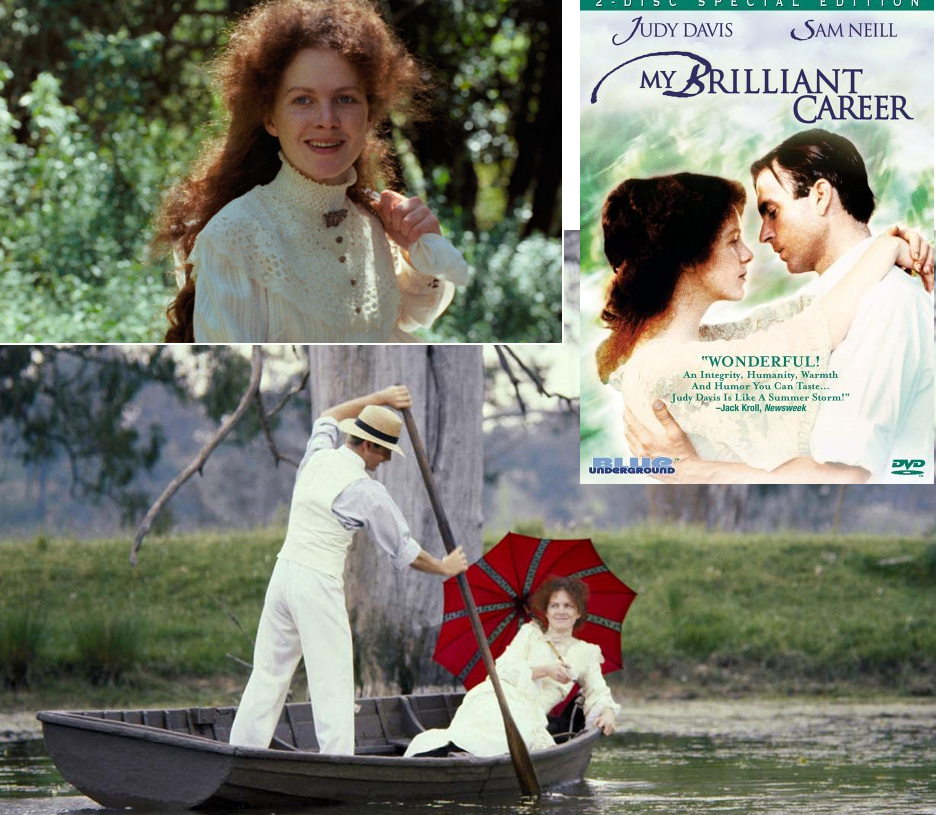
My Brilliant Career is a 1979 Australian period drama film directed by Gillian Armstrong, and starring Judy Davis, Sam Neill, and Wendy Hughes. Based on the 1901 novel of the same name by Miles Franklin, it follows a young woman in rural, late-19th-century Australia whose aspirations to become a writer are impeded first by her social circumstance, and later by an early romance. My Brilliant Career was released in Australia in August 1979 and later premiered in the United States at the New York Film Festival. It received significant critical acclaim, and was nominated for numerous AFI Awards, winning three, while Davis won the BAFTA Award for Best Actress in a Leading Role. In the United States, it received nominations for the Academy Award for Best Costume Design, and the Golden Globe Award for Best Foreign Film.
The film is regarded as being part of the Australian New Wave, as well as a piece of feminist cinema.
Armstrong’s work consistently explores women’s inner lives, relationships and the choices that shape their identities. While often associated with feminist themes, she emphasizes portraying complex individuals rather than making intentional political statements. Her films are anchored in emotional truth and psychological depth, noted for sharp story sense, meticulous design, and a strong sense of rhythm. Armstrong often uses period authenticity in historical settings, grounding her work in real locations and authentic period detail. Her visual language brings attention to music, lighting, and mise-en-scène that enhances the narrative.
The Road to Hollywood
Due to their success in Australian cinema, this led to the road to Hollywood, for big money and budgets, and bigger screen goers, many unaware that the Australian New Wave even existed.
Here are a few American films directed by these Australians:
Peter Weir: The Year of Living Dangerously, Witness, The Mosquito Coast, Dead Poets Society, Green Card, Fearless, The Truman Show, Master and Commander: The Far Side of the World
Fred Schepisi: Barbarosa, Iceman, Roxanne, A Cry in the Dark, Six Degrees of Separation
Bruce Beresford: Black Robe, Driving Miss Daisy, Tender Mercies
George Miller: Lorenzo’s Oil, Babe, Witches of Eastwick
Gillian Armstrong: Little Women (1994), Starstruck, The Last Days of Chez Nous, Mrs. Soffel, Charlotte Gray
Phillip Noyce: Dead Calm, Clear Present Danger
Stay tuned for the New Zealand New Wave.